
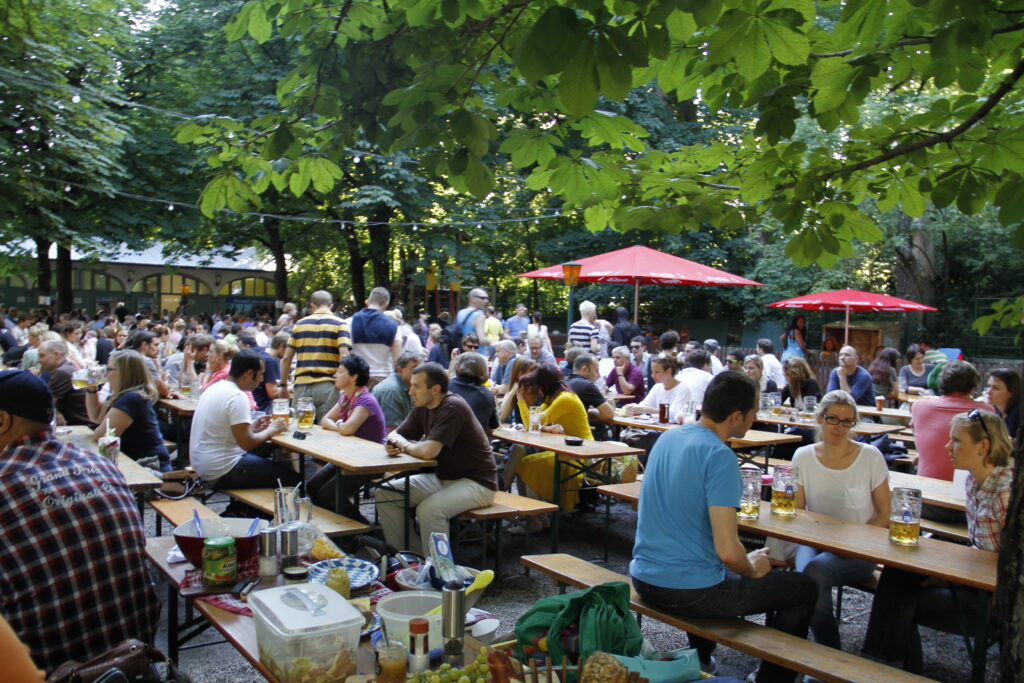
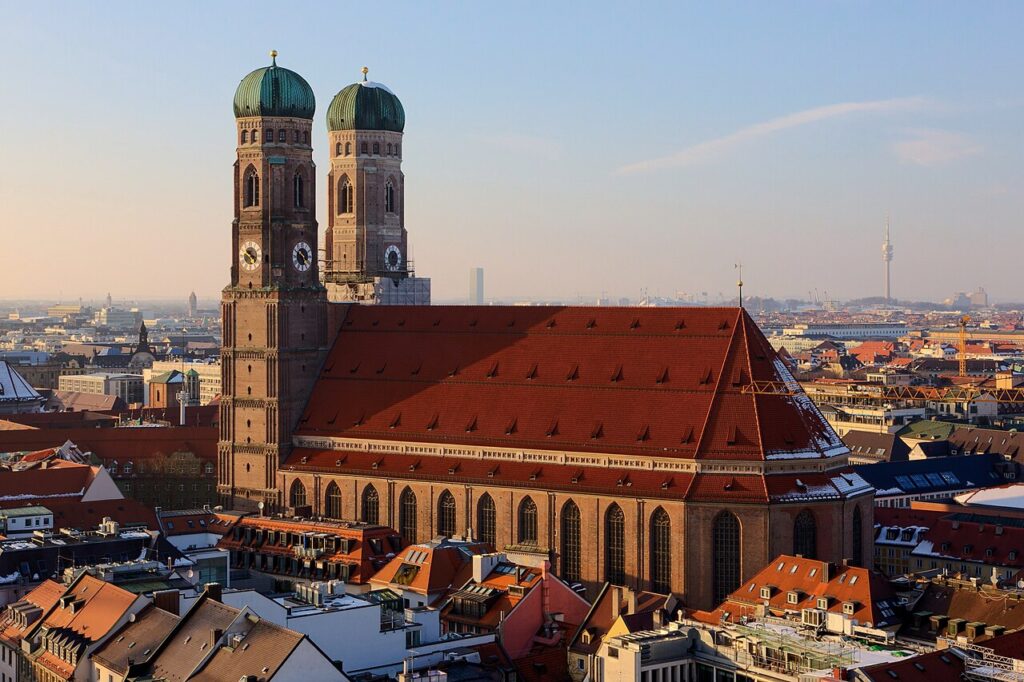
Few German traditions are as welcoming—or as misunderstood—as the Bavarian beer garden. These aren’t just outdoor bars. They’re communal living rooms under the shade of towering chestnut trees, where strangers share long wooden tables, families unpack picnic baskets, and a liter of lager costs less than a cappuccino in most European capitals.
The beer garden, or Biergarten, is protected by Bavarian law and rooted in 19th-century brewing tradition. Understanding a few unwritten rules makes the experience richer.
Why Chestnut Trees and Why You Can Bring Your Own Food
Bavarian brewers in the 1800s stored their lager in cool riverside cellars during summer. To keep the beer even colder, they planted fast-growing chestnut trees for shade and spread gravel on top to insulate the cellars below. Naturally, they began selling beer directly from the source.
Locals started bringing their own food to enjoy with the fresh brew, and when Munich’s brewers lobbied to ban the practice (to sell more sausages), King Ludwig I intervened in 1812. His decree allowed beer gardens to sell beer but required them to let guests bring their own meals. The law still stands.
Today, most beer gardens have a food counter selling pretzels, Obatzda (a tangy cheese spread), roast chicken, and pork knuckle. You’re welcome to buy from them or spread out your own picnic. Just don’t bring your own beer—that’s the one rule everyone observes.
How to Order and Where to Sit
There are no waiters in traditional beer gardens. You walk to the beer counter, order your Maß (a one-liter mug), pay on the spot, and carry it back to your table. Forget the half-liter; a proper beer garden serves Maß only, usually Helles, the pale lager that defines Munich brewing.
Seating is communal. Long wooden tables fit ten or more, and you’re expected to squeeze in wherever there’s space. A simple Grüß Gott (the Bavarian greeting) when you sit down goes a long way. Locals might offer you a radish from their basket or strike up a conversation about the weather, the beer, or the latest Bayern Munich match.
Some beer gardens have a separate serviced section with tablecloths and menus. If you see tables set with silverware, those are reserved for full-service dining. Stick to the self-service side for the real experience.
Munich’s Best Beer Gardens
The Augustiner-Bräu near the Hackerbrücke train station taps beer from wooden barrels—the only major Munich brewery that still does. The trees are tall, the vibe unpretentious, and Augustiner beer is the favorite of most locals.
Hirschgarten, on the western edge of the city, is Europe’s largest beer garden, seating 8,000 under ancient chestnuts. Deer roam a small park next door (the name means “deer garden”), and families spread blankets on the grass between tables. It’s less touristy than the English Garden options and beloved by neighborhood regulars.
The Chinesischer Turm in the English Garden is the most famous and the most crowded. A brass band plays from a pagoda-style tower on weekends, and the location—deep in Munich’s green heart—makes it irresistible despite the tour groups. Arrive early or embrace the chaos.
For something quieter, try Hofbräukeller in Haidhausen (not to be confused with the Hofbräuhaus in the city center). It sits on a hill with views over Munich’s rooftops, pours Hofbräu lager, and attracts more locals than visitors.
Beyond Munich
Franconia, in northern Bavaria, takes beer culture even further underground—literally. Bierkellers in towns like Bamberg and Forchheim are dug into hillsides, where brewers stored lager in cool sandstone caves. The beer gardens on top are smaller, shadier, and pour Franconian brews like smoked Rauchbier and dark Schwarzbier.
In Bamberg, the Wilde Rose Keller and Spezial-Keller are neighborhood favorites with sprawling tree-shaded terraces. Forchheim hosts the Kellerwald, an entire forest of 23 beer cellars on a hillside south of town, each representing a different local brewery.
Even smaller Bavarian towns have a Biergarten worth visiting. Look for chestnut trees, gravel paths, and the sound of glass clinking under the leaves.
When to Go
Beer gardens open around Easter and close in October, though exact dates depend on the weather. The best time is a weekday evening in May or June, when the chestnuts are in full leaf, the sun sets late, and the tables fill with regulars instead of crowds.
Weekends draw families, tourists, and anyone looking to unwind. Sundays are particularly busy, as the tradition of a post-church beer and a walk remains strong in Bavaria.
Pack a light jacket—even summer evenings cool off under the trees—and bring cash. Many beer gardens don’t accept cards at the counter.
Want more stories like this in your inbox? Subscribe to the Love Germany newsletter—one short story a day, straight from the heart of Germany.
Tours & experiences in Germany


Powered by Viator. Some links are affiliate links — we may earn a small commission at no extra cost to you.