Stand at the border crossing between Aachen, Germany, and Maastricht, the Netherlands, and you’ll find yourself in one of Europe’s most historically intertwined regions. For more than a millennium, these two cities have shared geographical proximity, language connections, and cultural ties that reflect their position in the borderlands between German and Dutch identity.
The connection runs through the Meuse-Rhine Euroregion (Euregio Meuse-Rhine), one of the oldest cross-border cooperation zones in Europe, established formally in 1976. This Euregio brings together five regions across three countries: the German-speaking Community of Belgium, the province of Liège (Belgium), the province of Limburg (Belgium), the province of Limburg (Netherlands), and the Aachen region (Germany). Aachen, once the capital of the Carolingian Empire, and Maastricht, a crucial Roman and medieval trading hub, were part of the same political and cultural sphere for centuries. Both cities share connections to Limburgish—a dialect continuum that serves as a linguistic bridge in the region.
Shared Heritage Across the Border
The family names found in the Aachen region often reflect patterns common across the border. The Catholic character of both regions also set them apart from their respective national contexts—Limburg as the Netherlands’ most Catholic province. This shared religious identity reinforced cultural bonds, with pilgrimage routes connecting Aachen’s cathedral, housing Charlemagne’s relics, to churches throughout the region. The Dutch surnames from Limburg often reflect this Catholic heritage, with names referencing saints, church lands, and religious occupations.
A Modern Cross-Border Community
Today, the Aachen-Maastricht connection thrives in practical ways. RWTH Aachen University, one of Germany’s leading technical universities, attracts international students including those from the Netherlands, while German shoppers regularly cross into Maastricht for Sunday shopping (prohibited in Germany). The Euregio Meuse-Rhine brings together 3.9 million people across German, Dutch, and Belgian borders, with Aachen and Maastricht as important anchors.
The cities share public transport connections, with buses running across the border, and many residents hold jobs in the neighboring country. The region exemplifies European cross-border integration.
Cultural Connections and Shared Traditions
Carnival season reveals cultural kinship in the region. Both Aachen and Maastricht celebrate carnival, though each maintains distinct traditions. The celebrations share Rhineland Catholic roots, and dialects that show regional connections.
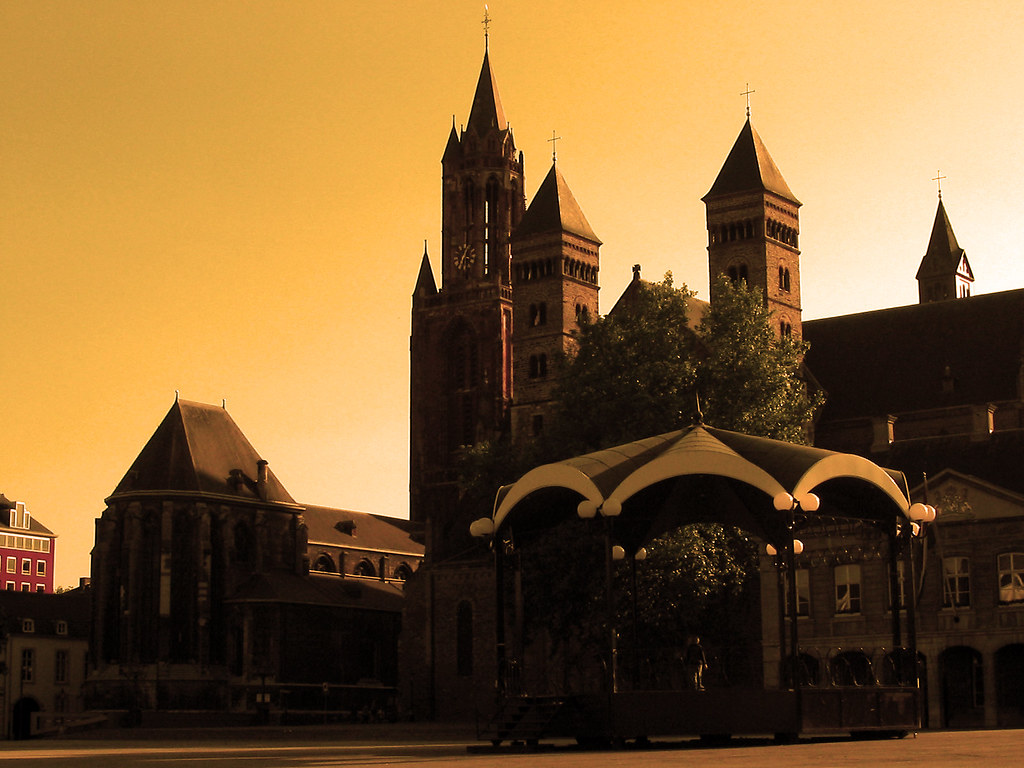
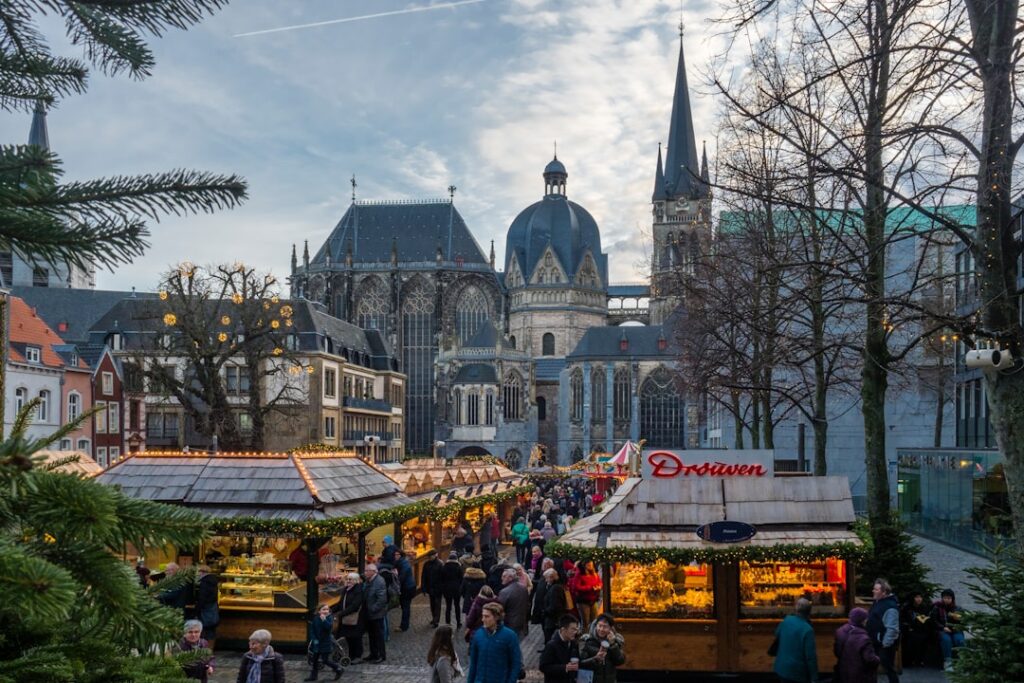
The Christmas markets also show this blending: Aachen’s famous Weihnachtsmarkt draws Dutch visitors, while Aacheners make the short journey to Maastricht’s Vrijthof square for its atmospheric winter market. The culinary traditions show overlap as well, from the love of asparagus in spring to the preference for hearty stews.
In this border region, local identity often transcends national boundaries—a reminder that Europe’s richest cultural zones have always been where different traditions meet and merge.
Tours & experiences in Germany


Powered by Viator. Some links are affiliate links — we may earn a small commission at no extra cost to you.