
For centuries, the Holy Roman Empire’s most sacred treasures—the Imperial Regalia including the crown, orb, sceptre, and Holy Lance—needed fortresses worthy of their protection. One such fortress was Karlštejn Castle, perched in the Bohemian forests just outside Prague, which played a crucial role in safeguarding these symbols of imperial power before they found their long-term home in Nuremberg.
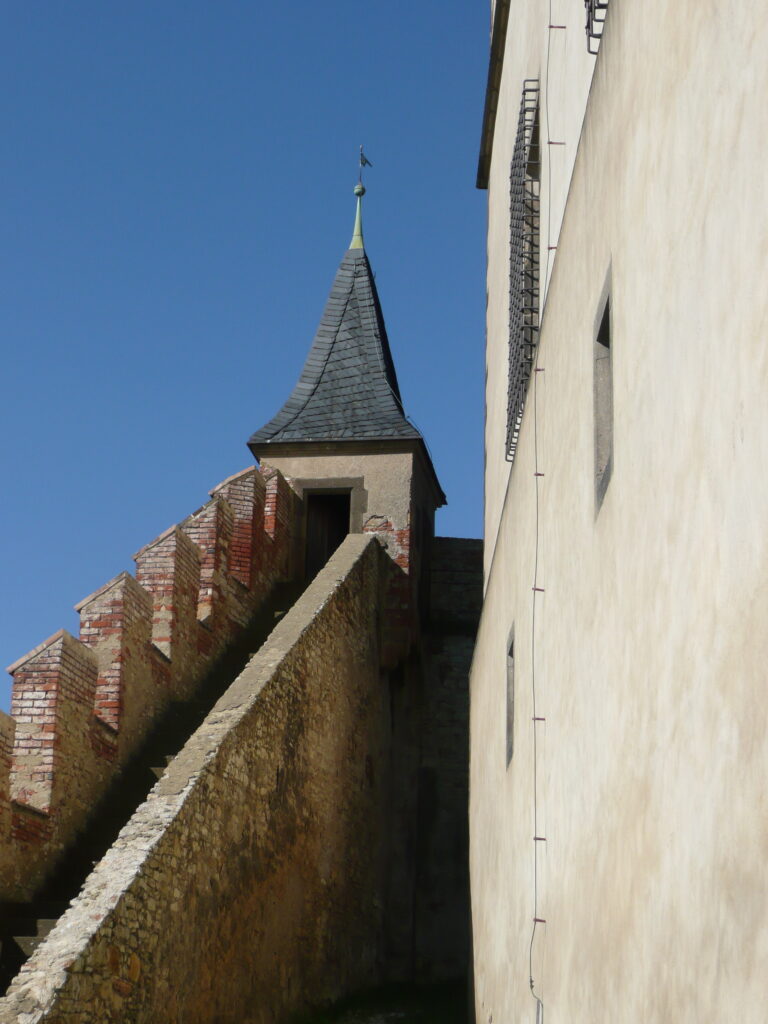
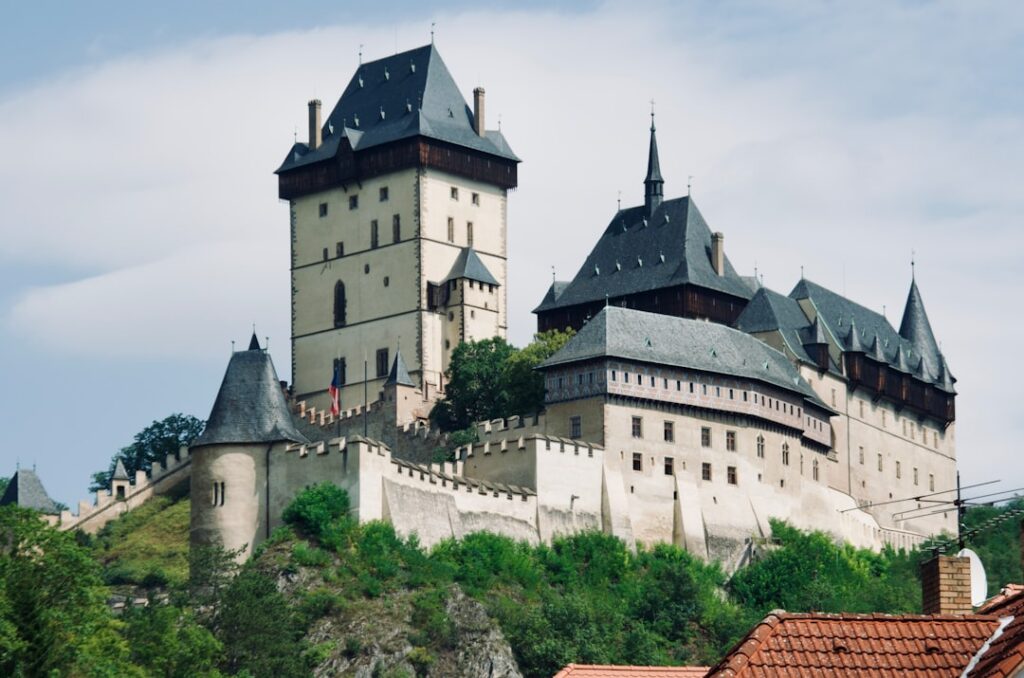
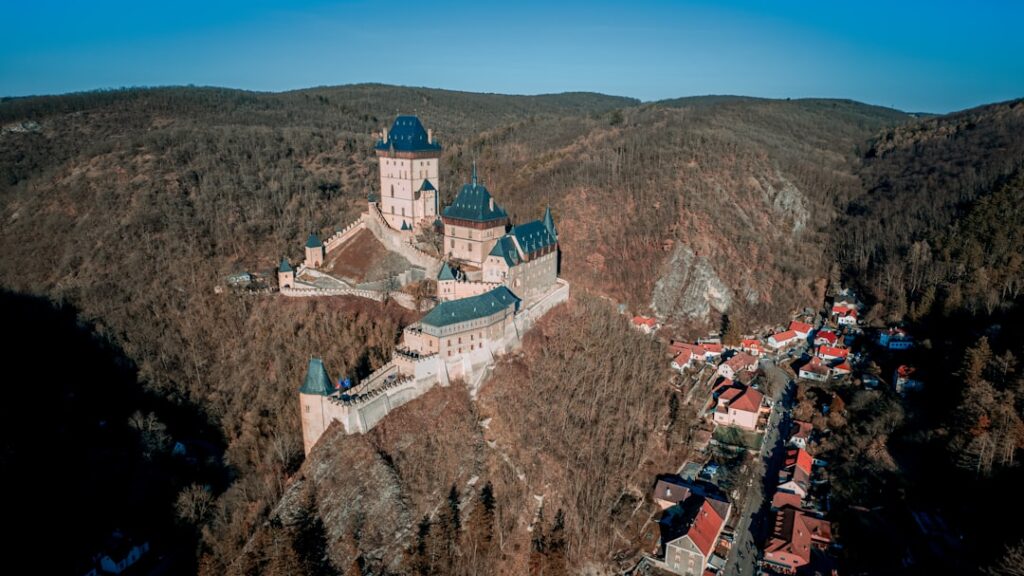
Built by Charles IV in 1348, Karlštejn was designed with one primary purpose: to safeguard the crown jewels and holy relics of the Holy Roman Empire. Charles IV, who ruled as both Holy Roman Emperor and King of Bohemia, created a fortress whose location on a steep hilltop above the Berounka River, combined with its sophisticated fortification system, made it virtually impregnable.
The connection between Karlštejn and the German imperial city of Nuremberg was forged during the Hussite Wars of the early 15th century. As religious conflict engulfed Bohemia and threatened Prague, the Imperial Regalia were evacuated from Karlštejn in 1421. After traveling via Hungary, they arrived in Nuremberg in 1424, where they would remain for 372 years until 1796.
Nuremberg took immense pride in this responsibility, and the city held annual exhibitions where citizens could view the sacred objects. The jewels were kept in the Heilig-Geist-Spital chapel throughout their stay in the city, which became an important center of imperial heritage in medieval Germany.
Architecture Built for Protection
Karlštejn’s design reflected its mission as a treasure vault. The castle consists of three levels, each progressively more secure. The Imperial Palace occupied the lowest level, the Marian Tower stood in the middle, and at the summit, the Great Tower housed the Chapel of the Holy Cross—the ultimate strongroom. This chapel, with walls encrusted with semi-precious stones and featuring 129 panel paintings by Master Theodoric, was where the crown jewels rested behind multiple locked doors.
Access to the Great Tower required passing through a series of fortified gates and courtyards. Charles IV himself reportedly kept one of the keys to the chapel, while trusted officials held the others, ensuring that no single person could access the treasures alone. This security system influenced later fortress design in how sensitive materials were stored.
Legacy of Two Cities
During World War II, as Allied bombing threatened German cities, the Imperial Regalia were moved from Nuremberg to a bunker beneath the city’s castle. American forces discovered them there in 1945 and eventually returned them to Vienna, where they remain today in the Hofburg Palace.
Today, visitors to Nuremberg can explore the city’s imperial past at the Germanic National Museum and the Kaiserburg, where displays explain the city’s role as guardian of the crown jewels. Meanwhile, Karlštejn continues to draw visitors who walk through the same fortified gates that once protected Europe’s most precious symbols of power. The castle’s Chapel of the Holy Cross, though no longer housing the original regalia, still displays replica pieces, allowing visitors to imagine the treasures that once linked this Bohemian fortress to the history of medieval Germany.
Tours & experiences in Germany


Powered by Viator. Some links are affiliate links — we may earn a small commission at no extra cost to you.