Rising from an island in the Trave River just a few kilometers from the Baltic Sea, Lübeck stands as one of northern Germany’s most captivating cities. This UNESCO World Heritage Site was once the capital of the powerful Hanseatic League, and its remarkably preserved medieval core transports visitors back to the glory days when merchant ships laden with salt, herring, and Baltic amber made this city one of Europe’s wealthiest trading powers.
Unlike the fairy-tale castles of Bavaria, Lübeck offers a different kind of German magic—one built on brick Gothic architecture, maritime tradition, and a cultural legacy that includes Thomas Mann, marzipan, and some of the finest examples of medieval urban planning in Europe. For travelers seeking authentic northern German charm away from the usual tourist trail, Lübeck delivers an unforgettable experience.
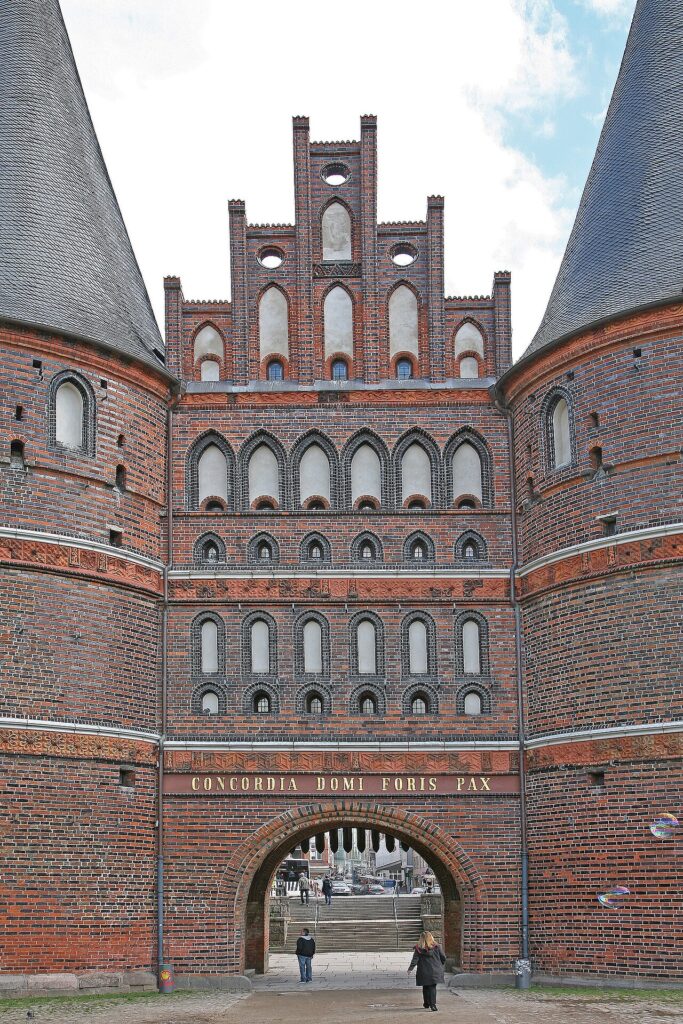
The Holstentor and Medieval Splendor
Your journey into Lübeck begins at the iconic Holstentor, the twin-towered brick gate that has guarded the western entrance to the old town since 1478. This tilting, fairy-tale structure—now housing a museum dedicated to Lübeck’s Hanseatic history—is one of Germany’s most photographed landmarks and graces the back of the old two-euro coin.
Beyond the gate lies the Altstadt (old town), a compact island where seven Gothic church spires pierce the skyline. The magnificent Marienkirche (St. Mary’s Church) towers above the market square with the third-highest brick vault in the world. Inside, you’ll find the haunting bells that fell during the 1942 bombing raids and were left embedded in the floor as a war memorial—a powerful reminder of the city’s resilience.
The Rathaus (Town Hall), with its distinctive black-glazed brick façade and Gothic arcades, has served as the seat of city government for over 800 years. Free guided tours reveal ornate council chambers where Hanseatic merchants once decided the fate of Baltic trade routes. The adjacent market square hosts excellent farmers’ markets on Thursdays and Saturdays, perfect for sampling local specialties.
Marzipan, Mann, and Maritime Heritage
No visit to Lübeck is complete without tasting the city’s most famous export: marzipan. The legendary Café Niederegger, operating since 1806, sits directly on the market square and offers an overwhelming selection of almond confections. Head upstairs to the marzipan museum to see intricate sculptures and learn why Lübeck’s version became Europe’s gold standard—it’s the high almond content and Baltic trade connections that made the difference.
Literature enthusiasts should make a pilgrimage to the Buddenbrookhaus, the childhood home of Nobel Prize-winning author Thomas Mann. This beautifully curated museum explores the Mann family dynasty and the novel Buddenbrooks, which immortalized Lübeck’s merchant class and brought Mann international acclaim. The nearby Günter Grass-Haus celebrates another Nobel laureate with Lübeck connections.
For maritime history, explore the Europäisches Hansemuseum, a state-of-the-art museum that brings 800 years of Hanseatic trade to life through interactive exhibits. The museum connects seamlessly with the medieval Dominican monastery, creating a fascinating dialogue between old and new architecture.
Practical Information: Getting There and When to Visit
Lübeck lies approximately 65 kilometers northeast of Hamburg, making it an easy day trip or worthwhile overnight destination. Direct trains from Hamburg Hauptbahnhof run every 30 minutes and take just 45 minutes. The train station sits just across the river from the old town—a scenic 10-minute walk across bridges brings you to the Holstentor.
If you’re flying into Germany, Hamburg Airport offers the most convenient access, with connecting trains via Hamburg central station. Drivers will find the A1 autobahn provides direct access, though parking in the old town is limited and expensive—use the park-and-ride facilities on the outskirts.
The best time to visit depends on your preferences. Summer (June through August) offers long daylight hours and outdoor café culture, though it’s also the busiest season. The Christmas market, held in several locations throughout the old town from late November through December, transforms Lübeck into a winter wonderland particularly magical given the medieval backdrop.
Spring and early autumn provide ideal visiting conditions—fewer crowds, pleasant weather for walking the cobblestone streets, and better photography light for capturing those iconic brick Gothic buildings.
Insider Tips for Your Visit
Start your day early to photograph the Holstentor without crowds—the morning light from the east illuminates the brick beautifully. Climb the tower of Petrikirche (St. Peter’s Church) for the best panoramic views of the old town’s seven spires and red-tiled rooftops—at just five euros, it’s the city’s best bargain.
Wander the Gängeviertel, the narrow medieval alleyways where workers once lived in tiny courtyards hidden behind the grand merchant houses. These atmospheric passages, particularly around Glockengießerstraße, reveal Lübeck’s authentic character away from the main tourist routes.
For dining, seek out restaurants in the Schiffergesellschaft, a 16th-century sailors’ guildhall with ship models hanging from vaulted ceilings, or enjoy fresh fish along the An der Obertrave waterfront. Don’t miss trying Roter Grütze, the regional red berry dessert that pairs perfectly with vanilla sauce.
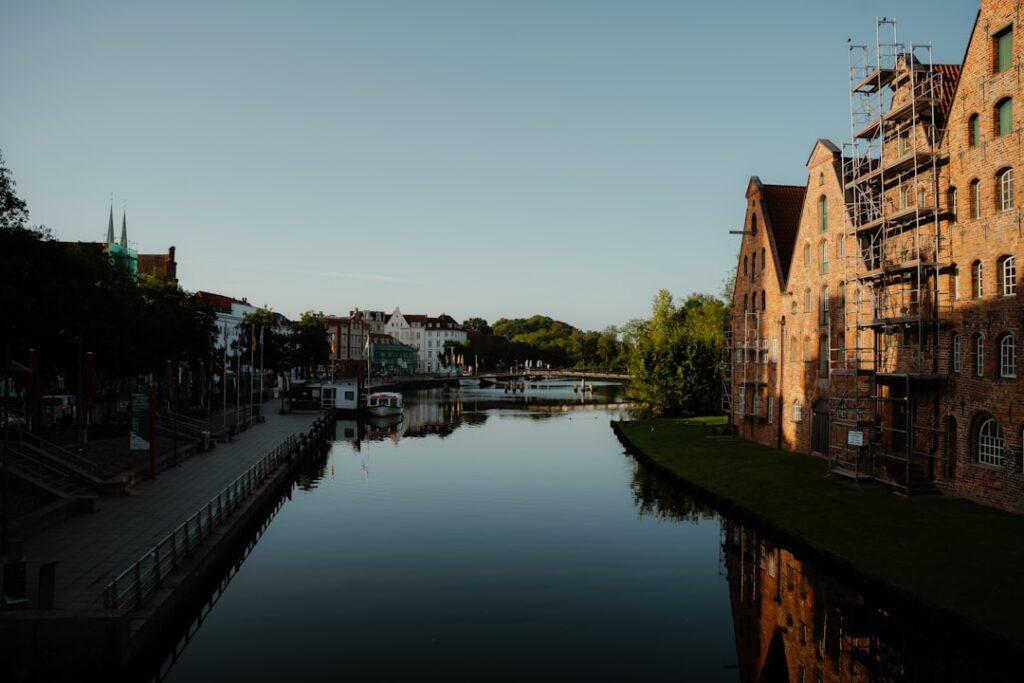
Consider staying overnight—when day-trippers depart, the old town takes on a wonderfully peaceful atmosphere. Evening strolls along the illuminated waterfront, with church spires reflecting in the Trave, offer moments of pure magic that day visitors miss entirely.
Lübeck proves that Germany’s treasures extend far beyond Bavaria’s mountains and Berlin’s boulevards. This Hanseatic queen offers history, culture, and culinary traditions wrapped in some of northern Europe’s finest medieval architecture—all just a short train ride from Hamburg.