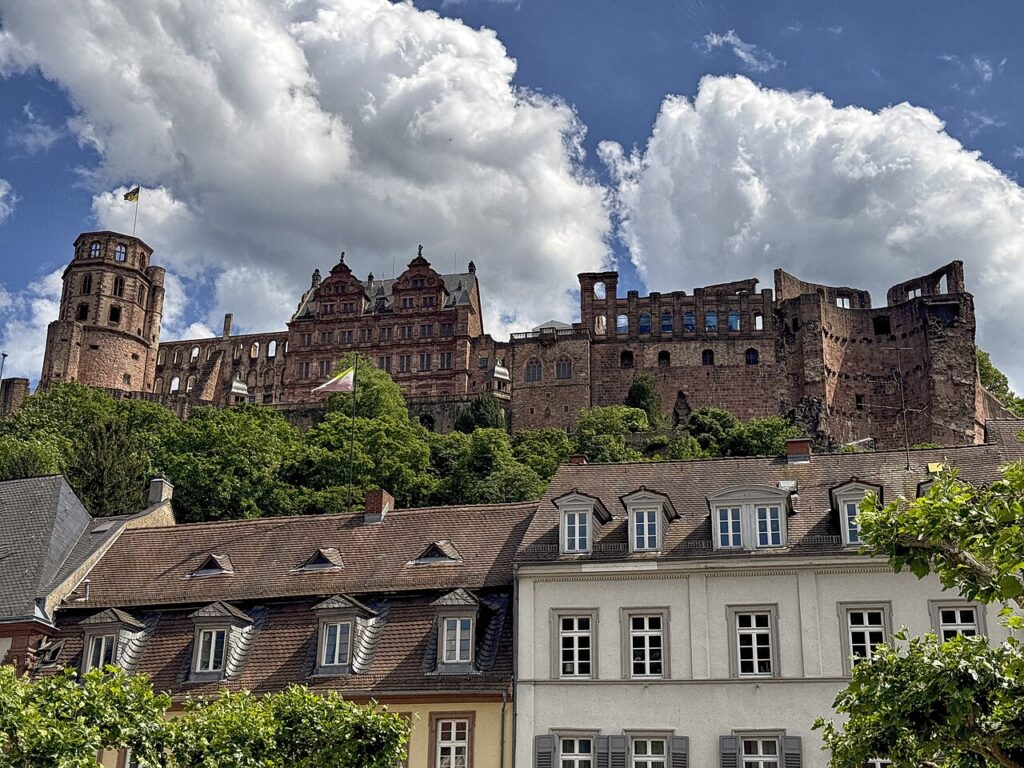
Rising majestically above the Neckar River, the red sandstone ruins of Heidelberg Castle (Heidelberger Schloss) have captured hearts for centuries. Combined with one of Germany’s most enchanting old towns below, Heidelberg represents the quintessential romantic German destination—a place where crumbling Renaissance grandeur meets vibrant student life, and where every cobblestone street seems to whisper tales of poets, philosophers, and princes.
Mark Twain famously wrote that “a ruin must be rightly situated to be effective,” and Heidelberg Castle is positioned to perfection. This partially destroyed fortress-palace has been a tourist magnet since the 19th century, drawing visitors who find its romantic decay more compelling than any perfectly restored palace could ever be.
What Makes Heidelberg Castle Special
Unlike Germany’s many meticulously restored castles, Heidelberg embraces its ruined state—a result of French destruction in the 17th century and subsequent lightning strikes. This romantic ruin represents several architectural periods, from Gothic to Renaissance, creating a fascinating architectural patchwork that spans four centuries.
The castle’s most famous resident is the Great Heidelberg Tun, the world’s largest wine barrel. Built in 1751, this massive cask holds over 58,000 gallons and has become one of the castle’s most photographed curiosities. Legend tells of court jester Perkeo, who supposedly drank enormous quantities of wine and, when finally given water, promptly died.
The German Pharmacy Museum, housed within the castle, offers a fascinating journey through pharmaceutical history with beautifully preserved apothecary equipment, rare medicines, and historic laboratory settings. The Friedrich Building features stunning Renaissance facades with ornate statuary representing the lineage of rulers, while the Ottheinrich Building showcases some of the finest German Renaissance architecture.
The castle gardens, redesigned as the Hortus Palatinus in the early 17th century, were once called the “Eighth Wonder of the World.” Though never completed, the remaining terraces offer breathtaking views across Heidelberg’s old town and the Neckar Valley.
Exploring the Altstadt (Old Town)
Below the castle, Heidelberg’s Altstadt is Germany’s longest pedestrian zone and one of its most beautiful. The Hauptstrasse (Main Street) stretches for over a kilometer, lined with baroque buildings, international boutiques, traditional German restaurants, and lively student bars.
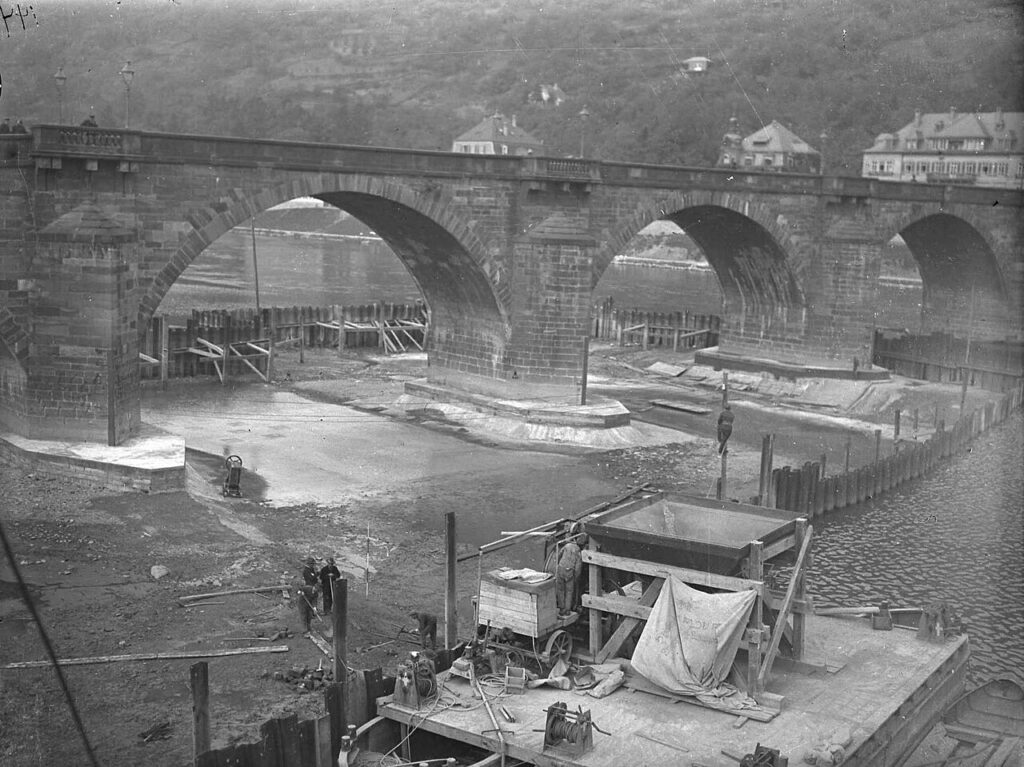
The Old Bridge (Alte Brücke), officially the Karl Theodor Bridge, is an iconic stone bridge dating to 1788. Don’t miss the Bridge Monkey statue at the southern end—local tradition says touching the monkey’s mirror brings wealth, while touching the bronze mice nearby ensures you’ll return to Heidelberg. The bridge gate towers offer excellent photo opportunities, especially at sunset when the castle glows golden above.
Heidelberg University, founded in 1386, is Germany’s oldest and infuses the old town with youthful energy. Visit the Student Prison (Studentenkarzer), where misbehaving students were once confined—many left behind graffiti and drawings that remain preserved today, offering an amusing glimpse into student life from 1778 to 1914.
The Church of the Holy Spirit (Heiliggeistkirche) dominates the Marktplatz with its distinctive red sandstone tower. You can climb the tower for panoramic views, and the market square below hosts farmers’ markets on Wednesdays and Saturdays.
Practical Information for Visiting
Heidelberg is easily accessible from Frankfurt (about 50 minutes by train) and makes an excellent day trip, though staying overnight allows you to experience the old town after tour groups depart. The castle is open daily, with guided tours available in English. Admission includes access to the castle grounds, the Great Tun, and the Pharmacy Museum.
To reach the castle, you can take the Bergbahn (funicular railway) from Kornmarkt, which is an attraction itself and continues higher to the Königstuhl mountain for even more spectacular views. Alternatively, the uphill walk through the steep paths and stairs takes about 15 minutes and offers lovely perspectives along the way.
The best times to visit are late spring (May-June) when the castle gardens bloom, or early autumn (September-October) for mild weather and fewer crowds. Summer brings the famous Castle Illuminations (June, July, and September), when fireworks recreate the castle’s historical destruction—a spectacular evening event viewed best from the Old Bridge or Philosophers’ Walk across the river.
Insider Tips
For the most romantic castle view, cross the Neckar River and walk the Philosophers’ Way (Philosophenweg), a path where university professors once strolled while contemplating. The elevated position provides postcard-perfect panoramas, especially in early morning light.
Purchase the combined ticket that includes castle admission, the funicular, and the Königstuhl summit for the best value. If you’re visiting multiple attractions, consider the HeidelbergCARD for free public transportation and museum discounts.
Skip the crowded restaurants on Hauptstrasse and venture into side streets like Untere Strasse or Steingasse for more authentic dining experiences. Try Schnitzel at a traditional Gasthaus or enjoy local Neckar Valley wines at one of the cozy wine taverns.
Visit the castle courtyard on weekend evenings during summer for classical concerts and theater performances in a magical setting. And don’t rush—Heidelberg rewards those who linger, especially as twilight transforms the castle into a silhouette against the darkening sky, reminding visitors why this has been Germany’s most romantic destination for over two centuries.