
Sylt isn’t your typical German beach destination. This slender island stretching 38 kilometers along the North Sea coast has earned its nickname as Germany‘s “Champagne Island” — a place where Hamburg’s elite have summered for generations, where thatched-roof Frisian houses stand beside sleek modernist villas, and where you’re as likely to spot someone sipping oysters and Riesling as you are to see families building sandcastles on the wide, windswept beaches.
Connected to the mainland by the Hindenburgdamm causeway (trains only — cars must be loaded onto the shuttle), Sylt feels worlds away from the rest of Germany. The island’s unique geography, distinct Frisian culture, and microclimate create an atmosphere that’s simultaneously sophisticated and ruggedly natural.
Westerland and the West Coast Beaches
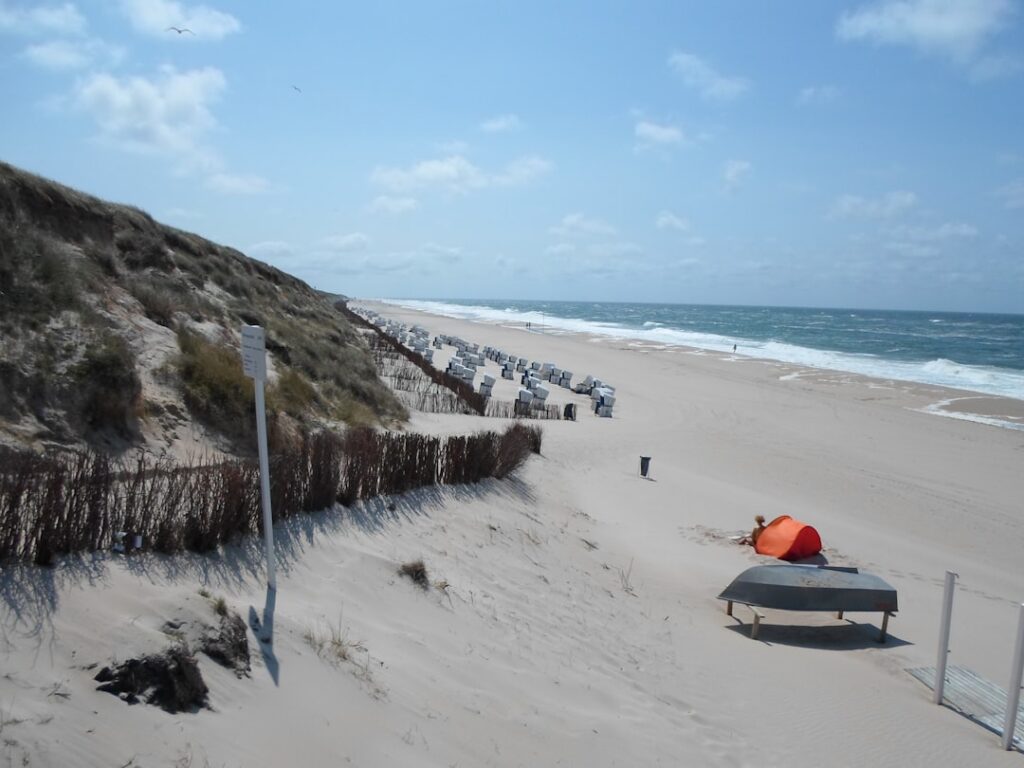
Westerland, Sylt’s main town, serves as the island’s beating heart. The long promenade, lined with beach chairs (the iconic Strandkörbe), stretches for kilometers along some of the finest white sand beaches in Northern Europe. The beach itself is remarkably wide at low tide, giving you plenty of room even during peak summer season.
Don’t miss the Friedrichstraße, Westerland’s main shopping street, where high-end boutiques sit alongside traditional Frisian shops selling local specialties like sea buckthorn products and smoked fish. The contrast perfectly captures Sylt’s dual nature — glamorous yet grounded in island tradition.
For the best beach experience, head north from Westerland to Wenningstedt or Kampen. Kampen’s Rotes Kliff (Red Cliff) offers stunning views from its rust-colored clay cliffs rising 30 meters above the beach. The sunset from here, watching the North Sea turn gold and amber, is unforgettable.
List and the Wild Eastern Shore
The eastern side of Sylt presents a completely different character. List, the northernmost village, sits at the edge of the Wadden Sea, a UNESCO World Heritage site where the tide retreats up to 40 kilometers, exposing the mudflats twice daily. Join a guided mudflat walk (Wattwanderung) to experience this otherworldly landscape — you’ll walk on the sea floor, learn about the unique ecosystem, and might spot seals lounging on distant sandbanks.
List is also home to the famous Ellenbogen peninsula, Germany’s northernmost point. The two lighthouses here mark the spot where the North Sea meets the Baltic approaches. Access requires a small toll (the peninsula is privately owned), but the dramatic views and sense of remoteness make it worthwhile.
The village of Keitum, near List, preserves Sylt’s most beautiful collection of traditional Frisian houses. Wander the narrow lanes past 18th-century captain’s homes with their distinctive thatched roofs and green shutters. The St. Severin Church, dating to the 13th century, contains maritime relics and reminds you that Sylt’s wealth once came from the sea, not tourism.
Island Specialties and Dining
Sylt’s culinary scene punches well above its 20,000-person population. The island boasts several Michelin-starred restaurants, including Söl’ring Hof in Rantum, where chef Jan-Philipp Berner showcases North Sea ingredients with Japanese-influenced precision.
For something more traditional, seek out Fischrestaurant Fisch-Fiete in List, where you can enjoy freshly caught plaice, shrimp, and the local specialty Finkenwerder Scholle (plaice with bacon and shrimp). The harbor restaurants in List serve oysters harvested from the Wadden Sea — they’re smaller and brinier than their French cousins, with a distinctive mineral finish.
Don’t leave without trying Pharisäer, Sylt’s contribution to German coffee culture: strong coffee spiked with rum and topped with whipped cream. Legend says Frisian islanders invented it to hide their drinking from disapproving pastors.
Planning Your Visit
Sylt works best as a three- to four-day escape. Summer (June through August) brings the warmest weather and liveliest atmosphere, but also the highest prices and biggest crowds. May and September offer a sweet spot — milder weather, fewer tourists, and lower accommodation costs, though you’ll need a windbreaker for the ever-present North Sea breeze.
The island is expensive by German standards, so budget accordingly. Booking accommodations well in advance is essential, especially for summer weekends. Consider renting an apartment rather than staying in a hotel — many visitors self-cater using ingredients from local markets.
Bicycles are the best way to explore Sylt’s 200 kilometers of bike paths. Rent one in Westerland and you can reach any point on the island within an hour. The flat terrain makes cycling easy, though the wind can be challenging when heading north.
Getting to Sylt requires taking the Sylt Shuttle (car train) from Niebüll on the mainland, or arriving by regular passenger train (Deutsche Bahn runs direct services from Hamburg). The 35-minute train journey across the causeway, surrounded by sea on both sides, provides a perfect introduction to island life.
Want more insider tips on Germany’s hidden corners and coastal treasures? Subscribe to the Love Germany newsletter — one short story about the real Germany, delivered to your inbox daily.
Tours & experiences in Germany


Powered by Viator. Some links are affiliate links — we may earn a small commission at no extra cost to you.