
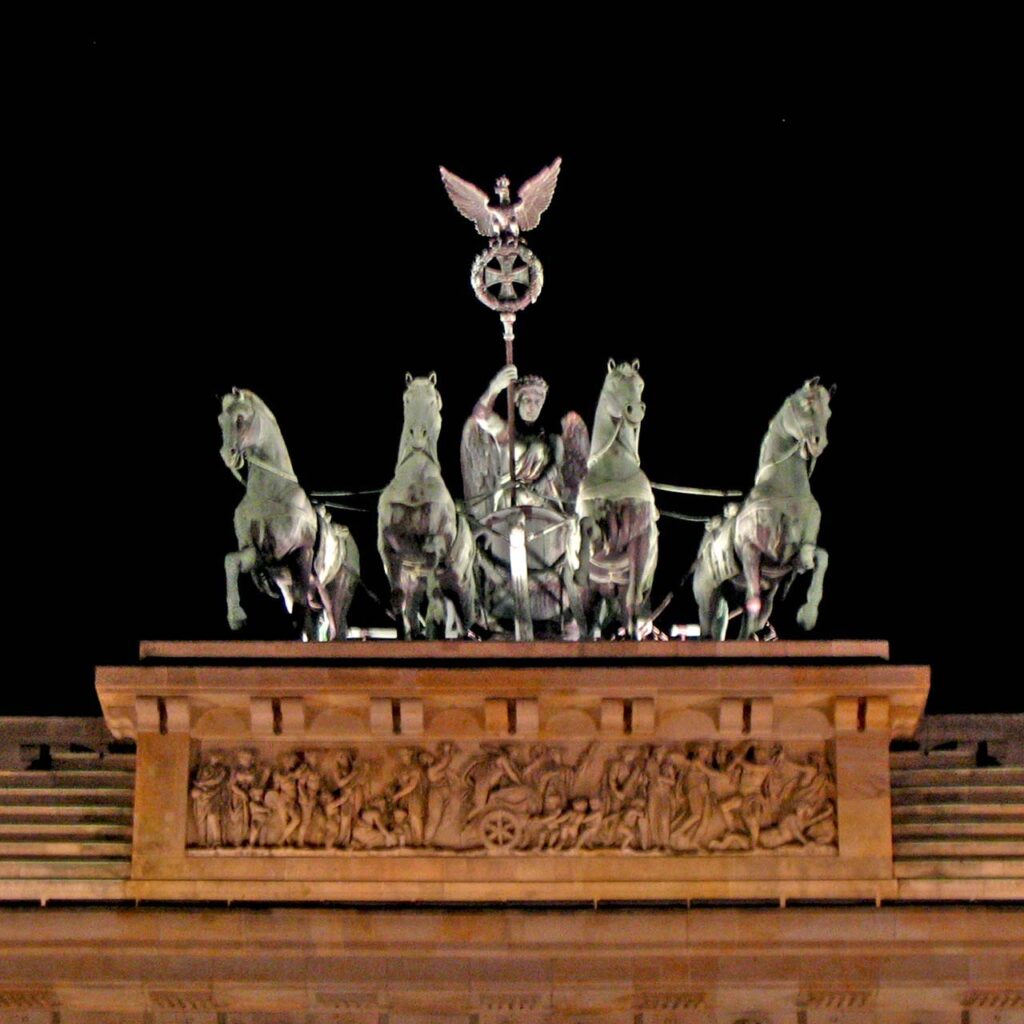
On June 26, 1963, President John F. Kennedy stood before a crowd in West Berlin and declared four words that would echo through history: “Ich bin ein Berliner.” What many don’t realize is that this defining moment of Cold War solidarity came from a president deeply proud of his Irish roots—a heritage that shaped his worldview and his approach to freedom and self-determination.
Kennedy’s visit to West Berlin came at a critical moment. The Berlin Wall had been standing for nearly two years, dividing the city and symbolizing the broader division between East and West. His speech at Rudolph Wilde Platz (now John-F.-Kennedy-Platz) became one of the most powerful addresses of the 20th century, with Kennedy expressing America’s commitment to the freedom of West Berlin and, by extension, all free peoples.
The connection between Kennedy’s Irish heritage and his Berlin speech runs deeper than many realize. Kennedy was acutely aware of his family’s immigrant story—his great-grandparents fled Ireland during the Great Famine, seeking freedom and opportunity in America. This understanding of oppression and the value of liberty informed his passionate defense of Berlin’s freedom. When he spoke of people living “in the defense of freedom in a time of maximum danger,” he drew from a well of understanding rooted in Irish history.
The Irish President Who Captivated Germany
Kennedy’s June 1963 trip to Germany wasn’t limited to Berlin. He also visited Bonn, Frankfurt, and Wiesbaden, where he was greeted by enormous, enthusiastic crowds. Germans connected with Kennedy not just as the leader of the free world, but as a young, charismatic figure who represented hope and renewal.
The president’s Irish-Catholic background also resonated in Germany’s Catholic regions. In a predominantly Protestant America, Kennedy had broken barriers as the first Catholic president, something that German Catholics particularly appreciated. Following his Germany visit, Kennedy made a historic pilgrimage to Ireland, where he visited his ancestral home in County Wexford—a journey that underscored his deep connection to his Irish roots.
A Legacy That Endures
Today, the square where Kennedy delivered his famous speech bears his name, and a large plaque marks the exact spot where he stood. The relationship between Kennedy’s Irish heritage and his German legacy illustrates how immigrant stories shape international relations. Among US Presidents with Irish Heritage, Kennedy remains perhaps the most beloved in Germany, his words still quoted and his visit still remembered as a pivotal moment in German-American relations.
The Rudolph Wilde Platz was renamed John-F.-Kennedy-Platz just three days after his assassination in November 1963, a testament to the profound impact he had on Berlin and Germany. The plaza remains a popular destination for visitors interested in Cold War history and Kennedy’s legacy.
Kennedy’s “Ich bin ein Berliner” speech demonstrated how an American president with strong Irish roots could forge an unbreakable bond with the German people. His understanding of what it meant to struggle for freedom and identity—lessons passed down through his Irish family history—allowed him to speak to Berliners in a way that transcended politics and touched the heart of human dignity and resilience.
Tours & experiences in Germany


Powered by Viator. Some links are affiliate links — we may earn a small commission at no extra cost to you.