

In 1801, German playwright Friedrich Schiller premiered Die Jungfrau von Orleans (The Maid of Orleans) at the Comödienhaus auf der Rannischen Bastei in Leipzig, transforming the story of France’s medieval heroine into one of the most enduring dramatic works in German literature. The play turned Joan of Arc from a historical figure into a Romantic icon, shaping how Germans—and much of Europe—would remember her for generations.
Schiller became captivated by Joan’s story while reading historical accounts in Weimar. His version departed significantly from the historical record: his Joan is a tragic heroine torn between divine mission and earthly love, who dies heroically on the battlefield rather than at the stake. The play was an immediate sensation, performed across German-speaking territories and translated into dozens of languages.
The Weimar Connection
Schiller wrote Die Jungfrau von Orleans during his most productive years in Weimar, where he worked closely with Johann Wolfgang von Goethe at the court of Duke Carl August. The city had become the intellectual heart of German Romanticism, and Joan’s story fit perfectly into the movement’s fascination with medieval heroism, national identity, and the struggle between fate and free will.
The play premiered on September 11, 1801. Schiller’s poetic language elevated Joan into a symbol of courage and self-sacrifice that resonated deeply with German audiences seeking their own national heroes during the Napoleonic period.
A German Joan for a German Age
What made Schiller’s version so powerful was how he reimagined Joan for German sensibilities. His heroine speaks in elevated verse, experiences visions that blend Christian mysticism with classical tragedy, and ultimately redeems herself through a noble death in battle. This Joan was less the peasant girl of historical record and more a figure of Romantic idealism—pure, passionate, and doomed.
The play influenced how Joan was portrayed in art, music, and literature throughout the 19th century. Composers including Tchaikovsky and Verdi drew on Schiller’s version for their own operatic treatments. In Germany, the play became a staple of school curricula and theatre repertoires, ensuring that generations of Germans knew Joan’s story through Schiller’s lens.

Visiting Schiller’s Weimar Today
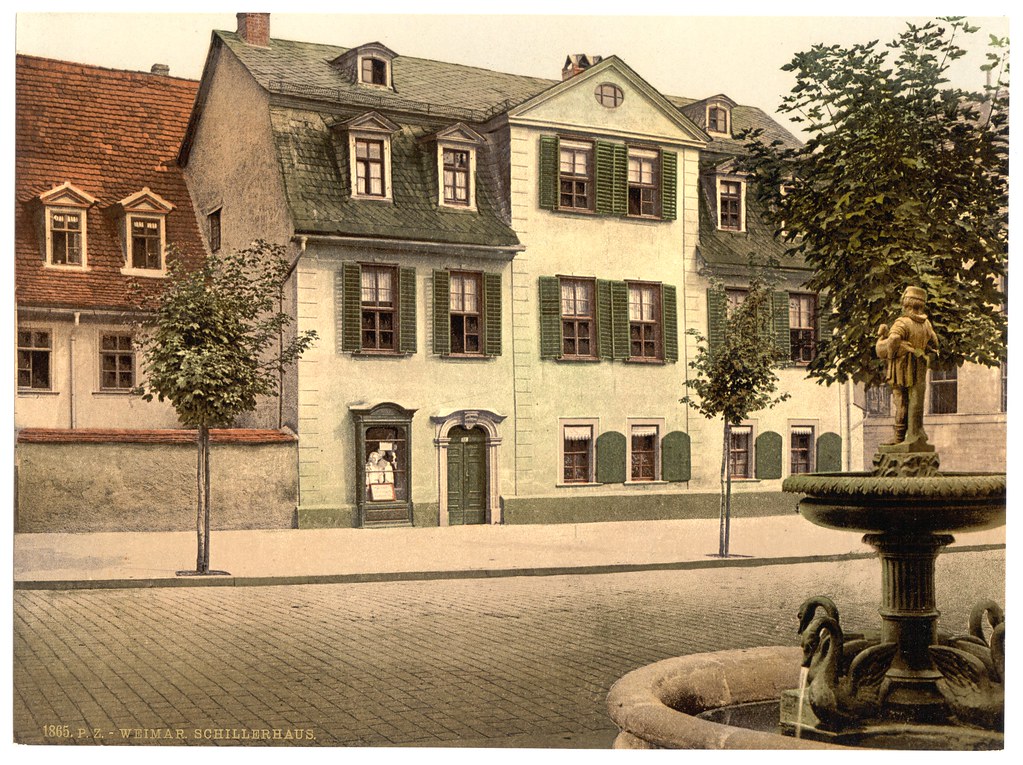
The Deutsches Nationaltheater in Weimar, rebuilt after World War II on the site of the original court theatre, still performs Die Jungfrau von Orleans regularly. Schiller’s former residence on Schillerstraße, now a museum, contains manuscripts and materials related to the play’s composition.
In the Herzogin Anna Amalia Bibliothek, visitors can see some of the historical sources Schiller consulted, including French chronicles that he read in translation. The library’s Rococo hall, restored after a devastating 2004 fire, represents the intellectual world in which Schiller transformed a French saint into a German theatrical legend.
Schiller’s romanticized Joan may bear little resemblance to the historical teenager who led French armies in 1429, but his play ensured her story would live on in German culture—a French heroine forever speaking in German verse, her legend shaped as much by Weimar as by Rouen.
Tours & experiences in Germany


Powered by Viator. Some links are affiliate links — we may earn a small commission at no extra cost to you.