
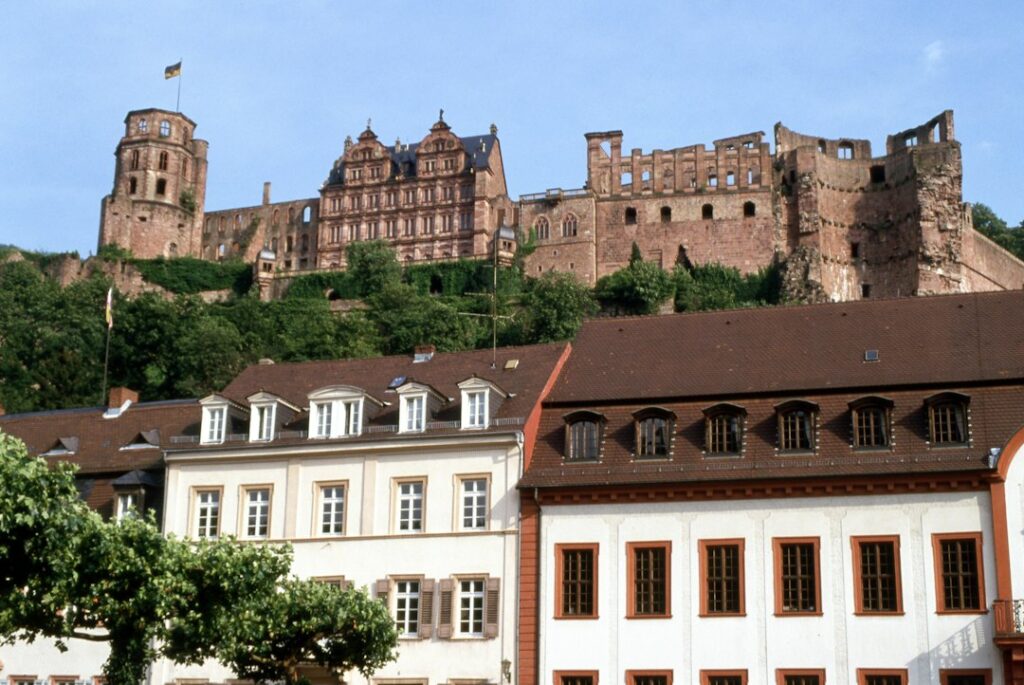
The turbulent life of Mary Queen of Scots is inseparable from Scotland’s most iconic fortresses, but one chapter of her story connects directly to Germany through her son James VI and the powerful marriage alliance he forged with the German Palatinate.
Mary herself was crowned at Stirling Castle as an infant in 1543, and the fortress remained central to Scottish royal power throughout her reign. But it was her son, James VI of Scotland (later James I of England), who would cement a crucial German connection that shaped European Protestant politics for generations.
In 1613, James VI arranged the marriage of his daughter Elizabeth Stuart to Frederick V, Elector Palatine, whose territories were centered in Heidelberg, Germany. This wasn’t merely a dynastic arrangement—it was a deliberate political statement. Frederick was the leading Calvinist prince in the Holy Roman Empire, and the marriage positioned Scotland and England at the heart of the Protestant Union against Catholic Habsburg power.

The wedding took place at Whitehall Palace in London on February 14, 1613, with extraordinary pageantry. Elizabeth Stuart, granddaughter of Mary Queen of Scots, became known as the “Winter Queen” after Frederick briefly accepted the crown of Bohemia in 1619, triggering the Thirty Years’ War that would devastate much of Germany.
The Heidelberg Legacy
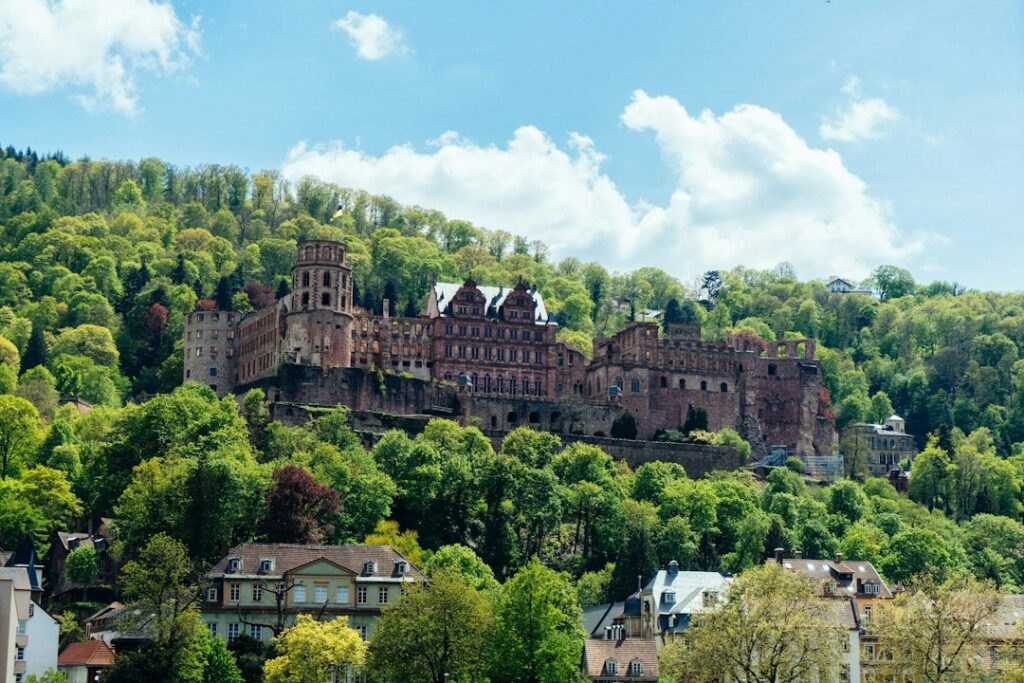
Elizabeth and Frederick made their court at Heidelberg Castle, where Elizabeth became renowned for her cultural patronage and the creation of the famous Hortus Palatinus gardens. Though their reign in Bohemia lasted only one winter (1619-1620), their exile in The Hague became a center of Protestant resistance and cultural achievement.
The couple had thirteen children, and through them, the Stuart-Palatinate bloodline spread throughout European royalty. Most significantly, their youngest daughter Sophia became Electress of Hanover, and her son became King George I of Great Britain in 1714—meaning that every British monarch since has descended from both Mary Queen of Scots and the German Palatinate.
The German-Scottish Royal Thread
This connection meant that the Hanoverian monarchs who ruled Britain from 1714 onward carried both Scottish Stuart blood through Mary Queen of Scots and German Palatinate heritage. George I spoke better German than English, and the court maintained strong ties to Hanover until Queen Victoria’s reign.
Today, Heidelberg Castle preserves the memory of Elizabeth Stuart, the “Winter Queen,” in its museum collections and historical exhibitions. The Elisabeth Gate, built by Frederick as a birthday surprise for his wife in 1615, still stands as a monument to this Scottish-German royal union.
Meanwhile, the story of Mary Queen of Scots and her descendants remains central to Scottish heritage sites. The royal apartments and Great Hall where the infant Mary was crowned continue to draw visitors interested in the dramatic saga of Scotland’s most famous queen—a saga that unexpectedly intertwined Scottish and German history through her granddaughter’s marriage.
The Stuart-Palatinate alliance ultimately failed in its immediate political goals—Frederick and Elizabeth never regained the Bohemian throne, and the Thirty Years’ War brought catastrophe to the German lands. Yet their descendants eventually inherited the British throne, creating a lasting Anglo-German royal connection that traces directly back through Mary Queen of Scots to the heart of Scottish history.
Tours & experiences in Germany


Powered by Viator. Some links are affiliate links — we may earn a small commission at no extra cost to you.