
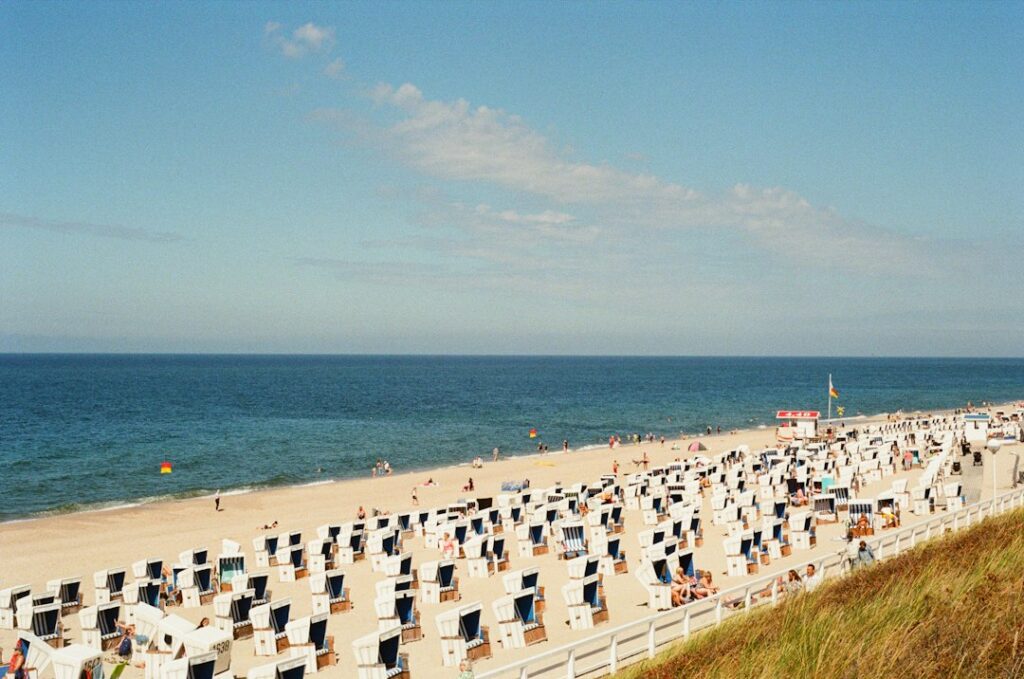
Sylt rises from the North Sea like a sliver of dune grass and sand, stretching 38 kilometers north from the German mainland. It’s Germany‘s most glamorous island—a place where Hamburg’s well-heeled escape for weekends, where thatched Frisian houses sit behind sea walls, and where you can eat fresh oysters while watching kite surfers carve through the waves.
Despite its reputation as a playground for the wealthy, Sylt rewards day-trippers who come for the beaches, the light, and the distinct character of Germany’s northernmost inhabited land. The island is connected to the mainland by the Hindenburgdamm causeway, accessible only by train—your car rides the rails with you, or you arrive on foot and explore by bike.
Getting There and Getting Around
The Deutsche Bahn car-train shuttle (Sylt Shuttle) departs from Niebüll on the mainland every 30 minutes during peak times, taking 35 minutes to reach Westerland, Sylt’s main town. If you’re not bringing a car, regular trains from Hamburg take about three hours. Book early for better fares.
Once on the island, buses connect all villages, but renting a bike in Westerland is the best way to explore. The island is flat, and dedicated bike paths run the length of Sylt, threading through dunes and heathland. You can cover the seven kilometers from Westerland to Kampen in under 30 minutes, with the wind at your back.
The Beaches and the Dunes
Sylt’s western coast is one unbroken beach—40 kilometers of fine sand facing the open North Sea. The beach at Westerland is the most accessible, backed by a promenade and beach chair rental stands. Those iconic wicker Strandkörbe face the water in neat rows, offering wind protection and a front-row seat to the surf.
For quieter stretches, head north to Wenningstedt or south to Hörnum. The Ellenbogen peninsula at Sylt’s northern tip is worth the ride—two lighthouses stand watch over the dunes, and on clear days you can see the Danish island of Rømø across the water. The landscape here feels elemental: sand, sea grass, sky.
The eastern side of the island, facing the Wadden Sea, offers a completely different character. At low tide, the mudflats stretch for kilometers, and guided mudflat walks (Wattwanderungen) are available from List. Wear old shoes and prepare to get muddy—this UNESCO World Heritage landscape is alive with crabs, worms, and migrating birds.
Villages Worth Your Time
Westerland is functional rather than charming, but it’s your base for transport and bike rentals. The real character lives in the smaller villages.
Keitum, on the island’s east side, is the prettiest. Frisian houses with thatched roofs and green-painted doors line narrow lanes. The St. Severin Church dates to the 13th century, and the cemetery headstones tell stories of sea captains and their widows. The Altfriesisches Haus museum shows how islanders lived in centuries past—low ceilings, tile stoves, and cramped but cozy rooms.
Kampen, to the north, is where the money gathers. Boutiques and champagne bars occupy converted farmhouses, and the red cliff (Rotes Kliff) offers views over the beach from 30 meters up. The Uwe Dune, at 52 meters, is Sylt’s highest point. Climb the wooden steps for a panorama that takes in the entire island.
List, at the northern tip, is a working fishing village with ferry connections to Denmark. The harbor here serves the best fish sandwiches on the island—Gosch and Brasserie are both reliable for fried fish, shrimp, and cold beer on the dock.
What to Eat
Sylt takes its seafood seriously. Oysters from the Wadden Sea are a local specialty, served raw with lemon at Dittmeyer’s Austern-Compagnie in List or at Sansibar in Rantum, the island’s most famous beach restaurant. Expect to queue at Sansibar in summer.
For something more traditional, try Friesentorte—a layered cake with cream and prunes—at one of Keitum’s cafés. Labskaus, the sailor’s hash of corned beef, potatoes, and beetroot, appears on menus across the island, often with a fried egg and pickled herring on the side.
Fish soup (Fischsuppe) is another staple, rich with North Sea catch and served with dark bread. The island’s restaurants range from Michelin-starred dining rooms to simple Fischbuden (fish shacks) along the harbor—both are worth your time, depending on your mood and budget.
Timing Your Visit
Summer brings crowds and high prices. The island is at its most vibrant from June through August, but also at its most expensive. May and September offer milder weather, fewer tourists, and better deals on accommodation if you decide to stay overnight.
Winter on Sylt is stark and beautiful. The beaches empty out, storms roll in from the Atlantic, and the island returns to the locals. Christmas markets pop up in Westerland and Keitum in December, and New Year’s Eve on the beach has become a tradition—bring warm clothes and a thermos of Glühwein.
Low tide times matter if you’re planning mudflat walks or want to see the Wadden Sea at its most dramatic. Check tide tables before you go.
Practical Notes
Sylt is expensive. Budget accordingly for meals, bike rentals, and beach chair hire. Bring cash—some smaller establishments don’t take cards.
The wind is constant. Layers, a windbreaker, and sunglasses are essential even in summer. Sunscreen matters more than you think—the UV reflects off sand and water.
If you’re day-tripping, start early. The first train from Niebüll gives you a full day to explore before the last train back in the evening. Alternatively, base yourself in Westerland for a night and take your time—the island reveals more when you’re not watching the clock.
For more insider tips and hidden corners across Germany, subscribe to the Love Germany newsletter. One short story a day, straight to your inbox.
Tours & experiences in Germany


Powered by Viator. Some links are affiliate links — we may earn a small commission at no extra cost to you.