For centuries, the German city of Aachen and the Dutch city of Maastricht have existed as twin poles of culture, commerce, and faith along one of Europe’s most historically fluid borders. Separated by just 30 kilometers, these two cities share far more than geography—they share a intertwined past shaped by Charlemagne’s empire, Catholic heritage, and cross-border cooperation that continues to this day.
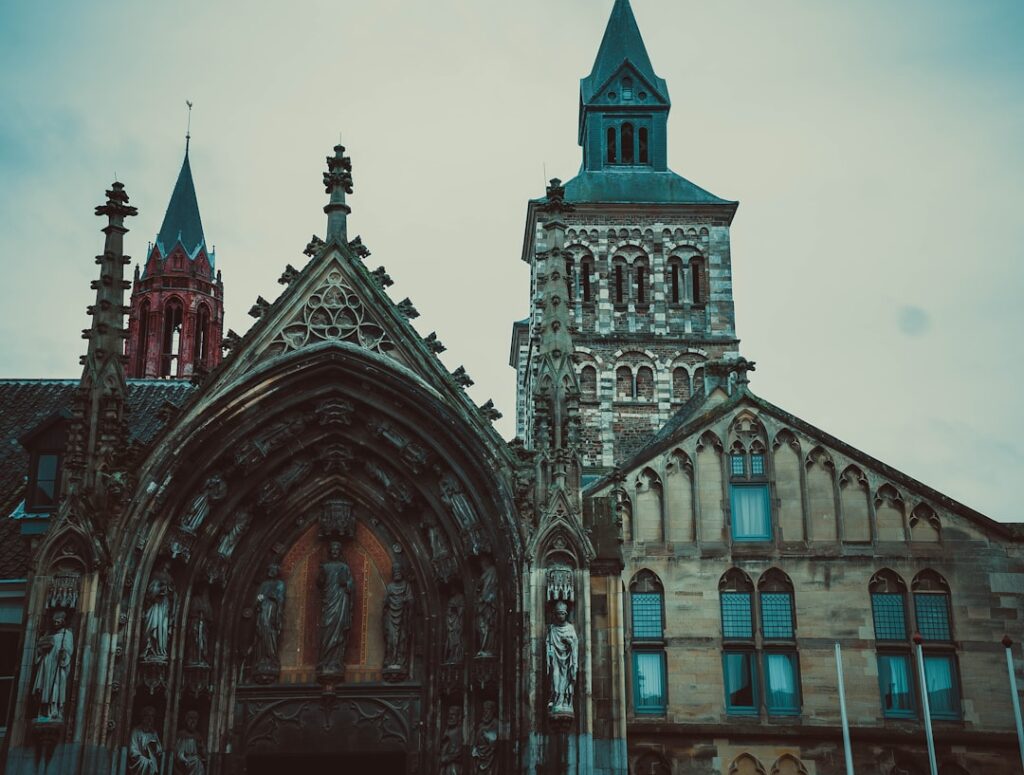
Aachen, known as Aix-la-Chapelle in French and Aken in Dutch, served as the heart of Charlemagne’s vast Carolingian Empire in the 8th and 9th centuries. It was here that the emperor built his palace and chapel, and where German kings were crowned for over 600 years. But Charlemagne’s influence extended well beyond Aachen’s walls. Maastricht, already an important Roman settlement, became a key bishopric city within his empire, and the Basilica of Saint Servatius in Maastricht stands as one of the oldest churches in the Netherlands, with foundations dating to the 6th century.
A Shared Catholic Identity
Unlike much of the Netherlands, which became predominantly Protestant after the Reformation, Maastricht remained staunchly Catholic—a characteristic it shares with Aachen and the broader Rhineland region of Germany. This shared faith created cultural and institutional ties that persisted even as political borders shifted. Both cities became centers of pilgrimage, religious education, and Catholic tradition in their respective countries.
The proximity and shared heritage meant that for centuries, residents moved freely between the two cities for trade, marriage, and work. Many families in the border region have roots on both sides, speaking regional dialects that blend German and Dutch linguistic features.
Modern Cross-Border Cooperation
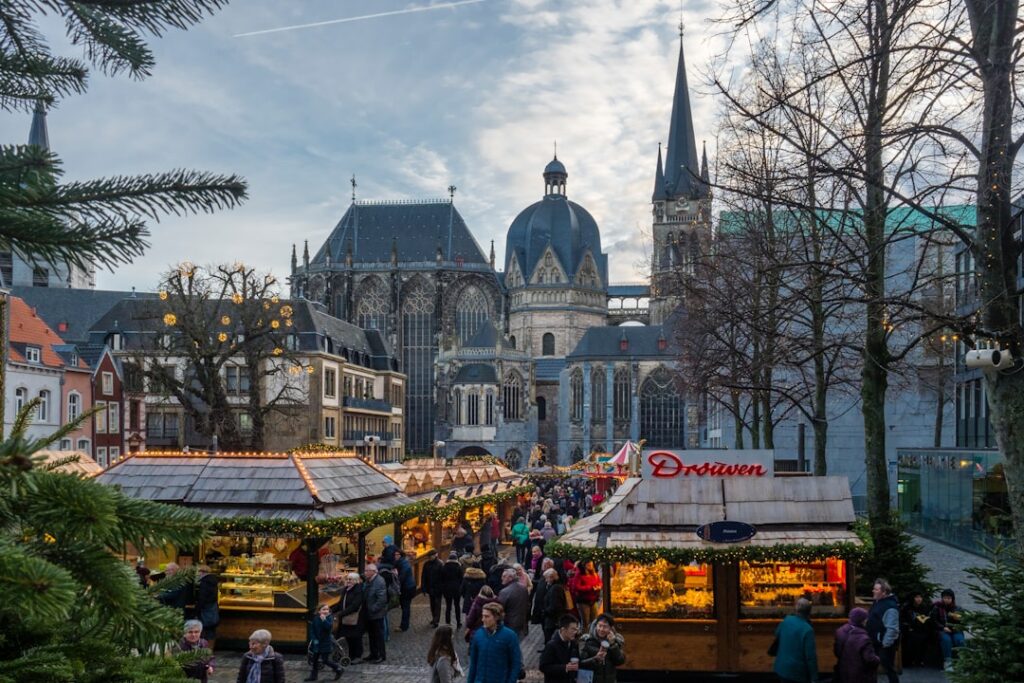
Today, Aachen and Maastricht anchor the Euregio Meuse-Rhine, one of Europe’s most successful cross-border regions, which also includes the Belgian city of Liège. This cooperation zone, established in 1976, facilitates everything from public transportation and healthcare to education and cultural programming across national boundaries.
Students from Aachen’s renowned RWTH technical university frequently visit Maastricht for its vibrant student culture and historic cafés. Meanwhile, residents of Maastricht often cross into Germany for shopping, medical services, or to explore Aachen’s UNESCO World Heritage cathedral. The two cities are connected by regular train and bus services, making the journey between them a matter of minutes.
Carnival and Cultural Exchange
Both Aachen and Maastricht celebrate Carnival with characteristic Rhineland exuberance—a tradition that sets them apart from their more Protestant northern neighbors. The pre-Lenten festivities feature parades, costumes, and revelry that draw on centuries of shared Catholic culture. Carnival societies from both cities regularly participate in each other’s celebrations, strengthening bonds between communities.
For visitors exploring the Dutch-German borderlands, the connection between these two cities offers a fascinating glimpse into how European identity transcends modern national boundaries. A trip to Maastricht from Germany reveals not a foreign country, but a continuation of the Rhineland’s cultural landscape—where the same Romanesque architecture, Catholic traditions, and even similar dialects create a sense of regional unity that predates the nation-state itself.
Tours & experiences in Germany


Powered by Viator. Some links are affiliate links — we may earn a small commission at no extra cost to you.