
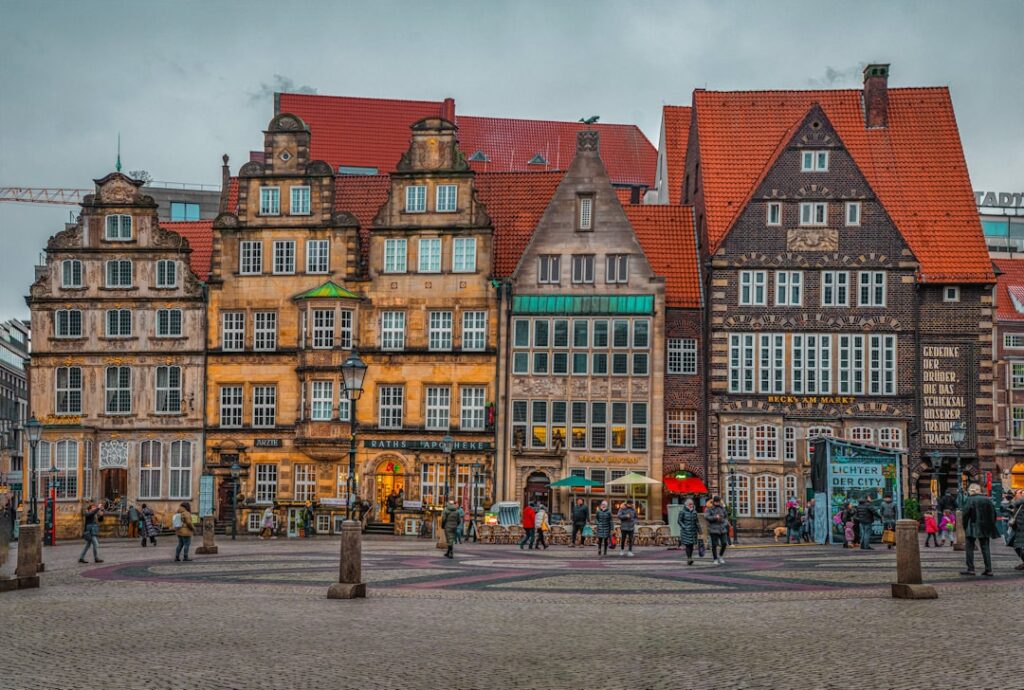
In the northwest corner of Germany, where the Weser River flows toward the North Sea, sits Bremen—a city that seamlessly blends medieval charm with maritime heritage. While often overshadowed by its larger neighbors Hamburg and Berlin, Bremen offers visitors an intimate glimpse into Germany’s Hanseatic past, along with one of the country’s most beloved fairytale landmarks. The UNESCO-listed Town Hall and Roland statue anchor the magnificent Market Square, but it’s the whimsical bronze Town Musicians statue and the winding lanes of the Schnoor Quarter that truly capture travelers’ hearts.
This Free Hanseatic City has maintained its independent spirit for over 1,200 years, and today that character shines through in its impeccably preserved architecture, vibrant cultural scene, and the palpable pride locals take in their heritage. Whether you’re tracing the footsteps of the Brothers Grimm’s famous animal heroes or getting delightfully lost in narrow medieval alleyways, Bremen rewards those who take the time to explore its treasures.
The Town Musicians: Bremen’s Most Photographed Residents
On the western side of the Town Hall, you’ll find Bremen’s most famous attraction: a bronze sculpture depicting a donkey, dog, cat, and rooster standing on each other’s backs. Created by sculptor Gerhard Marcks in 1953, this statue immortalizes the characters from the Brothers Grimm fairytale Die Bremer Stadtmusikanten (The Town Musicians of Bremen). According to legend, touching the donkey’s front legs while making a wish brings good luck—which explains why those hooves shine brighter than the rest of the statue.
The fairytale tells of four aging animals who escape their farms to become musicians in Bremen. Though they never actually reach the city in the story, Bremen has adopted them as beloved symbols. You’ll find musicians-themed souvenirs throughout the city, from postcards to chocolates, and even a second, more whimsical sculpture on the opposite side of the building where the animals appear to be climbing through a window.
The surrounding Market Square (Marktplatz) deserves equal attention. The Gothic and Renaissance-style Town Hall, along with the imposing Roland statue, form a UNESCO World Heritage Site. The Roland, standing 5.5 meters tall, has symbolized Bremen’s freedom and market rights since 1404. Local legend says Bremen will remain free as long as Roland stands—so important is this statue that during World War II, it was encased in concrete for protection.
The Schnoor Quarter: Medieval Bremen Frozen in Time
Just a ten-minute walk from the Market Square lies the Schnoor, Bremen’s oldest and most enchanting neighborhood. Dating back to the 13th century, this warren of narrow lanes contains the city’s smallest and most picturesque houses, many no wider than a modern car. The name “Schnoor” comes from the old German word for string or cord, referring either to the rope-makers who once worked here or the way the houses line up like beads on a string.
Wandering through Schnoor feels like stepping back six centuries. The timber-framed houses, painted in cheerful colors, lean companionably against one another along cobblestone streets barely wide enough for two people to pass. Originally a poor fishermen’s quarter, Schnoor has transformed into Bremen’s most charming shopping and dining district. Art galleries, craft boutiques, jewelry shops, and cozy cafés now occupy the historic buildings, but strict preservation laws ensure the medieval character remains intact.
Don’t miss the Böttcherstraße, a 100-meter-long street connecting the Market Square to the Weser River. Rebuilt in the 1920s with distinctive Expressionist brick architecture, it houses museums, shops, and the famous Glockenspiel that plays daily between noon and 6 PM, with hand-painted Meissen porcelain bells chiming while wooden panels rotate to show scenes of transatlantic explorers and adventurers.
Planning Your Visit: Practical Information
Bremen is easily accessible by train, with frequent connections from Hamburg (one hour), Hanover (one hour), and other major German cities. The compact historic center is perfectly suited for exploration on foot—you can walk from the train station to the Market Square in about 15 minutes. The city also offers an efficient tram network, though most attractions cluster within a walkable area.
The best time to visit Bremen is from May through September, when pleasant weather allows for comfortable outdoor exploration and café-sitting in the Market Square. However, the Christmas season transforms Bremen into a winter wonderland, with one of Germany’s most atmospheric Christmas markets filling the historic center. The market runs from late November through December 23rd, and the Schlachte-Zauber medieval market along the Weser riverfront is particularly enchanting.
Plan to spend at least a full day in Bremen to properly appreciate both the main sights and the leisurely atmosphere. If you have more time, consider adding a visit to the Universum Science Center, taking a harbor tour along the Weser, or exploring the trendy Viertel (Quarter) district with its alternative shops, street art, and vibrant nightlife.
Insider Tips for the Perfect Bremen Experience
Arrive at the Market Square early in the morning, ideally before 9 AM, to photograph the Town Musicians statue without crowds. The soft morning light also beautifully illuminates the Town Hall’s ornate façade. For the best views of the city, climb the 265 steps of St. Petri Cathedral’s south tower—the panorama over the red-roofed old town and toward the Weser River is worth every step.
In the Schnoor, seek out the Bremer Bonbon Manufaktur, where you can watch traditional hard candies being made by hand and sample flavors like Bremen coffee or Beck’s beer. For an authentic meal, try Labskaus, a traditional North German sailor’s dish, or Knipp, a local specialty made from oats, pork, and spices. The Ratskeller, located in the Town Hall’s cellar, boasts Germany’s oldest wine cellar still in use and serves excellent regional cuisine in a historic setting.
Consider purchasing the Bremen Card, which offers unlimited public transportation and discounts at museums and attractions. Most importantly, take time to simply wander without a specific destination—Bremen’s magic lies in stumbling upon a hidden courtyard, a quirky shop, or a perfectly preserved medieval corner that makes you feel like you’ve traveled back in time.
Tours & experiences in Germany


Powered by Viator. Some links are affiliate links — we may earn a small commission at no extra cost to you.