
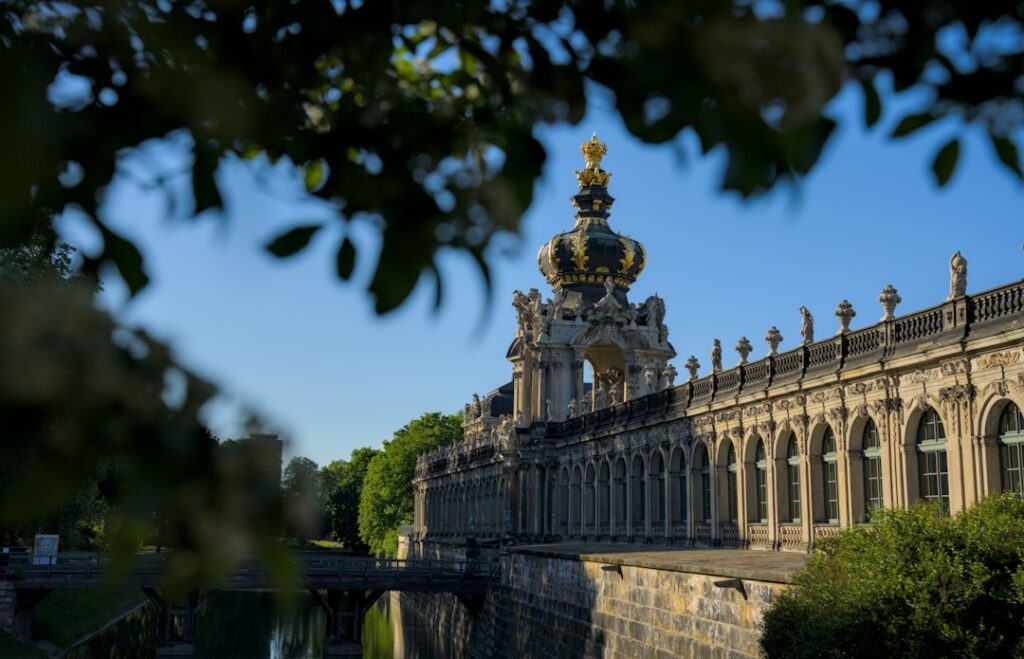
In the heart of Dresden, a city renowned for its architectural splendor, stands the Zwinger Palace—a breathtaking Baroque complex that represents the pinnacle of Saxon artistry and ambition. Built in the early 18th century under Augustus the Strong, Elector of Saxony and King of Poland, this architectural masterpiece combines ornate sandstone pavilions, fountains, sculptures, and manicured gardens into a harmonious celebration of power, culture, and beauty. Today, the Zwinger houses some of Germany’s finest museums, making it an essential destination for anyone visiting Dresden or exploring Germany’s cultural heritage.
Unlike a traditional palace residence, the Zwinger was conceived as an orangery and festival ground for the Saxon court’s lavish celebrations. Its very name, derived from the German word for the fortified area between a city’s inner and outer walls, hints at its origins on Dresden’s former defensive perimeter. What Augustus created, however, transcended military function to become a temple of the arts—a vision that endures three centuries later.
Architectural Splendor and Historic Significance
The Zwinger’s architectural design, primarily the work of Matthäus Daniel Pöppelmann with sculptural contributions by Balthasar Permoser, showcases Baroque architecture at its most exuberant. The complex forms a rectangular courtyard surrounded by single-story galleries connecting elaborate pavilions at each corner and side. The most famous of these is the Crown Gate (Kronentor), topped with a gleaming golden Polish crown that symbolizes Augustus’s dual monarchy.
Every surface tells a story through sculpture. Permoser’s figures—depicting gods, nymphs, satyrs, and allegorical representations—seem to dance across the sandstone facades. The Nymphenbad (Nymph’s Bath), a grotto-like fountain courtyard, features some of the most playful and sensual sculptures in German Baroque art. These weathered sandstone figures, perpetually splashed by cascading water, create an atmosphere of mythological enchantment.
The Zwinger suffered catastrophic damage during the February 1945 bombing of Dresden but has been painstakingly restored to its former glory. This restoration itself represents one of Germany’s most impressive post-war cultural achievements, making a visit here both an aesthetic and historical experience.
World-Class Museums Within
The Zwinger complex houses three exceptional museums that justify spending an entire day exploring. The Old Masters Picture Gallery (Gemäldegalerie Alte Meister) occupies the Semper Gallery wing and contains one of the world’s finest collections of European paintings from the 15th to 18th centuries. Raphael’s Sistine Madonna, perhaps the gallery’s most famous work, draws art lovers from around the globe, but you’ll also find masterpieces by Vermeer, Rembrandt, Titian, and Canaletto among the nearly 750 paintings on display.
The Porcelain Collection (Porzellansammlung) showcases Augustus the Strong’s obsession with “white gold.” This extraordinary collection features approximately 20,000 pieces of Asian and Meissen porcelain, making it one of the most significant ceramics collections worldwide. The displays illustrate both the European fascination with Asian craftsmanship and the birth of European porcelain production at nearby Meissen.
The Royal Cabinet of Mathematical and Physical Instruments contains historic scientific instruments, clocks, and globes that reveal the Renaissance and Baroque fascination with measuring and understanding the world. The collection includes some of the most beautiful and precise instruments ever crafted, where science meets art.
Planning Your Visit
The Zwinger sits in Dresden’s Altstadt (Old Town), within easy walking distance of the Semperoper, Frauenkirche, and Dresden Castle. You can reach Dresden by train from Berlin (2 hours), Prague (2.5 hours), or Munich (5.5 hours). From Dresden’s main train station, tram lines 4, 8, and 9 will take you directly to the Postplatz stop, just steps from the Zwinger’s entrance.
The complex is open Tuesday through Sunday from 10:00 AM to 6:00 PM (closed Mondays except holidays). A combination ticket covering all three museums costs approximately €14 for adults, with discounts available for students and families. While you can purchase tickets on-site, booking online in advance during peak tourist season (May through September) can save waiting time.
Spring and early fall offer the most pleasant visiting conditions, with mild weather perfect for enjoying the outdoor courtyards and fewer crowds than the summer peak. However, the Zwinger possesses unique charm in every season—winter visits offer the possibility of seeing the courtyard dusted with snow, creating a magical atmosphere, while summer concerts and theater performances in the courtyard add cultural dimension to your visit.
Insider Tips for an Unforgettable Experience
Arrive when the museums open at 10:00 AM to experience the Old Masters Gallery with fewer visitors, particularly if viewing the Sistine Madonna is a priority. The smaller rooms can become crowded by midday, diminishing the contemplative experience these masterworks deserve.
Don’t rush through the courtyards to reach the museums. Take time to walk the galleries, examine Permoser’s sculptures up close, and simply absorb the architectural harmony. The courtyard is free to enter, so you can return in the evening when the museums close to enjoy the space in a different light—literally, as the illuminated Zwinger after dark offers spectacular photography opportunities.
Consider combining your Zwinger visit with the nearby Dresden Castle (Residenzschloss), whose treasury, the Historic Green Vault, complements the Zwinger’s collections perfectly. A full-day ticket covering multiple Dresden State Art Collections locations offers excellent value for museum enthusiasts.
Finally, the Zwinger Café in the southwest corner provides a civilized spot for coffee and Saxon cake with views of the courtyard—ideal for processing the artistic overload and planning your next Dresden adventure. The Zwinger isn’t just a museum; it’s a total Baroque experience that captures the ambition, artistry, and resilience of Dresden itself.
Tours & experiences in Germany


Powered by Viator. Some links are affiliate links — we may earn a small commission at no extra cost to you.