The border between Germany and the Netherlands is one of Europe’s most permeable—a place where languages blend, families span two nations, and surnames tell stories that refuse to respect cartographic boundaries. Nowhere is this more evident than in the region where Aachen meets Maastricht, where centuries of shared history have created a unique cultural landscape written in family names.
The city of Aachen, Germany’s westernmost metropolis, sits barely thirty kilometres from Maastricht. For centuries, this proximity has meant more than geography—it has shaped identities, economies, and families. Merchants, craftsmen, and farmers moved across what is now international territory, marrying, settling, and establishing family lines that would carry names reflecting both German and Dutch linguistic traditions.
Many surnames common in both Aachen and the Dutch province of Limburg reveal this shared heritage. Names like Janssen, Claessen, and Peeters appear with equal frequency on both sides of the border, testament to patronymic naming traditions that transcended emerging national identities. The surname Beckers—from the German and Dutch word for baker—is ubiquitous in both regions, reflecting the essential trade that sustained medieval communities.
The Linguistic Borderland
What makes the Aachen-Limburg surname landscape particularly fascinating is the linguistic fluidity. The local dialect spoken in Aachen, known as Öcher Platt, shares significant similarities with the Limburgish dialect across the border. This linguistic continuum meant that surnames evolved organically, sometimes taking on slightly different spellings depending on which side of the border a family settled, but retaining recognizable roots.
The surname Schmitz, one of the most common in the Aachen region, derives from the German word for blacksmith. Its Dutch equivalent, Smeets or Smits, appears frequently in Dutch surnames from Limburg. Both variations coexisted in border communities, with individual families sometimes adopting different spellings across generations or even between siblings, depending on where they established themselves.
Religious and Economic Ties
The shared Catholic heritage of Aachen and Limburg also influenced surname patterns. Unlike much of the Netherlands, which became predominantly Protestant during the Reformation, Limburg remained staunchly Catholic—just like Aachen and the Rhineland. This religious continuity facilitated marriages and migrations between the regions, with families moving to find work in textile mills, coal mines, or the emerging industries of the nineteenth century.
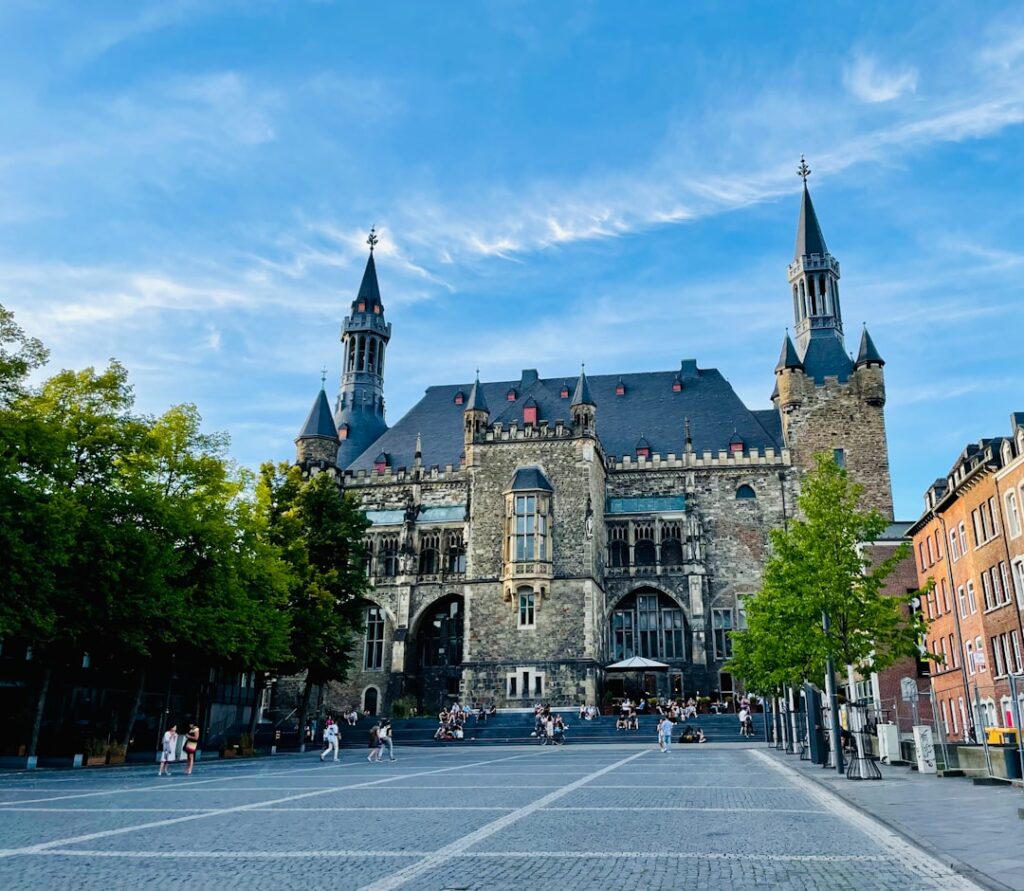
Mining families settled wherever work was available, caring little for national boundaries. The cultural and historical sites that dot both regions today stand as monuments to this shared history.
Modern Connections
Today, the Aachen-Maastricht-Liège region markets itself as the Euregio Meuse-Rhine, a cross-border metropolitan area where over 3.9 million people live and work across three countries. Thousands of residents commute daily across the German-Dutch border, continuing centuries-old patterns of movement and exchange. Genealogists researching family histories in this region quickly discover that their ancestors rarely respected modern borders, with parish records, civil registrations, and family trees spanning both nations.
The surnames that appear in both Aachen’s city directories and Limburg’s family histories remind us that borders are recent inventions, while families, trades, and communities have deeper, more enduring roots. In the space between Aachen and Maastricht, German and Dutch identities have always been less about separation than about the rich complexity of living in between.
Tours & experiences in Germany


Powered by Viator. Some links are affiliate links — we may earn a small commission at no extra cost to you.