
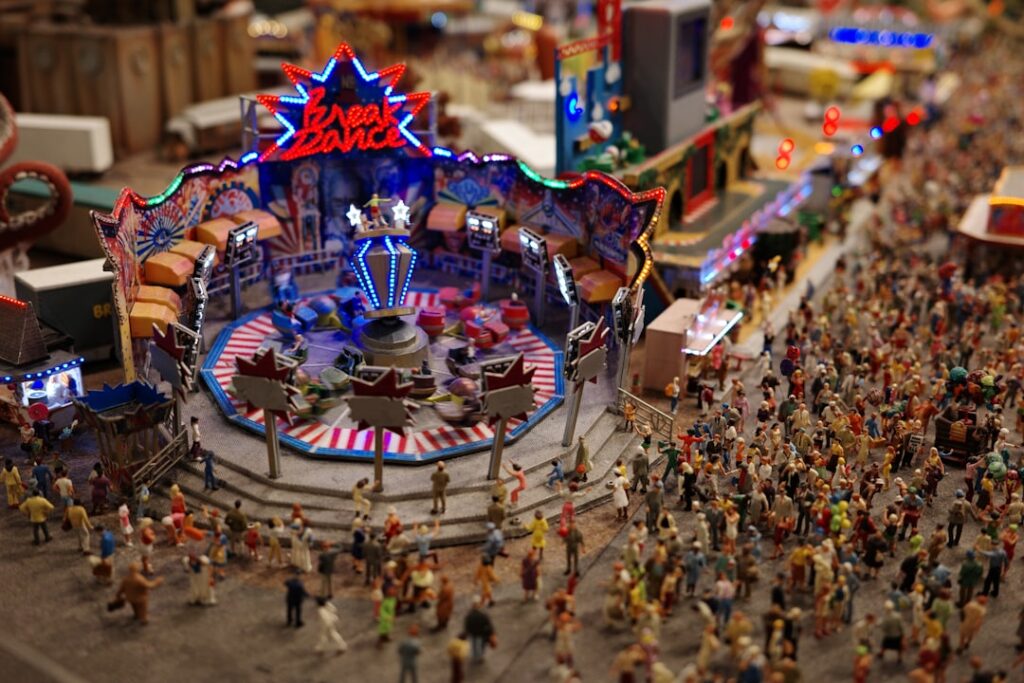
Tucked away in Hamburg’s historic Speicherstadt warehouse district, Miniatur Wunderland is far more than a simple model train set. This extraordinary attraction holds the Guinness World Record as the largest model railway in the world, but calling it just a railway hardly does it justice. With over 16,000 meters of track, more than 1,000 trains, 4,300 buildings, and 263,000 figurines spread across 1,490 square meters, this is a meticulously crafted miniature universe that captivates visitors of all ages.
Since opening in 2001, Miniatur Wunderland has become one of Germany’s most visited attractions, drawing over 1.4 million visitors annually. What makes it truly special isn’t just its size, but the astonishing attention to detail and the seamless integration of technology that brings these tiny worlds to life in ways you never imagined possible.
A Journey Through Miniature Worlds
Miniatur Wunderland is organized into distinct sections, each representing different regions and countries with remarkable accuracy and creativity. The journey begins in Germany, where you’ll find detailed recreations of Hamburg itself, the Harz mountains, and Bavaria complete with alpine villages and the famous Oktoberfest. The level of detail is staggering—look closely and you’ll spot a tiny crime scene being investigated, a nudist beach, or a rock concert with thousands of miniature fans.
The Austria and Switzerland sections showcase the Alps in all their glory, with ski resorts, mountain railways, and avalanche demonstrations that occur every few minutes. Scandinavia features Norwegian fjords and Swedish forests, while the America section includes a sprawling Las Vegas with illuminated casinos and the Grand Canyon rendered in impressive detail.
One of the most popular sections is the miniature airport, a technological marvel featuring more than 40 aircraft that actually take off and land on a six-meter runway. Every six minutes, planes taxi, accelerate, and disappear into the wall before emerging again for landing—a feat that required years of engineering to perfect.
The Italy section, added in 2016, captures the essence of the Mediterranean with the Amalfi Coast, Rome’s Colosseum, and Pompeii. Most recently, Monaco and Provence were added, featuring the famous Monte Carlo casino and lavender fields of southern France. The creators continuously expand the exhibit, with new sections regularly under development.
The Magic of Day and Night
One of Miniatur Wunderland’s most enchanting features is its day-night cycle. Every 15 minutes, 385,000 LED lights simulate nightfall across the entire exhibition. Watching the sun set over these miniature worlds is magical—cities illuminate, cars switch on their headlights, and you’ll notice details impossible to see during daylight. The tiny nightclub in Hamburg comes alive with colorful lights, while the Alps glow with the lights of evening skiers returning to their lodges.
Don’t miss the interactive buttons scattered throughout the exhibition. Press them to trigger scenes: a fire brigade responding to an emergency, a chocolate factory beginning production, or a thunderstorm over the Swiss mountains. These interactive elements make the experience engaging for children and adults alike, though competition for the buttons can be fierce during peak hours.
Planning Your Visit
Miniatur Wunderland is located in Block D of the Speicherstadt, Hamburg’s UNESCO World Heritage warehouse district. The easiest way to reach it is by taking the U3 subway line to Baumwall station, followed by a five-minute walk. Alternatively, the U1 to Meßberg station is equally convenient. If you’re staying in Hamburg’s city center, it’s a pleasant 20-minute walk along the harbor.
Booking tickets online in advance is absolutely essential. The attraction operates on a timed-entry system, and walk-up tickets are rarely available, especially during school holidays and weekends. Tickets typically cost around €20 for adults, with discounts for children, students, and families. Book at least several days ahead, or even weeks during summer months and the Christmas season.
Plan to spend at least two to three hours exploring—serious enthusiasts can easily spend four or five hours discovering new details. The exhibition can become crowded, so visiting during weekday mornings or late afternoons generally offers a better experience. Tuesday and Wednesday mornings are typically the quietest times.
The best time of year to visit is during the darker months from November to February, when the day-night cycles are even more impressive, and the Christmas markets section is fully decorated. However, this is also peak season, so booking well in advance is crucial.
Insider Tips for Your Visit
Arrive at your scheduled time slot but don’t rush through. Unlike many timed attractions, once you’re inside, you can stay as long as you like until closing time. Bring binoculars or use your smartphone camera’s zoom function—you’ll discover countless hidden details, from miniature marriage proposals to tiny garden gnomes in unexpected places.
Visit the behind-the-scenes area included with your ticket, where you can watch technicians working on new sections and learn about the complex technology that keeps everything running. The workshop area offers fascinating insights into how these intricate scenes are created.
The on-site café offers decent food and drinks, but for a more memorable experience, explore the surrounding Speicherstadt district after your visit. The historic red-brick warehouses house excellent restaurants, coffee shops, and other attractions like the Hamburg Dungeon and the Speicherstadt Museum.
Finally, resist the temptation to photograph everything. Instead, take time to simply observe and appreciate the incredible craftsmanship. Look for the small stories unfolding in every corner—a tiny thief being chased by police, a wedding party at a church, or workers going about their daily routines. These miniature narratives are what transform Miniatur Wunderland from an impressive technical achievement into something truly magical.
Tours & experiences in Germany


Powered by Viator. Some links are affiliate links — we may earn a small commission at no extra cost to you.