
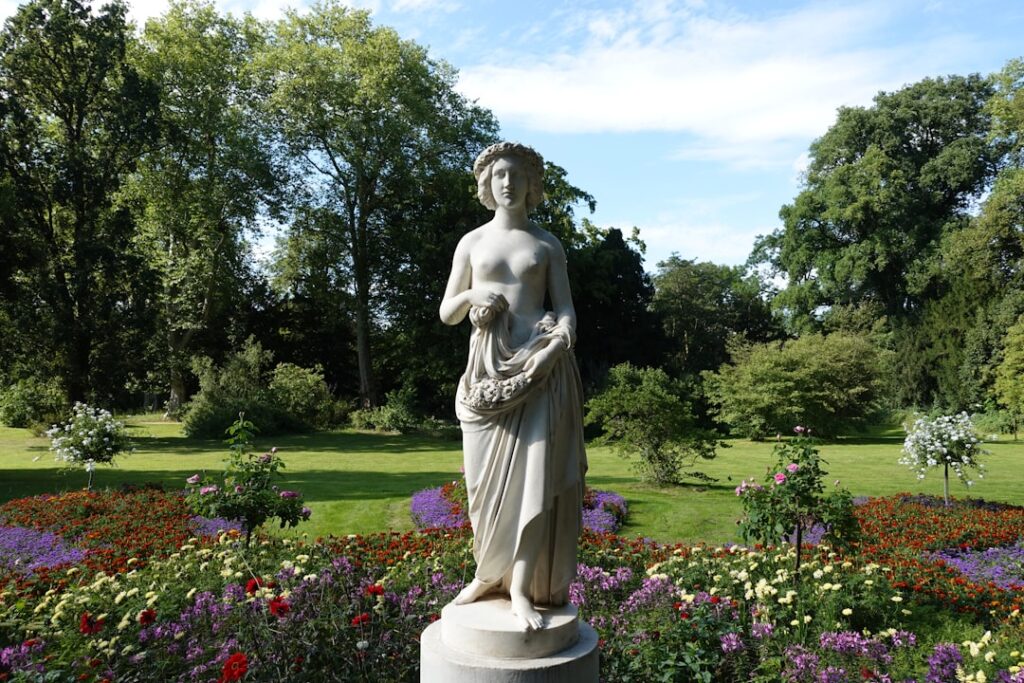
Just beyond Berlin’s bustling streets lies a world of rococo splendor that transports visitors to the golden age of Prussian royalty. Sanssouci Palace, nestled in the charming city of Potsdam, stands as Frederick the Great’s most intimate creation—a summer retreat where the philosopher-king could escape court formalities and indulge his passion for art, music, and intellectual discourse. The name itself, meaning “without care” in French, perfectly captures the spirit of this enchanting estate that has captivated visitors for nearly three centuries.
Built between 1745 and 1747, Sanssouci represents the personal vision of Frederick II, who sketched the initial designs himself. Unlike the imposing grandeur of other European palaces, this single-story rococo gem was designed for pleasure and privacy. The palace crowns a terraced hillside adorned with six levels of vineyard terraces—a striking architectural feature that remains one of the most photographed views in Germany. Today, Sanssouci Park, a UNESCO World Heritage Site since 1990, encompasses nearly 300 hectares of landscaped gardens, fountains, temples, and additional palaces that reflect two centuries of Prussian history.
The Palace and Its Magnificent Interiors
The intimacy of Sanssouci Palace surprises many first-time visitors. With just twelve rooms, this was never meant to accommodate large courts or ceremonies—it was Frederick’s personal sanctuary. The interior showcases the finest rococo artistry of the 18th century, with elaborate stucco work, gilded decorations, and murals that create an atmosphere of refined elegance.
The highlight is undoubtedly the Marble Hall, a circular domed room inspired by the Pantheon in Rome, where Corinthian columns of white Carrara marble support a magnificent cupola. Frederick’s Concert Room reveals his passion for music—he was an accomplished flutist and composer—with ornate gilded decorations and paintings by Antoine Pesne. The library and study provide intimate glimpses into Frederick’s intellectual life, while the guest rooms housed luminaries like Voltaire, who spent three years at Sanssouci engaging in philosophical debates with his royal host.
Access to the palace interior requires a timed-entry ticket, and tours are limited to preserve the delicate furnishings. English audio guides provide excellent context, though the visual splendor speaks for itself. Photography inside is prohibited, so take time to absorb each room’s exquisite details.
Exploring the Sprawling Park Grounds
While the palace itself can be toured in about an hour, Sanssouci Park deserves at least half a day of exploration. The expansive grounds feature multiple attractions, each with its own character and historical significance. The New Palace, built after the Seven Years’ War, dwarfs Sanssouci itself with over 200 rooms and served as the main residence for later Prussian royalty and German emperors.
The Chinese House, a circular garden pavilion adorned with gilded figures and palm-tree columns, exemplifies the 18th-century European fascination with Asian aesthetics. The Roman Baths complex, despite its name, served as a guesthouse and tea pavilion, while the Orangery Palace’s Italian Renaissance-inspired architecture houses a collection of Raphael copies and offers panoramic views from its twin towers.
Don’t miss the Picture Gallery, Germany’s oldest surviving museum building, which displays Frederick’s impressive collection of Baroque paintings, including works by Caravaggio and Rubens. The park’s geometric French-style gardens gradually transition into romantic English landscape design, reflecting changing aesthetic philosophies over the decades. Numerous fountains, including the Great Fountain in front of the palace, create refreshing focal points throughout the grounds.
Planning Your Visit: Practical Information and Insider Tips
Sanssouci lies just 30 minutes from central Berlin by S-Bahn (S7 line to Potsdam Hauptbahnhof), making it an ideal day trip. From the station, bus 695 runs directly to the park, or enjoy a pleasant 20-minute walk through Potsdam’s historic center. Alternatively, regional trains reach Potsdam in about 25 minutes from Berlin Hauptbahnhof.
The palace is open Tuesday through Sunday from April through October (10am-5:30pm) and with reduced hours November through March (10am-4:30pm, closed Mondays year-round). Purchase tickets online in advance, especially during summer months and weekends, as daily visitor numbers are strictly limited to protect the interiors. A combination ticket covering multiple buildings offers better value if you plan to explore beyond the main palace.
Spring and early summer (May through June) are ideal for visiting when the gardens burst with color and temperatures are pleasant. September and October offer beautiful autumn foliage with fewer crowds than peak summer. Winter visits have their own charm, with the palace taking on a serene, contemplative atmosphere, though some park buildings close during colder months.
Arrive early to beat tour groups and enjoy the terraced vineyards in morning light—the view from the top terrace down to the Great Fountain is spectacular before crowds arrive. Wear comfortable walking shoes, as the park’s vastness requires considerable strolling. Pack a picnic to enjoy in the designated areas, or visit one’s of Potsdam’s charming cafés in the Dutch Quarter after your palace visit.
For photography enthusiasts, the terraced vineyards and palace façade photograph beautifully from the bottom of the hill, especially in late afternoon when golden light illuminates the yellow palace walls. While you cannot photograph inside, the park grounds offer endless opportunities for stunning shots.
Sanssouci Palace delivers a perfect blend of architectural beauty, historical significance, and natural splendor. Whether you’re drawn by Frederick the Great’s fascinating legacy, rococo art and design, or simply the peaceful gardens, this Prussian paradise offers an unforgettable journey into Germany’s royal past.
Tours & experiences in Germany


Powered by Viator. Some links are affiliate links — we may earn a small commission at no extra cost to you.