Standing at the heart of Aachen’s historic Markt, it’s easy to forget that the Netherlands lies nearby to the west. This proximity has shaped centuries of shared history between Germany’s ancient imperial city and the Dutch border region, creating a unique cross-border area where language, culture, and family ties have flowed across what are now national boundaries.
The connection between Aachen and the nearby Dutch territories runs deep into the medieval period. When Charlemagne established his palace in Aachen in the late eighth century, the surrounding regions formed part of a broader Carolingian realm that would later be divided by national borders.
A Linguistic and Cultural Border Zone
The border region between Aachen and the Netherlands represents one of Europe’s fascinating linguistic transition zones. The dialects spoken in both areas reflect centuries of intermarriage, trade, and shared community life. Many Dutch surnames from Limburg are virtually identical to those found in the Aachen region, reflecting common origins in medieval occupations, geographical features, and patronymic traditions that transcended what would later become national borders.
The Drielandenpunt: Where Three Nations Meet
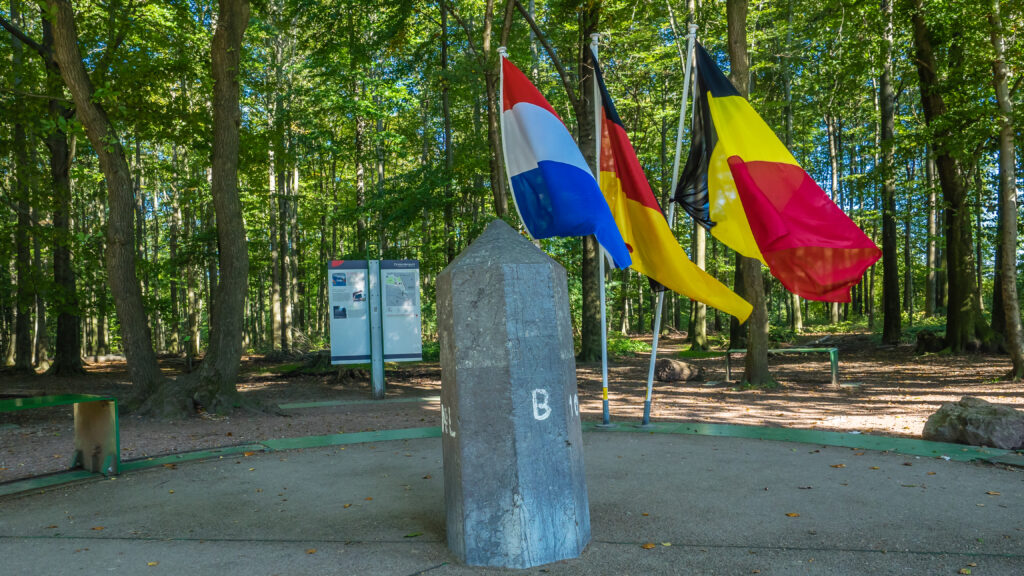
Perhaps nowhere is this cross-border heritage more tangible than at the Drielandenpunt, the point where Germany, the Netherlands, and Belgium converge. Located near Aachen, this symbolic meeting point attracts visitors who can literally stand in three countries at once. The nearby Vaalserberg, at 322.4 metres, is the highest point in mainland Netherlands and offers panoramic views across the tri-border region.
For centuries before modern nation-states solidified these boundaries, people in this region moved freely for work, worship, and family obligations. Families on both sides maintained ties that had nothing to do with nationality.
Modern Cross-Border Cooperation
Today, Aachen and the Limburg region participate in the Euregio Maas-Rhine, one of Europe’s oldest and most successful cross-border cooperation zones. Established in 1976, this partnership facilitates everything from public transport connections to shared healthcare services and educational programmes. Residents on both sides benefit from integrated bus routes, mutual recognition of emergency services, and cultural initiatives that celebrate their shared heritage.
The RWTH Aachen University maintains strong research partnerships with Maastricht University, and thousands of Dutch students study in Aachen while German professionals commute daily to jobs in Limburg. The Christmas markets, carnival celebrations, and cultural festivals on both sides of the border draw visitors from the entire region, reinforcing bonds that have existed for centuries.
For travellers exploring this corner of Europe, the Aachen-Limburg connection offers a unique perspective on how history, geography, and culture can create ties stronger than any political boundary. Whether tracing family heritage, exploring linguistic traditions, or simply enjoying the region’s rich cultural tapestry, this cross-border zone stands as a living testament to a shared past that continues to shape the present.
Tours & experiences in Germany


Powered by Viator. Some links are affiliate links — we may earn a small commission at no extra cost to you.