
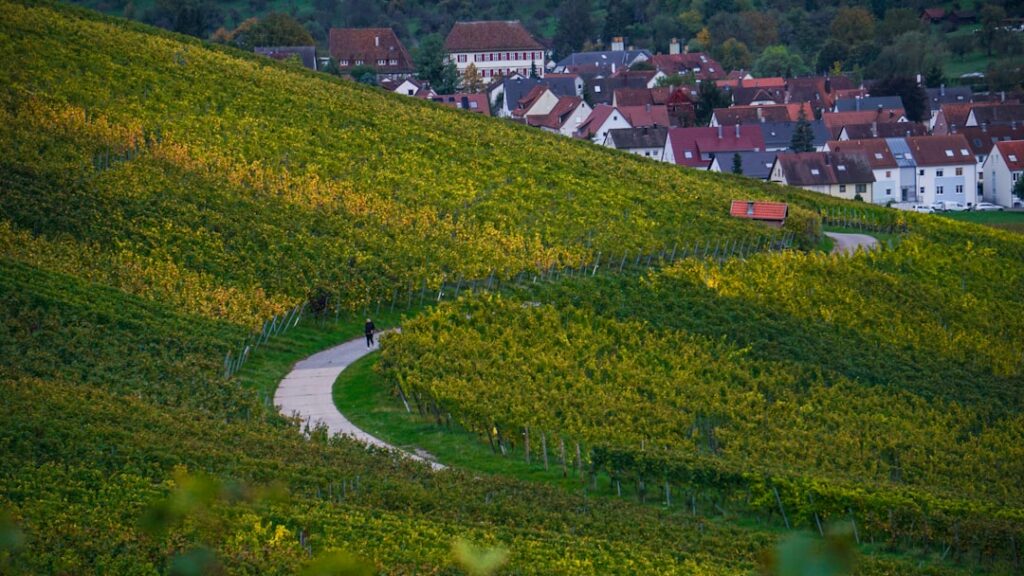
Most travelers know the Rhine and Moselle valleys, but Germany’s smallest wine region remains wonderfully under the radar. The Saxon Wine Route stretches just 34 miles along the Elbe River between Dresden and Meißen, yet it packs remarkable charm into its compact geography. With steep terraced vineyards dating back nearly 900 years, this is where winemaking meets genuine adventure.
The region produces less than one percent of Germany’s wine, making every bottle something of a local secret. You’ll find most of it poured in Dresden’s restaurants and Meißen’s wine taverns, rarely exported beyond Saxony itself.
Why Saxon Wine Is Different
The Saxon vineyards cling to south-facing slopes above the Elbe, some with gradients steep enough to require hand-harvesting and specialized equipment. This is Germany’s most northeasterly wine region, with a continental climate that creates cool nights and warm days during the growing season.
The result? Elegant, mineral-driven wines with bright acidity. Müller-Thurgau, Riesling, and Weißburgunder (Pinot Blanc) dominate the white grape plantings, while Dornfelder and Spätburgunder (Pinot Noir) represent the reds. The region’s specialty is Goldriesling, a crossing you’ll rarely find elsewhere in Germany, producing aromatic wines with notes of apple and citrus.
Visit the terraced vineyards of Pillnitz or the Schloß Wackerbarth estate near Radebeul to see why winemaking here has always been a labor of love. The stone walls that terrace these slopes have been maintained for centuries, creating a landscape that feels more Italian Piedmont than eastern Germany.
The Wine Towns Worth Visiting
Start in Radebeul, just west of Dresden. This suburb has transformed into the region’s wine capital, home to dozens of wineries and the Hoflößnitz estate, where you can tour historic wine presses and sample local bottles in a Renaissance setting. The town’s villa-lined streets and proximity to Dresden make it an easy base.
Meißen anchors the northwestern end of the route. Famous for its porcelain manufactory, the town also boasts excellent wine taverns in its medieval center. Climb to Albrechtsburg Castle for views over the vineyards, then descend to Vincenz Richter, a half-timbered wine house that’s been pouring Saxon wines since 1523.
Between the two, Diesbar-Seußlitz offers the steepest vineyards in Saxony. The slopes here require cable systems to transport grapes down to the cellars. Small family wineries like Zimmerling and Klaus Zimmerling produce some of the region’s most sought-after bottles.
How to Experience the Wine Route
The most scenic way to travel the route is by bicycle along the Elbe Cycle Path, which runs right through the heart of wine country. Rent a bike in Dresden and head upstream, stopping at vineyard restaurants and tasting rooms as you go. The route is mostly flat along the river, with optional climbs into the vineyards for the ambitious.
If you prefer four wheels, the designated Saxon Wine Route (Sächsische Weinstraße) winds through the hillside villages with excellent signage. Park in any of the wine towns and explore on foot—many wineries are clustered close enough to visit several in an afternoon.
From April through October, many estates open their Straußwirtschaften, temporary wine taverns where winemakers serve their new vintage with simple regional food. Look for a broom or wreath hanging outside—the traditional sign that a winery is pouring. You’ll sit at shared tables under grape arbors, drinking wine made from the vines above your head.
The harvest festivals in September and early October bring the region to life. The Meißen Wine Festival and Radebeul’s Weinfest feature tastings from dozens of local producers, along with traditional Saxon food and live music in historic town squares.
Practical Details
Dresden makes the ideal base for exploring the Saxon Wine Route. The city is well-connected by train, and local S-Bahn lines run frequently to Radebeul and Meißen. Most wine estates welcome visitors, though smaller producers appreciate a phone call or email in advance, especially outside peak season.
English is less common here than in more tourist-heavy wine regions, but winemakers are passionate about their craft and happy to communicate through tastings and gestures if necessary. A few key German wine terms will go a long way.
Summer brings crowds to Dresden but leaves the vineyard villages relatively quiet. Late spring, when the vines flower, and early autumn, during harvest, offer the most rewarding visits. The landscape is beautiful year-round, but many tasting rooms close from November through March.
Pack comfortable walking shoes—those vineyard paths are steep and sometimes cobbled. Designate a driver or plan your route around public transportation if you’re serious about tasting.
Ready to discover more of Germany’s hidden corners and local flavors? Subscribe to the Love Germany newsletter and get one short story a day, delivered straight to your inbox.
Tours & experiences in Germany


Powered by Viator. Some links are affiliate links — we may earn a small commission at no extra cost to you.