
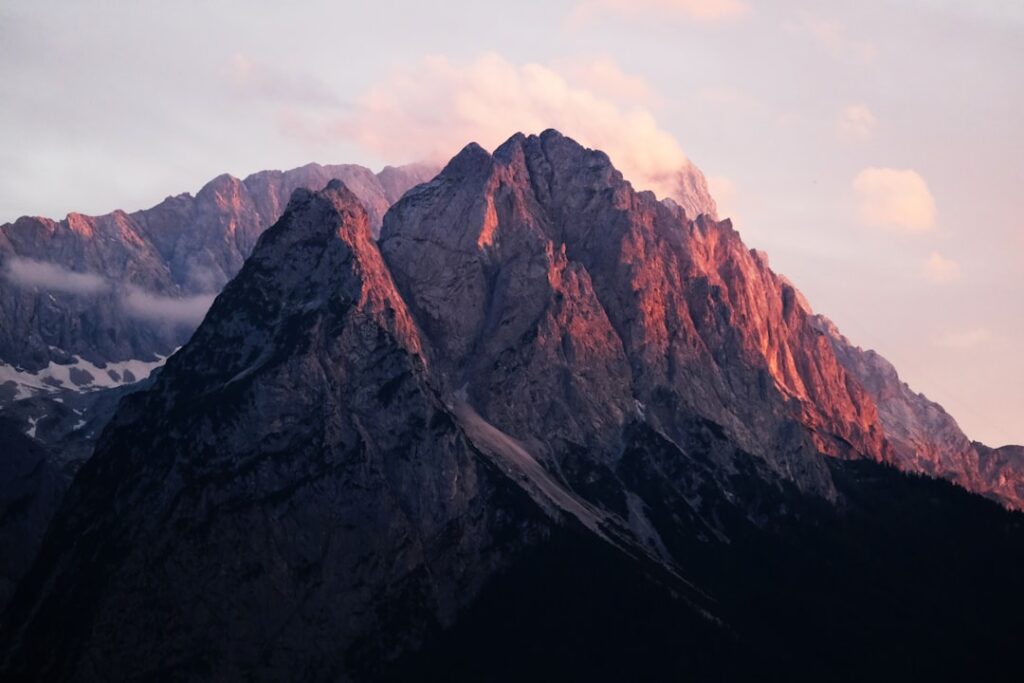
The Zugspitze isn’t just Germany‘s highest peak—it’s one of the country’s most accessible alpine experiences. At 2,962 meters above sea level, this limestone giant on the Austrian border draws hikers, skiers, and sightseers year-round. On clear days, the summit panorama stretches across more than 400 peaks in four countries: Germany, Austria, Italy, and Switzerland.
Unlike many high-alpine destinations, you don’t need climbing experience to reach the top. Three different cable cars serve the summit from both the German and Austrian sides, making it possible to stand on Germany’s rooftop in under ten minutes from the valley floor.
Getting to the Summit
Most visitors approach from Garmisch-Partenkirchen, the picture-perfect Bavarian resort town at the mountain’s base. The newest route, the Zugspitze Cable Car (opened in 2017), departs from the Eibsee, a turquoise Alpine lake that’s worth visiting even if you’re not heading up the mountain. The cable car covers 1,950 vertical meters in a single ten-minute span—one of the world’s longest free-span cable car rides. The views through the panoramic windows as you rise above the forest, over bare rock faces, and past the Schneeferner glacier are unforgettable.
The traditional route uses the Zugspitzbahn cogwheel railway, which has been climbing the mountain since 1930. Board in Garmisch-Partenkirchen and ride through tunnels and across alpine meadows to the Zugspitzplatt station at 2,600 meters, then transfer to a cable car for the final push to the summit. Train enthusiasts appreciate the engineering and the historical significance, though the journey takes about an hour and a half.
From Austria, the Tiroler Zugspitzbahn cable car departs from Ehrwald and reaches the summit in about ten minutes. If you’re already exploring Tyrol or want to approach from the south, this route offers different perspectives on the massif.
What to Do at the Top
The summit complex straddles the German-Austrian border—you can literally walk between countries. On the German side, the Münchner Haus restaurant serves Bavarian classics like käsespätzle and schnitzel with those four-country views. The Austrian side has its own terrace and facilities. A golden summit cross marks the actual highest point, reached by a short walk from the main platform.
In summer (roughly June through September), hiking trails crisscross the surrounding peaks and the Zugspitzplatt plateau. The Gatterl route from the Knorrhütte to the summit is a challenging full-day alpine hike requiring sure-footedness and proper equipment—this isn’t a casual walk. Most visitors, however, simply enjoy the observation decks, the glacier viewing platform, and the thin mountain air.
Winter transforms the Zugspitze into Germany’s highest ski resort. The season here runs from November into May, longer than anywhere else in the country. The Schneeferner glacier holds snow reliably, and the summit runs offer that rare thrill of skiing from nearly 3,000 meters. The slopes suit intermediate skiers best, though beginners have designated areas on the Zugspitzplatt.
Practical Tips for Your Visit
Weather on the Zugspitze changes fast. Even in August, summit temperatures can hover near freezing, and wind makes it feel colder. Bring a warm jacket, hat, and gloves regardless of valley conditions. Check the webcams before you go—there’s no point making the journey if clouds obscure the view.
Buy tickets online in advance, especially in summer and on winter weekends. The Garmisch Classic ticket, which includes both the Zugspitze and the neighboring Garmisch-Classic ski area, offers good value if you’re spending multiple days in the region. If you hold a BahnCard, you’ll receive a discount on cable car tickets.
The best visibility typically occurs in the morning before clouds build up. Aim to be on the first or second cable car up. Sunset from the summit is spectacular, but check the last descent time—you don’t want to be stranded at the top.
Altitude affects some visitors. At nearly 3,000 meters, the air holds about 30% less oxygen than at sea level. Take it easy when you first arrive at the summit, especially if you have heart or lung conditions. The station keeps oxygen available for emergencies.
Eibsee and Garmisch-Partenkirchen
Don’t rush away from the Eibsee after your cable car ride. This Alpine lake, with its distinctive turquoise color and island-dotted surface, ranks among Bavaria’s most beautiful. A 7.5-kilometer path circles the shore through forest and over small footbridges—allow two to three hours for the loop. Swimming is permitted, though even in summer the water is bracingly cold.
Garmisch-Partenkirchen itself deserves at least a day. The twin towns merged in 1935 but retain distinct characters. Garmisch is the livelier resort center; Partenkirchen preserves more traditional Bavarian lüftlmalerei-painted houses. The Partnachklamm gorge, just outside town, offers a dramatic walk through a narrow canyon with waterfalls and rock walls soaring overhead. In winter, the 1936 Olympic ski jump on the Gudiberg still hosts competitions, and visitors can ride the lift for valley views.
The Zugspitze experience stays with you—the engineering marvel of the ascent, the physical reality of standing higher than any other point in Germany, and the humbling scale of the Alps stretching in every direction. Whether you come for the skiing, the hiking, or simply the view, Germany’s rooftop delivers.
Want more insider tips on Germany’s mountains, valleys, and hidden corners? Subscribe to the Love Germany newsletter and get one short story a day—the Germany beyond the guidebooks, delivered to your inbox.
Tours & experiences in Germany


Powered by Viator. Some links are affiliate links — we may earn a small commission at no extra cost to you.