
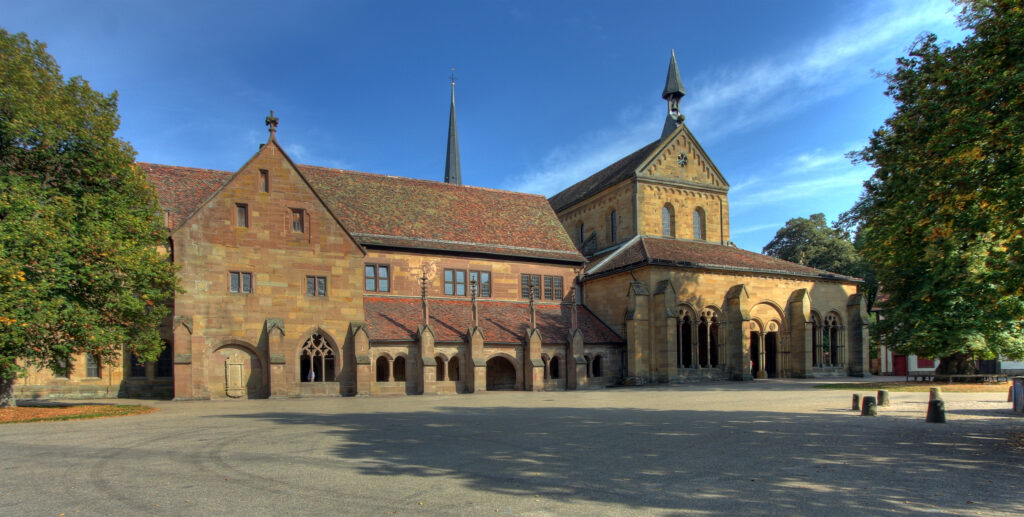

Tucked into the rolling hills northwest of Stuttgart, Kloster Maulbronn stands as Germany’s most complete and best-preserved medieval monastery. This UNESCO World Heritage Site isn’t a romantic ruin—it’s a living testament to Cistercian architecture and monastic life, with nearly every building from the 12th to 16th centuries intact and accessible.
Founded in 1147 by Cistercian monks from Alsace, Maulbronn became one of the wealthiest and most influential monasteries in southern Germany. After the Reformation, it transformed into a Protestant seminary that educated some of Germany’s greatest minds, including astronomer Johannes Kepler and novelist Hermann Hesse, who later wrote about his years there in Beneath the Wheel.
A Complete Medieval World Behind Walls
The monastery complex sprawls across several acres, enclosed by fortified walls that protected both the monks and the town that grew up around them. You enter through the gatehouse and immediately step back eight centuries.
The centerpiece is the church, a masterpiece of Romanesque and early Gothic architecture. The Paradise, an entrance porch added around 1220, represents some of the earliest Gothic architecture in Germany—its delicate columns and vaulted ceiling feel almost weightless compared to the solid Romanesque nave beyond.
Inside the church, simplicity rules. The Cistercians rejected ornate decoration, and the bare stone walls and clean lines create a space of profound calm. The wooden choir stalls, dating from the 15th century, remain in daily use by the seminary students who still study here.
The Cloister and Monastic Buildings
The cloister, with its arcaded walkway surrounding a peaceful garden, connects to every major building the monks used daily. The chapter house, where the community gathered for readings and decisions, features beautiful rib vaulting. The refectory (dining hall) is enormous, with a reader’s pulpit built into the wall—monks ate in silence while listening to scripture.
Don’t miss the lavatorium, the monks’ washing fountain. Its intricate stonework and the original bronze basin show the Cistercian commitment to both cleanliness and craftsmanship. The warming room, one of the only heated spaces in winter, has massive fireplaces where monks could briefly escape the cold between prayers.
The lay brothers’ wing, where non-ordained workers lived, is equally impressive. These men did the farming, construction, and manual labor that sustained the monastery, and their quarters reflect the community’s self-sufficient nature.
Practical Details and Visiting Tips
Kloster Maulbronn sits in the small town of Maulbronn, about 20 miles northwest of Pforzheim and 35 miles from Stuttgart. The easiest approach is by car—there’s a large parking area just outside the monastery walls. By train, take the S-Bahn to Mühlacker, then bus 700 to Maulbronn (about 20 minutes).
The monastery is open daily year-round, though hours vary seasonally. Admission includes an excellent audio guide available in English. Plan at least two hours to explore thoroughly, though you could easily spend half a day wandering the complex and the charming town beyond the walls.
Visit on a weekday morning if possible. Tour groups arrive midday, especially in summer. Early morning light in the cloister is particularly beautiful, and you’ll often have whole sections to yourself before 10 a.m.
The on-site restaurant in the former granary serves solid regional dishes—try the Maultaschen or Spätzle—and there’s a pleasant café in the half-timbered houses just outside the main gate. The monastery shop sells wine from the monks’ former vineyards, now maintained by the state wine cooperative.
Beyond the Monastery
The town of Maulbronn itself deserves a stroll. Half-timbered houses line narrow streets, and the old defensive walls include several towers you can walk between. The Salzhaus, an old salt warehouse, now houses a small museum about the monastery’s history and Hesse’s time as a reluctant student.
If you’re visiting from Stuttgart or Heidelberg, consider combining Maulbronn with Pforzheim, the gateway to the Black Forest and Germany’s center of jewelry manufacturing. The drive through the Kraichgau wine region, with its gentle hills and villages, is lovely any time of year.
For a deeper dive into Germany’s hidden treasures and under-the-radar destinations, subscribe to the Love Germany newsletter—one short story delivered to your inbox daily, written for travelers who want to go beyond the guidebook.
Tours & experiences in Germany


Powered by Viator. Some links are affiliate links — we may earn a small commission at no extra cost to you.