
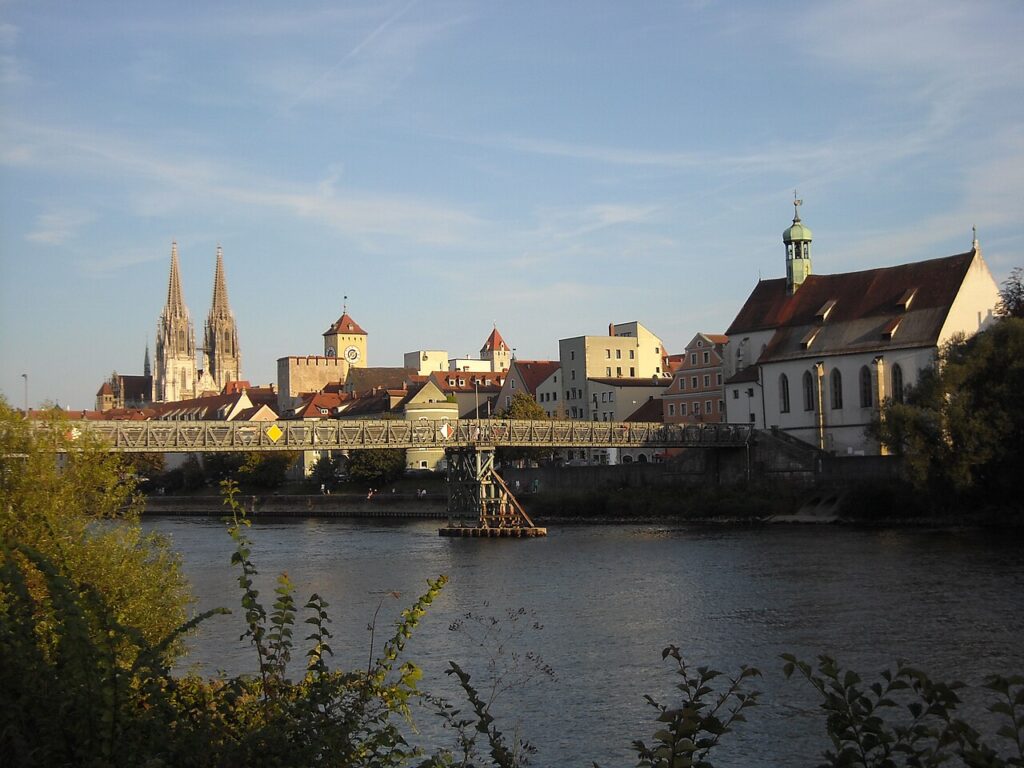
Regensburg doesn’t shout. It doesn’t need to. This Bavarian city on the Danube has survived two millennia virtually intact—Roman fortifications, medieval merchant houses, Gothic spires, and cobblestone lanes that twist through one of Germany’s largest preserved old towns. It’s a UNESCO World Heritage Site, a university city, and a place where you can eat sausages that have been grilled in the same riverside shack since 1135.
If you’re based in Munich, Nuremberg, or even Prague, Regensburg makes an ideal day trip. It’s compact, walkable, and refreshingly free of tour-bus crowds—though that’s changing as more travelers catch on.
Getting There and Getting Around
Regensburg is 90 minutes by train from Munich, an hour from Nuremberg, and just under two hours from Prague. The Hauptbahnhof sits a fifteen-minute walk north of the Altstadt, or you can catch bus 1, 2, or 6 to the Stone Bridge.
Once you’re in the old town, forget the bus. Regensburg is made for walking. The entire historic core measures roughly 600 by 800 meters—small enough to navigate by instinct, large enough to get pleasantly lost. Wear comfortable shoes; the cobblestones are original, which means they’re uneven and unforgiving.
If you’re driving, park at the Domplatz garage or the Dachauplatz lot and walk in. Street parking in the Altstadt is nearly impossible and unnecessary.
What to See: The Stone Bridge, the Dom, and the Wurstkuchl
Start at the Steinerne Brücke, the Stone Bridge that has spanned the Danube since 1146. For three centuries, this was the only bridge crossing the river between Ulm and Vienna, making Regensburg a critical trade hub. The views upstream toward the cathedral and downstream toward the Danube valley are worth the crossing alone.
On the north end of the bridge, you’ll find the Historische Wurstkuchl, the oldest continuously operating sausage kitchen in the world. It fed the bridge workers in the 12th century and still serves the same menu: six or eight charcoal-grilled sausages with mustard and sauerkraut, served with a bread roll. The outdoor benches fill fast, but turnover is quick. Go at 11:30 or after 2 p.m. to avoid the lunch rush.
From the bridge, head into the Altstadt and follow the spires to the Dom St. Peter, Regensburg’s Gothic cathedral. Construction began in 1275 and took 600 years to finish—the twin towers weren’t completed until the 19th century. The stained glass is extraordinary, particularly the medieval windows in the choir. Entrance is free; climb the south tower for €3.50 and a view over the red rooftops to the Danube.
Wander south from the Dom along Kramgasse and Goldene-Bären-Straße, where tall medieval houses lean together like old friends. Many of these buildings date to the 13th and 14th centuries, when Regensburg was one of the wealthiest cities in the Holy Roman Empire. The Goliathhaus at Goliathstraße 4, with its massive fresco of David and Goliath, is a favorite photo stop.
The Porta Praetoria and Thurn und Taxis
Regensburg’s Roman past is still visible at the Porta Praetoria, a stone gateway built around 179 AD when the city was called Castra Regina. It’s tucked beside the cathedral and easy to miss, but it’s one of the oldest standing Roman structures in Germany—still in use as a passageway.
For a different slice of history, visit Schloss Thurn und Taxis, the sprawling palace complex south of the Altstadt. The Thurn und Taxis family ran Europe’s postal system for centuries and still lives in part of the palace. You can tour the state rooms, the treasury, and the cloisters of the former Benedictine monastery next door. The palace also hosts a Christmas market in December that’s worth the trip alone.
Where to Eat and Drink
Beyond the Wurstkuchl, Regensburg has a strong food scene rooted in Bavarian tradition. Wurstkuchl zum Goldenen Kreuz on Haidplatz serves hefty plates of pork, dumplings, and dark beer in a 14th-century inn. Brauerei Kneitinger, a family brewery since 1530, pours its own Dunkel and Helles at several taverns around town—the one on Arnulfsplatz has a beer garden.
For coffee and cake, head to Café Prinzess on Rathausplatz or Café Lila on Fröhliche-Türken-Straße, a tiny spot with excellent espresso and homemade pastries. If you’re here on a Saturday, the farmers’ market at Neupfarrplatz runs until 1 p.m. and sells everything from Alpine cheese to fresh pretzels.
Practical Tips
Regensburg is walkable year-round, but spring and fall are ideal—mild weather, fewer crowds, and the Danube at its prettiest. Summer can be hot and busy, especially during the Bürgerfest in July. Winter is quiet and atmospheric, particularly when the Christmas markets are running.
If you’re staying overnight, book in the Altstadt. Hotels like the Altstadthotel Arch and Hotel Goldenes Kreuz put you in the heart of the action. Day-trippers can store luggage at the Hauptbahnhof lockers for €4.
Most shops close on Sundays, but cafés, restaurants, and the cathedral remain open. Bring cash; smaller restaurants and market stalls don’t always take cards.
Want more stories like this delivered to your inbox? Subscribe to the Love Germany newsletter—one short story a day about Germany’s hidden corners, local flavors, and the places worth your time.
Tours & experiences in Germany


Powered by Viator. Some links are affiliate links — we may earn a small commission at no extra cost to you.