Approximately 30 kilometres from Aachen lies one of the Netherlands’ most distinctive cities. Maastricht, the capital of Dutch Limburg, shares more than geography with its German neighbour Aachen—the two cities are bound by centuries of shared history, cross-border commuters, and a linguistic and cultural heritage that defies neat national boundaries.
The connection between Aachen and Maastricht runs deep. Both cities were significant centres during the Carolingian Empire, when Charlemagne made Aachen his imperial capital in the late 8th century. Maastricht, then known as Trajectum ad Mosam, was an important trading hub along the Meuse River. The two cities existed within the same political and cultural sphere for centuries, long before modern nation-states drew lines on maps.
Today, the relationship remains remarkably close. Thousands of people cross the border daily for work, shopping, and leisure. Many residents of the Aachen region shop in Maastricht’s historic centre, while Dutch citizens frequently visit Aachen for its thermal baths, Christmas markets, and cultural offerings. The cities are connected by regular bus services, and the journey between them takes less than half an hour.
A Linguistic Border Zone
The area around Aachen and Maastricht represents one of Europe’s most interesting linguistic landscapes. The local dialect spoken in Aachen—Öcher Platt—shares considerable similarities with the Limburgish dialect spoken across the border. Both belong to the Franconian dialect continuum, and speakers on either side of the border often find they can understand each other better than they can understand standard German or Dutch.
This linguistic kinship reflects centuries of shared history. The region changed hands multiple times through European history. Many families have roots on both sides, and the sense of regional identity often supersedes national boundaries.
Cultural and Educational Exchange
The two cities have formalised their relationship through various partnerships and initiatives. The Euregio Maas-Rhine, established in 1976, is one of Europe’s oldest cross-border cooperation zones, linking Aachen, Maastricht, Liège, Hasselt, and Eupen in a region of over 3.9 million people. This cooperation covers healthcare, education, culture, and economic development.
Students frequently cross the border for education. Maastricht University, with its international programmes taught in English, attracts many German students, while RWTH Aachen University draws Dutch students to its renowned engineering programmes. The proximity allows students to live in one city while studying in the other, creating a truly binational student community.
Visiting Both Cities
For travellers, the Aachen-Maastricht pairing offers an ideal opportunity to experience two distinct national cultures within a single day trip. Aachen’s cathedral, where Charlemagne is buried, represents one of Northern Europe’s most important medieval monuments. The city’s thermal springs have attracted visitors since Roman times.
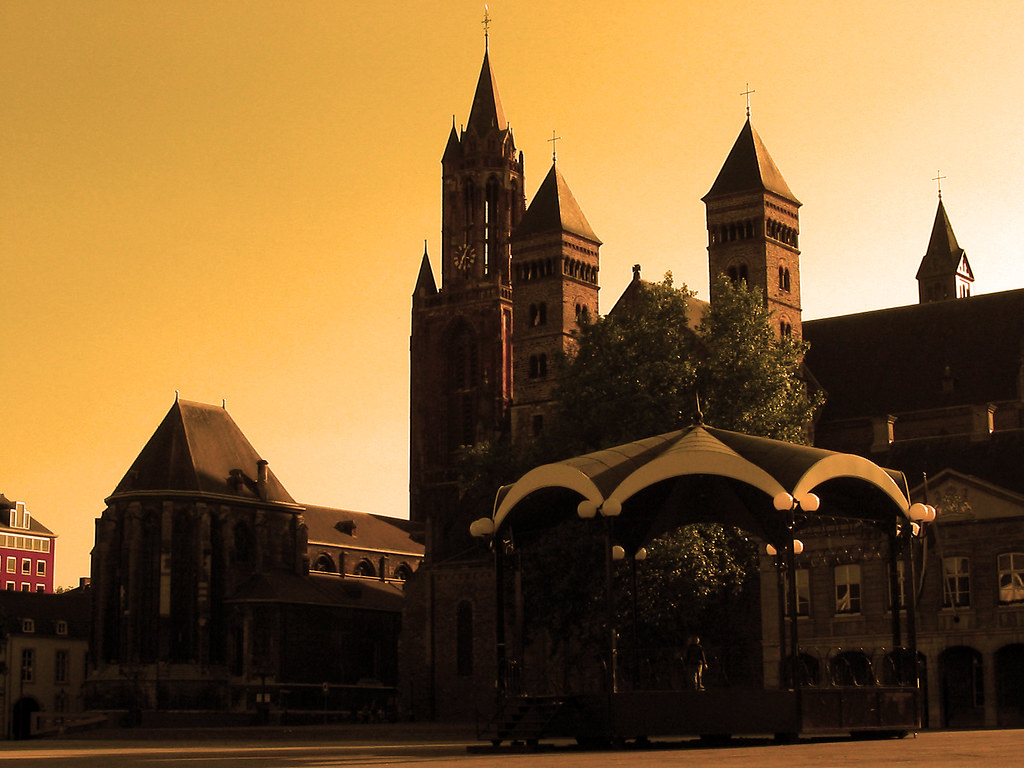
Maastricht offers a contrasting but complementary experience, with its remarkably preserved medieval centre, distinctive Limburgish cuisine, and the famous Vrijthof square. The city’s location in the far south of the Netherlands gives it a character quite unlike Amsterdam or other northern Dutch cities—something immediately apparent to visitors from Aachen who make the short journey across the border.
The relationship between these two ancient cities demonstrates how European borders, while politically significant, often represent continuities rather than divisions—places where history, language, and daily life flow naturally across lines on maps.
Tours & experiences in Germany


Powered by Viator. Some links are affiliate links — we may earn a small commission at no extra cost to you.