
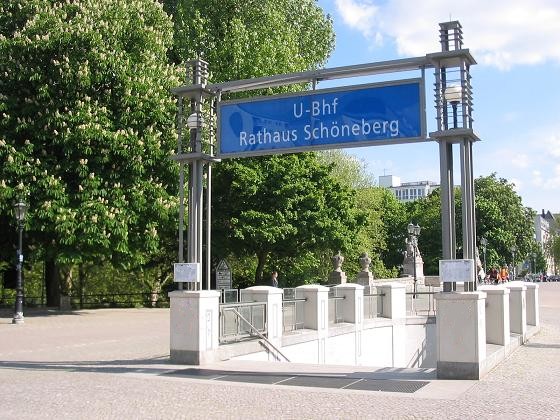
On June 26, 1963, President John F. Kennedy stood before a crowd at Rathaus Schöneberg and declared “Ich bin ein Berliner” — I am a Berliner. It became one of the most famous speeches of the Cold War era, a moment when American solidarity with a divided city reached its emotional peak. But what many don’t realize is that Kennedy’s presence in Berlin that day was deeply connected to his Irish-American identity.
Kennedy was the first Catholic president of the United States, and proudly Irish-American. His great-grandfather Patrick Kennedy had left County Wexford during Ireland’s Great Famine in 1848, settling in Boston where generations of Kennedys would build their political dynasty. JFK’s Irish roots were central to his identity — after his Berlin visit on June 26, 1963, he flew to Ireland that same day, receiving a rapturous welcome in Dublin, Wexford, and Cork.
The Berlin speech came at the height of Cold War tensions, just two years after the construction of the Berlin Wall. Kennedy’s words were meant to reassure West Berliners that America stood with them against Soviet pressure. “All free men, wherever they may live, are citizens of Berlin,” he proclaimed, “and, therefore, as a free man, I take pride in the words ‘Ich bin ein Berliner.'”
The connection between Irish-American identity and Germany runs deeper than Kennedy alone. Among US Presidents with Irish Heritage, several played significant roles in shaping German-American relations during crucial historical moments. Ronald Reagan, whose ancestors came from County Tipperary, stood at the Brandenburg Gate in 1987 and challenged Soviet leader Mikhail Gorbachev to “tear down this wall.” Barack Obama, who discovered his Irish roots in the village of Moneygall, visited Berlin in 2008 as a presidential candidate, drawing 200,000 people to the Victory Column.
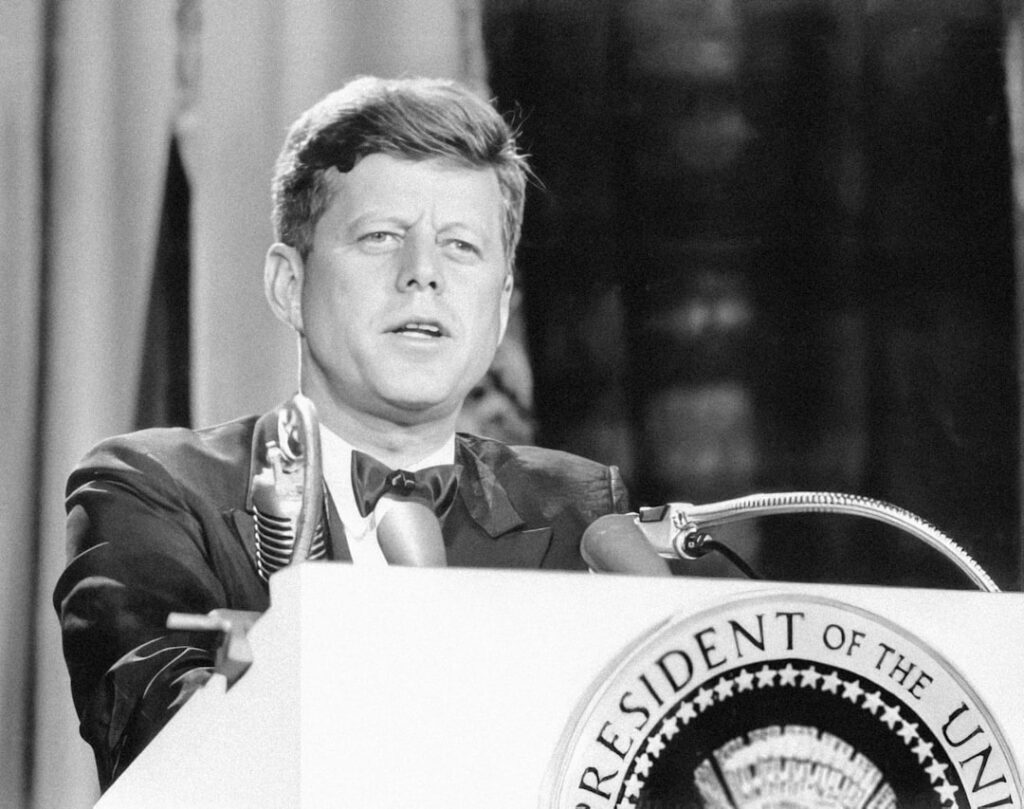
But Kennedy’s 1963 visit remains the most iconic. His motorcade through Berlin drew ecstatic crowds along the entire route. At the Berlin Wall, he looked into East Berlin with visible anger at the barrier dividing families and friends. His speech at the Free University of Berlin earlier that day touched on themes of freedom and democracy that resonated with his Irish heritage — a people who had themselves struggled for independence and self-determination.
The Legacy in Berlin Today
Today, Kennedy’s memory is preserved throughout Berlin. A plaque at Rathaus Schöneberg marks the spot where he delivered his famous speech. The nearby John F. Kennedy Plaza was renamed in his honor on November 25, 1963, three days after his assassination. The John F. Kennedy Institute for North American Studies at the Free University of Berlin continues to foster German-American academic exchange.
Kennedy’s Berlin visit also strengthened ties between Germany and the Irish diaspora in America. For many Irish-Americans, Kennedy represented the culmination of their community’s journey from famine refugees to the highest office in the land. His confident assertion of Western values in Berlin, delivered with the eloquence and charm that marked his Irish heritage, became a defining moment not just of the Cold War, but of Irish-American achievement.
The story of JFK in Berlin reminds us that history is shaped by more than politics and geography — it’s shaped by heritage, identity, and the journeys families make across oceans. From County Wexford to the White House to a divided city in Germany, the Irish-American experience found one of its most powerful expressions on that June day in 1963.
Tours & experiences in Germany


Powered by Viator. Some links are affiliate links — we may earn a small commission at no extra cost to you.