
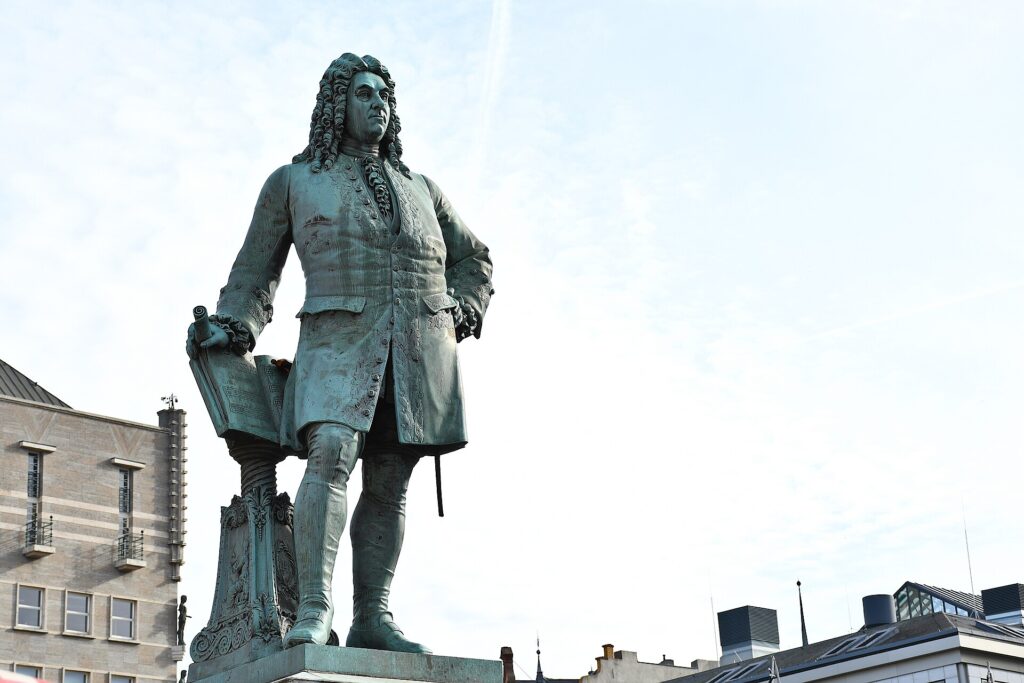
When George Frideric Handel left his native Germany in 1712 to settle permanently in London, he could scarcely have imagined that he would become one of Britain’s most beloved cultural figures. Born Georg Friedrich Händel in Halle, Saxony-Anhalt, in 1685, this German composer would transform English music and leave a legacy so profound that he was buried with royal honours in Westminster Abbey—a recognition afforded to few foreigners in British history.
Handel’s journey to London began with an invitation from Queen Anne, but it was his genius and adaptability that secured his place in the city’s heart. Unlike many continental composers who maintained their outsider status, Handel anglicized his name, became a British subject in 1727, and immersed himself in English culture. He mastered the English language well enough to set it to music with unprecedented brilliance, creating works that remain cornerstones of the English choral tradition.
Covent Garden and the Birth of English Oratorio
Handel’s London was centred around the theatres and concert halls of the West End. At the Royal Academy of Music in the Haymarket and later at Covent Garden’s Theatre Royal, he premiered dozens of operas that captivated Georgian audiences. When Italian opera fell out of fashion in the 1730s, Handel reinvented himself, creating the English oratorio—a form that combined his German musical training with English literary traditions and the British love of choral singing.
His oratorio “Messiah,” first performed in Dublin in 1742 but finding its true home in London, became perhaps the most performed choral work in the English-speaking world. The tradition of audiences standing during the “Hallelujah Chorus”—allegedly begun when King George II rose to his feet at a London performance—continues today, a living link to Handel’s adopted city.
A German in Westminster Abbey
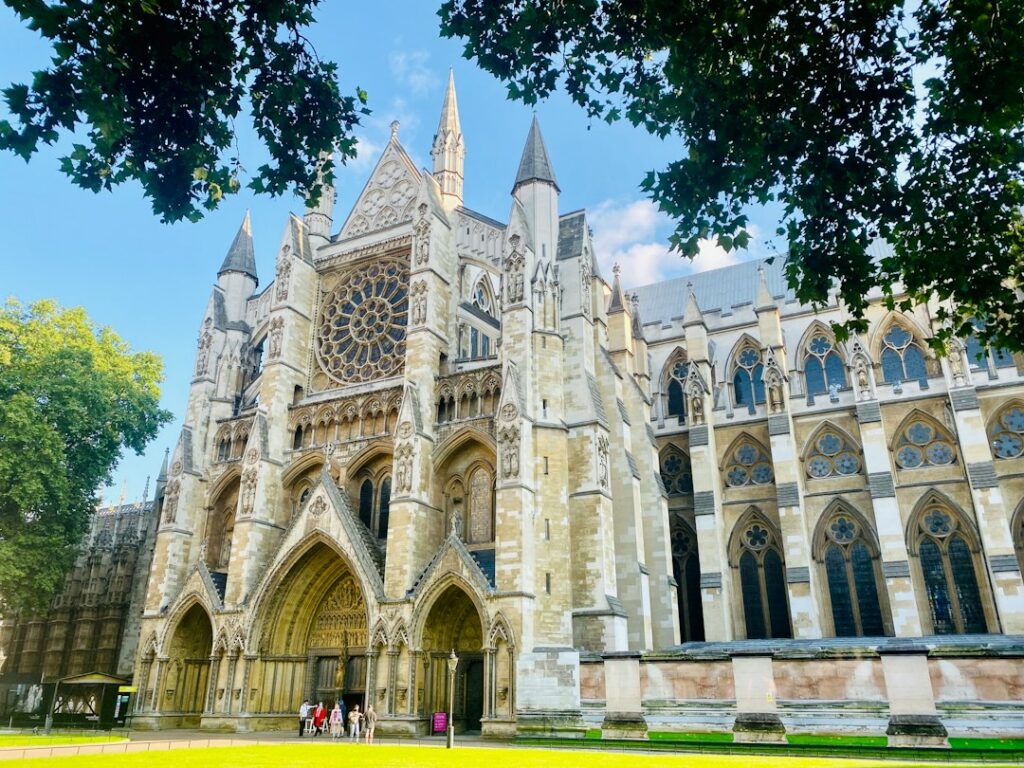
When Handel died in 1759, London mourned him as one of its own. More than 3,000 people attended his funeral at Westminster Abbey, where he was interred in Poets’ Corner—an extraordinary honour that placed this German immigrant among England’s greatest cultural heroes. His monument there, sculpted by Louis-François Roubiliac, shows him holding the manuscript of “I Know That My Redeemer Liveth” from Messiah, forever linking the German composer to English sacred music.
Today, visitors exploring Shakespeare’s London walk in Handel’s footsteps too. The composer lived for 36 years at 25 Brook Street in Mayfair, now the Handel House Museum, where he composed many of his greatest works. The house stands as a testament to the German contribution to London’s cultural wealth—a contribution that extended far beyond music to influence British identity itself.
Handel’s story represents one of history’s most successful cultural integrations. He brought German baroque craftsmanship and contrapuntal mastery to English shores, then synthesized it with British theatrical traditions and the English language to create something entirely new. In doing so, this son of Halle became more English than many native-born Londoners, proving that national identity can be chosen as well as inherited.
The German-British musical exchange that Handel pioneered continues to this day, with London’s orchestras regularly performing works by Bach, Beethoven, and Brahms, while German concert halls treasure Handel as both a native son and an English master. It is a cultural dialogue that began three centuries ago on the streets of Georgian London, when a young German composer decided to make the Thames his home.
Tours & experiences in Germany


Powered by Viator. Some links are affiliate links — we may earn a small commission at no extra cost to you.