
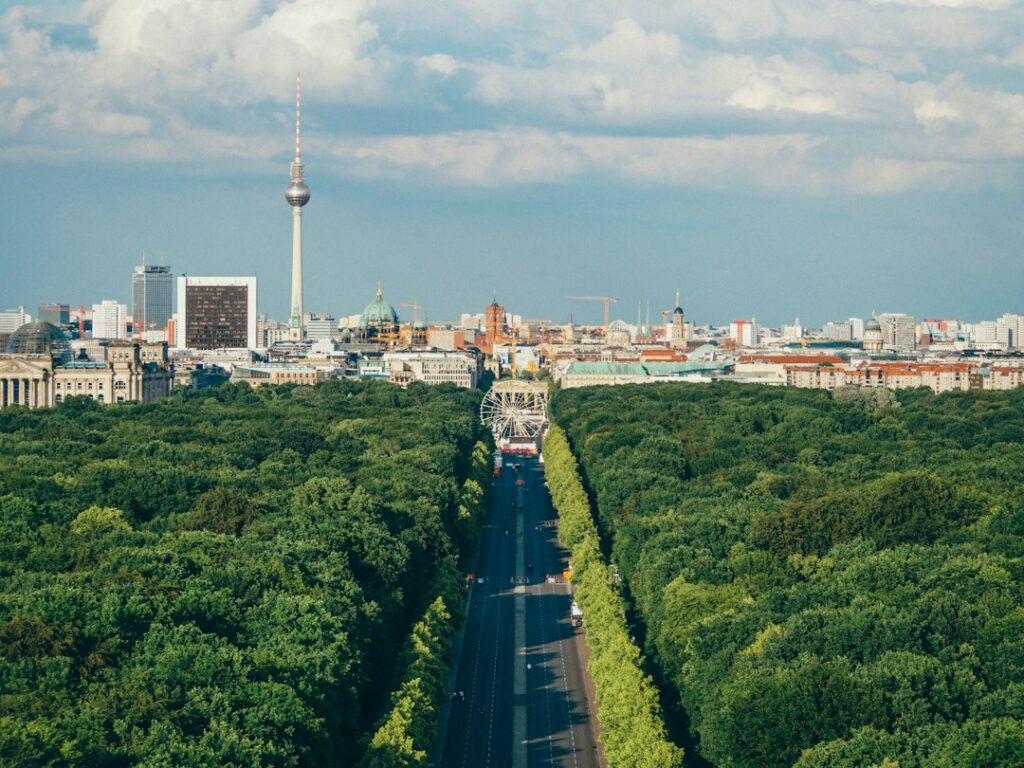
On August 6, 1806, Emperor Franz II made an extraordinary announcement: the Holy Roman Empire of the German Nation, which had endured for more than a thousand years, would cease to exist. The man who forced this decision was not a German prince or an Austrian rival, but a Corsican general who had crowned himself Emperor of the French just two years earlier.
Napoleon Bonaparte’s relationship with Germany was one of conquest, reorganization, and ultimately, transformation. After crushing Austrian and Russian forces at the Battle of Austerlitz in December 1805, Napoleon held the fate of Central Europe in his hands. He had already begun redrawing the map of Germany, consolidating hundreds of small territories into larger, more manageable states under French influence.
The Confederation of the Rhine
In July 1806, Napoleon established the Confederation of the Rhine, a collection of 16 German states that formally withdrew from the Holy Roman Empire and placed themselves under French protection. Bavaria, Württemberg, Baden, and other significant territories joined this new alliance, their rulers elevated to kings and grand dukes by Napoleon’s decree. The Confederation would eventually grow to include 36 states, encompassing most of western and southern Germany.

Franz II understood the reality: if these princes no longer recognized his authority, the Empire existed only on paper. Rather than cling to an empty title, he formally abdicated as Holy Roman Emperor, retaining only his position as Emperor of Austria. The institution that had defined German political life since Charlemagne vanished overnight.
Napoleon’s German Campaigns
Napoleon’s France did not merely dismantle old structures; it introduced new ones. The Code Napoléon—the French civil code—was implemented across the Confederation, replacing centuries of feudal law with modern legal principles. Serfdom was abolished in many territories. Jews received civil rights. The reforms were often imposed at gunpoint, but they were reforms nonetheless.
The French occupation was not universally welcomed. Prussia, humiliated at the battles of Jena and Auerstedt in 1806, lost half its territory and was forced to pay crippling indemnities. French troops garrisoned German cities. Young German men were conscripted to fight in Napoleon’s campaigns, including the disastrous invasion of Russia in 1812.
The German Response
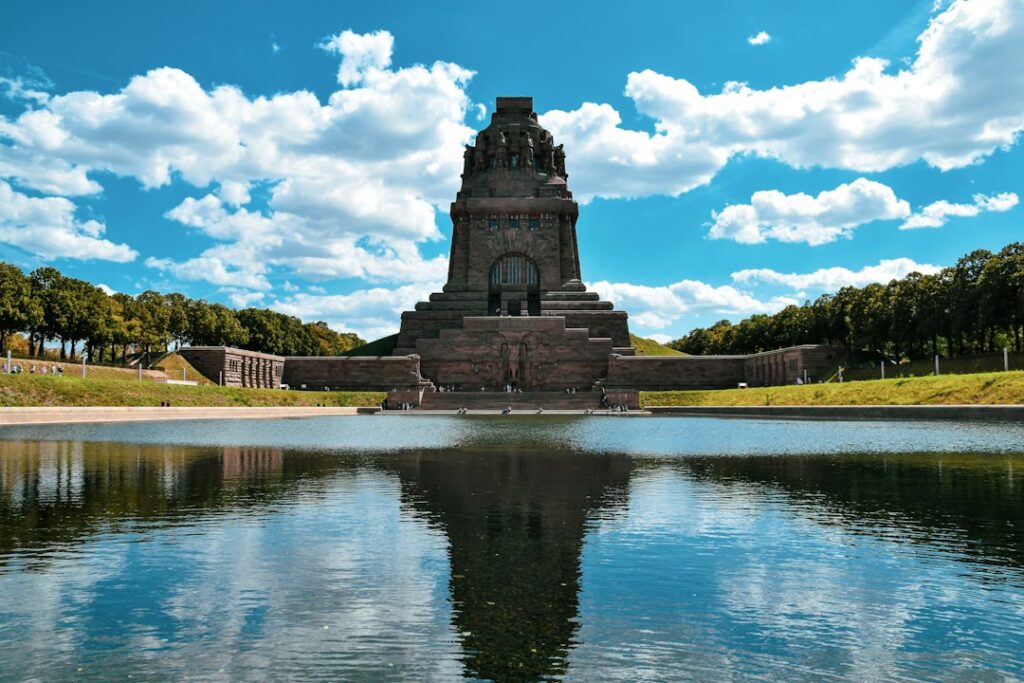
Yet Napoleon’s domination also sparked something unexpected: German nationalism. Intellectuals like Johann Gottlieb Fichte delivered passionate speeches calling for German unity and resistance. The humiliation of occupation created a shared sense of German identity that had been largely absent in the fragmented Holy Roman Empire. When the tide finally turned against Napoleon, German forces played a crucial role in his defeat at the Battle of Leipzig in 1813—known in Germany as the Battle of Nations.
The Congress of Vienna in 1815 attempted to restore the old order, but Germany could not return to what it had been. The Holy Roman Empire remained dead. In its place emerged the German Confederation, a loose association of 39 states that would eventually give way to German unification under Prussia in 1871.
Napoleon never set out to create a unified Germany—quite the opposite. He wanted German states divided and dependent on France. But by destroying the old Empire, rationalizing the political map, and inadvertently fostering German national consciousness, he set in motion forces that would reshape Europe for the next century. The Germany that emerged in the 19th century was, in an unexpected way, part of Napoleon’s legacy.
Tours & experiences in Germany


Powered by Viator. Some links are affiliate links — we may earn a small commission at no extra cost to you.