
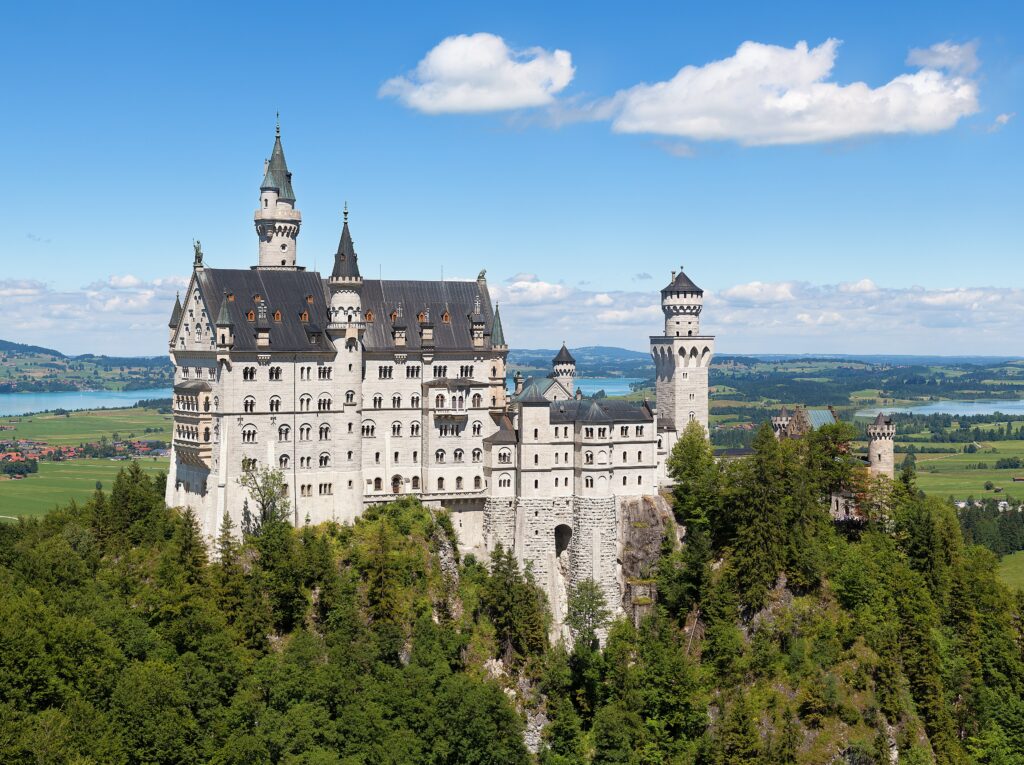
Perched on a rugged hill above the village of Hohenschwangau, Neuschwanstein Castle is Germany’s most photographed building—and for good reason. King Ludwig II of Bavaria built this Romanesque Revival palace between 1869 and 1886 as a personal retreat and homage to composer Richard Wagner. Today, more than 1.4 million people visit each year, making advance planning essential.
The castle’s towers and turrets inspired Walt Disney’s Sleeping Beauty Castle, but the real thing is far more dramatic. Set against the backdrop of the Alps with views over the Alpsee and Schwansee lakes, Neuschwanstein looks like it grew straight out of the mountain.
Getting There and Buying Tickets
Neuschwanstein is located near Füssen in the Allgäu region of Bavaria, about 120 kilometers south of Munich. The nearest train station is Füssen; from there, take bus 73 or 78 to Hohenschwangau (10 minutes). The buses drop you at the ticket center in the village, where all tours begin.
Book your tickets online weeks in advance, especially from May through October. You cannot enter the castle without a timed ticket, and same-day tickets often sell out by mid-morning. Your ticket includes a specific entry time—miss it, and you forfeit your spot.
The ticket center is at the base of the hill. From there, you have three options to reach the castle entrance: a 30- to 40-minute uphill walk, a shuttle bus (€3 up, €2 down), or a horse-drawn carriage (€8 up, €4 down). The walk is steep but scenic; the carriage drops you about 10 minutes below the entrance.
Inside the Castle
Tours last 30 minutes and are guided only—no wandering on your own. You’ll see about 15 of the castle’s 200 rooms, including the Throne Hall with its Byzantine-inspired mosaics, the Singers’ Hall modeled after Wartburg’s festival hall, and Ludwig’s ornate bedroom draped in carved wood and silk.
The irony: Ludwig never saw his dream completed. He lived in the castle for only 172 days before his mysterious death in 1886. Many rooms remain unfinished, their walls bare brick behind the completed show spaces.
Photography is not allowed inside, and the tour moves quickly. Listen for details about the castle’s modern technology—Ludwig installed flush toilets, central heating, and even a telephone system, luxuries rare in the 1880s.
Marienbrücke: The Essential Viewpoint
Don’t leave without visiting Marienbrücke (Mary’s Bridge), the iron footbridge suspended over the Pöllat Gorge about 10 minutes uphill from the castle. This is the postcard view of Neuschwanstein, with the castle framed by mountains and forest.
The bridge can get crowded, especially between 10 a.m. and 3 p.m. Visit early morning or late afternoon for fewer people and better light. In winter, the bridge sometimes closes due to ice—check conditions before you go.
Timing Your Visit
Arrive in Hohenschwangau at least 90 minutes before your tour time. You’ll need to collect your tickets (if you reserved online), walk or ride up to the castle, and navigate the crowds. Early morning tours (before 10 a.m.) and late afternoon slots (after 3 p.m.) offer the most breathing room.
September and October are the best months: stable weather, fewer tour buses, and the forests around the castle ablaze with fall color. Winter visits are magical when snow blankets the peaks, but expect shorter daylight hours and possible closures.
If you have time, buy a combination ticket that includes Hohenschwangau Castle, the yellow palace across the valley where Ludwig grew up. It’s less famous but equally fascinating, with rooms full of swan motifs—the symbol that inspired Neuschwanstein’s name (New Swan Stone).
Practical Tips
Wear good shoes. The paths are steep and can be slippery when wet. There’s no café inside the castle, but Hohenschwangau village has several restaurants and bakeries near the ticket center.
If you’re staying overnight, consider the nearby towns of Füssen (charming old town, good restaurants) or Schwangau (quieter, closer to the castle). An overnight stay lets you visit the castle early, beat the day-trippers from Munich, and explore the surrounding area—the Tegelberg cable car offers stunning Alpine views, and the Lechfall waterfall in Füssen is a quick, rewarding detour.
Neuschwanstein is everything the photos promise, but it rewards careful planning. Book ahead, visit at off-peak times, and give yourself space to savor both the castle and the landscape that makes it unforgettable.
Want more stories like this delivered to your inbox? Subscribe to the Love Germany newsletter—one short story a day about Germany beyond the guidebooks.
Tours & experiences in Germany


Powered by Viator. Some links are affiliate links — we may earn a small commission at no extra cost to you.