
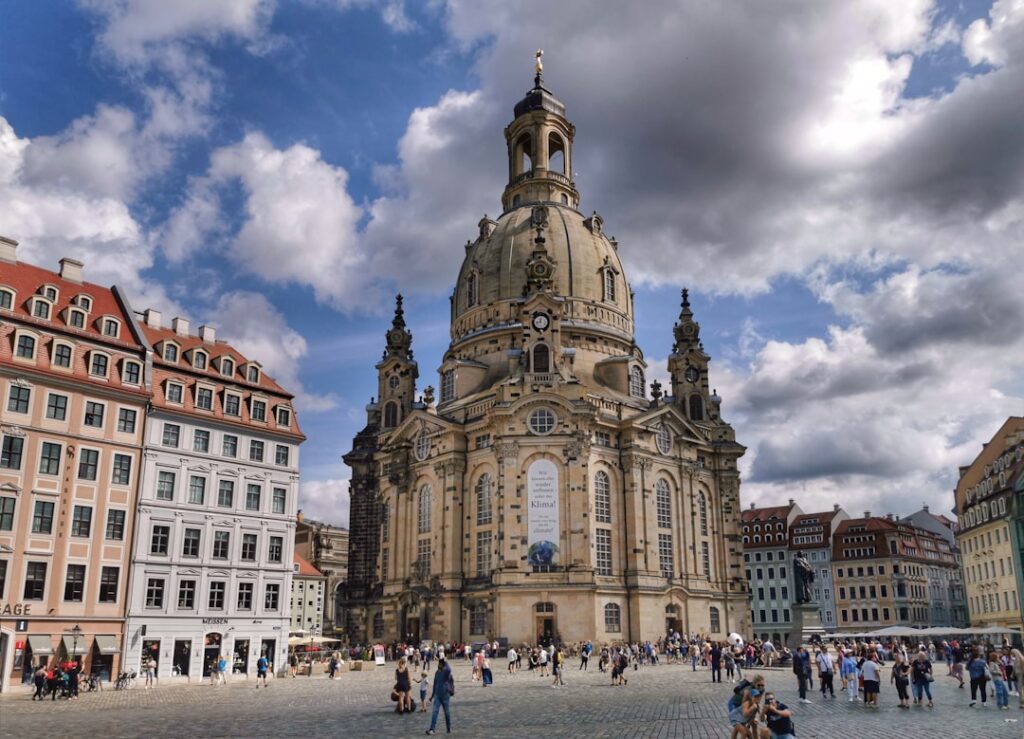
Rising majestically above Dresden’s Neumarkt square, the Frauenkirche (Church of Our Lady) represents one of the most moving stories of destruction and resurrection in European history. This stunning Baroque masterpiece, with its distinctive stone bell-shaped dome, was reduced to rubble during the devastating Allied bombing of Dresden in February 1945. For nearly fifty years, its ruins stood as a war memorial, until an extraordinary reconstruction effort restored it to its former glory in 2005. Today, the Frauenkirche serves not only as an architectural triumph but as a powerful symbol of peace, reconciliation, and the resilience of the human spirit.
An Architectural Marvel Reborn
The original Frauenkirche, completed in 1743 under the direction of architect George Bähr, was considered one of Europe’s greatest Protestant church buildings. Its revolutionary stone dome—the largest north of the Alps at the time—was an engineering feat that influenced church architecture across the continent. The reconstruction, completed after sixteen years of painstaking work, used original plans, photographs, and the salvaged rubble itself. Engineers and craftsmen employed historical building techniques alongside modern technology, incorporating approximately 3,800 original stones into the new structure. You can identify these blackened stones throughout the facade, creating a poignant patchwork that tells the church’s history at a glance.
Inside, the church soars to breathtaking heights. The interior measures 40 meters in diameter and reaches 68 meters to the dome’s apex. The pale sandstone walls, ornate galleries stacked on multiple levels, and the magnificent altar create an atmosphere of ethereal beauty. The altar, reassembled from fragments found in the rubble, stands as the church’s emotional centerpiece. Look for the gilded cross atop the dome—crafted by a British blacksmith whose father flew bombing missions over Dresden, it symbolizes the reconciliation between former enemies.
What to See and Experience
A visit to the Frauenkirche offers multiple experiences. The main sanctuary is free to enter, and simply sitting in the pews, absorbing the acoustics and artistry, is deeply moving. Guided tours (offered in English) provide fascinating insights into the reconstruction process and the church’s history. For a small fee, these tours include access to areas not otherwise open to the public.
The climb to the dome viewing platform is absolutely worthwhile for those able to manage the 300 steps. The panoramic views across Dresden’s meticulously restored Old Town are spectacular, with the Elbe River, Zwinger Palace, and Semperoper opera house spread before you. The ascent itself takes you through the inner workings of the dome structure, offering a unique perspective on its engineering genius.
Music lovers should time their visit to attend one of the regular concerts or organ recitals. The church’s acoustics are legendary, and hearing Bach or other Baroque composers performed here is transcendent. The Frauenkirche hosts everything from chamber music to full orchestral performances throughout the year. Check the church’s calendar in advance and book tickets early, as concerts often sell out.
Don’t miss the basement exhibit, which documents the church’s history through photographs, original architectural drawings, and artifacts recovered from the ruins. The before-and-after images are particularly striking, showing both the devastation and the meticulous reconstruction.
Planning Your Visit
The Frauenkirche is located in Dresden’s historic center, easily accessible on foot from most central hotels. If arriving by public transport, take any tram to Altmarkt or Pirnaischer Platz stops, both within a five-minute walk. Dresden Hauptbahnhof (main train station) is approximately twenty minutes away on foot or a short tram ride.
The church is open daily, typically from 10 am to 6 pm on weekdays and from noon on Sundays after services, though hours can vary seasonally. Entry to the main sanctuary is free, though donations are appreciated for ongoing maintenance. Dome climbs and guided tours require tickets, which can be purchased on-site or booked online in advance—recommended during peak season.
Spring through early fall offers the best visiting conditions, with May and September particularly pleasant for combining your visit with strolls along the Elbe or exploring Dresden’s other attractions. December brings the famous Dresden Striezelmarkt, Germany’s oldest Christmas market, which fills Neumarkt square directly in front of the church, creating a magical atmosphere. However, expect significantly larger crowds during this period.
Insider Tips
Visit early in the morning, right when the church opens, to experience the sanctuary in relative tranquility before tour groups arrive. The soft morning light filtering through the windows creates an especially serene atmosphere.
For photographers, the exterior is most photogenic in the late afternoon when the setting sun illuminates the sandstone facade. The best vantage point is from the Neumarkt square, though exploring the surrounding streets reveals interesting angles featuring the dome against Dresden’s skyline.
Combine your Frauenkirche visit with the nearby Zwinger Palace and Semperoper, all within a ten-minute walk. This cluster of attractions makes Dresden’s Old Town perfectly suited for a full day of exploration.
If attending a concert, arrive early to secure the best seats—seating is often general admission. The galleries offer excellent acoustics and unique perspectives of the performers below.
Finally, take time to read the plaques and informational displays throughout the church. Understanding the Frauenkirche’s journey from rubble to restoration deepens appreciation for what you’re witnessing—not just a beautiful building, but a testament to peace, forgiveness, and the enduring power of human creativity.
Tours & experiences in Germany


Powered by Viator. Some links are affiliate links — we may earn a small commission at no extra cost to you.