
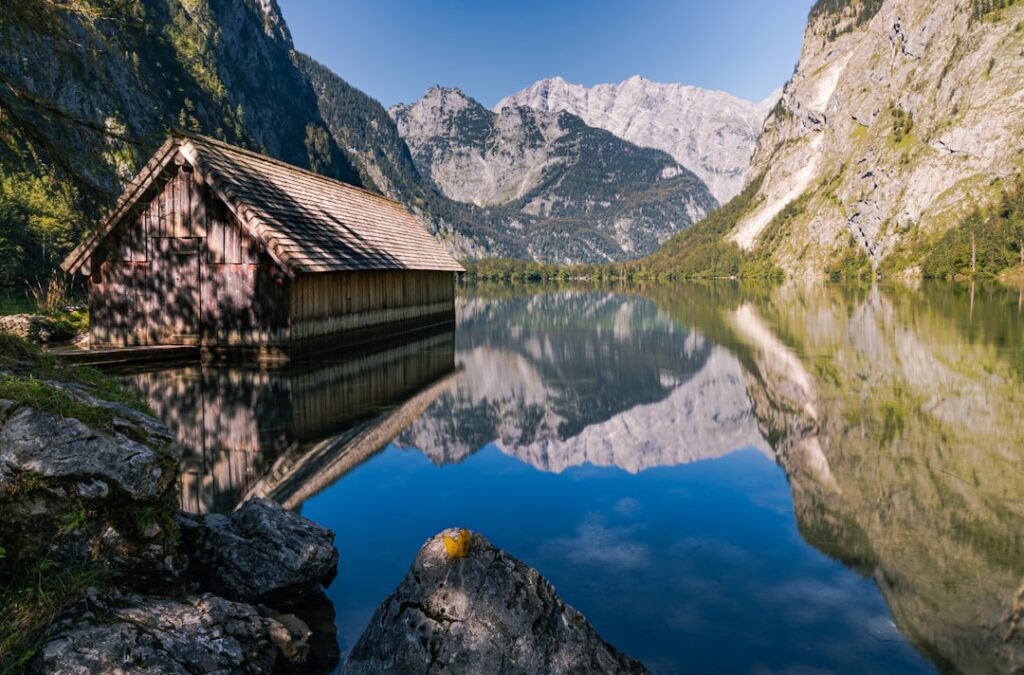
Nestled in the heart of Berchtesgaden National Park in southeastern Bavaria, Königssee—literally “King’s Lake”—is Germany’s most pristine and photographed Alpine lake. This glacially-carved fjord-like gem stretches nearly eight kilometers through towering limestone cliffs, its emerald-green waters so pure that only electric boats have been allowed to operate on it since 1909. With its dramatic mountain backdrop, the baroque pilgrimage church of St. Bartholomä, and legendary acoustics, Königssee offers one of Germany’s most breathtaking natural experiences.
Located just five kilometers south of Berchtesgaden town and a stone’s throw from the Austrian border, this natural wonder attracts visitors year-round who come to witness a landscape that seems almost too perfect to be real. The lake’s extraordinary clarity—you can see up to ten meters down in places—comes from strict environmental protections and the fact that it’s fed entirely by mountain streams and underground springs.
What Makes Königssee Special
Königssee isn’t just beautiful—it’s acoustically magical. The sheer rock walls of the Echowand (Echo Wall) create one of Europe’s most famous natural echoes. During the boat journey, captains stop mid-lake to demonstrate this phenomenon by playing a flugelhorn or trumpet. The melody bounces off the cliffs multiple times, creating an ethereal concert that’s been enchanting visitors for centuries.
The lake itself is remarkably deep, reaching 190 meters at its deepest point, and maintains a chilly temperature year-round. This depth and the surrounding 2,700-meter peaks create a microclimate and an ecosystem that’s home to rare Alpine flora and fauna. The area is also rich in legend—local lore speaks of water sprites and sunken treasures, adding mystique to the already enchanting setting.
Perhaps most significant is the lake’s status as Germany’s cleanest body of water. The commitment to environmental preservation here is extraordinary: no combustion engines, strict limits on development, and rigorous water quality monitoring have kept Königssee in near-pristine condition despite welcoming hundreds of thousands of visitors annually.
Must-See Sights and Activities
The iconic electric boat ride is the quintessential Königssee experience. These whisper-quiet vessels depart from Schönau am Königssee throughout the day, gliding past vertical cliffs that plunge directly into the water. The primary destination is St. Bartholomä, a picturesque onion-domed pilgrimage church dating from the 12th century. Its red roofs against the backdrop of the Watzmann massif create one of Germany’s most photographed scenes. At the stop, you can explore the chapel, enjoy fresh fish from the lake at the adjacent restaurant, or take short hiking trails along the shore.
For the adventurous, continue to Salet, the boat’s final stop at the southern end of the lake. From here, a gentle 15-minute walk leads to Obersee, a smaller, even more secluded lake that feels like stepping into a fairy tale. The trail continues to the thundering Röthbach waterfall, Germany’s highest at 470 meters, where water cascades down the rock face in spectacular fashion.
Hiking opportunities abound for all fitness levels. The Malerwinkel (Painter’s Corner) offers the classic postcard view of the lake and is easily accessible from the parking area. More ambitious hikers can tackle the trail to the Jenner summit or the challenging route to the Fischunkelalm, a traditional Alpine hut perched high above the lake.
In winter, Königssee transforms into a silent wonderland. While boat service is reduced, the scenery becomes even more dramatic with snow-capped peaks and occasional ice formations along the shoreline. Cross-country skiing and winter hiking trails offer peaceful alternatives to the busier summer season.
Practical Information and Insider Tips
Königssee is easily accessible by car or public transportation. From Munich, it’s about a 90-minute drive via the A8 autobahn to Berchtesgaden, then follow signs to Königssee. Ample parking is available near the lake, though it fills quickly in peak season—arrive before 9 AM or after 3 PM to avoid crowds and secure a spot. The Bayerische Regiobahn (BRB) train runs regularly from Munich to Berchtesgaden, and local bus line 841 connects the town to the lake in just 12 minutes.
The best time to visit depends on your preferences. May through June offers mild weather, blooming Alpine flowers, and manageable crowds. September and early October bring autumn colors and crisp, clear days perfect for photography. July and August are peak season—expect long lines for boats and packed trails, but also the warmest water temperatures and longest daylight hours. Winter visits (December through March) offer solitude and stark beauty, though check boat schedules in advance as service is limited.
Book boat tickets online in advance during summer to skip the queue—they’re available on the Königssee Schifffahrt website. The round-trip to St. Bartholomä takes about two hours including a 30-minute stop, while going all the way to Salet requires three to four hours. Combination tickets with the nearby Obersalzberg Documentation Center or Salzbergwerk (salt mine) offer good value.
Pack layers regardless of season—weather can change rapidly in the mountains. Bring sun protection, as reflection off the water intensifies UV rays. For dining, the restaurant at St. Bartholomä specializes in Steckerlfisch (grilled fish on a stick), caught fresh from the lake. It’s delicious but pricey; consider packing a picnic instead.
For an extraordinary experience with almost no crowds, take the first boat of the day at 8 AM in summer. You’ll have St. Bartholomä nearly to yourself for a magical half-hour before other boats arrive. Photography enthusiasts should note that morning light on the eastern cliffs is spectacular, while afternoon sun illuminates the church and western shoreline.
Königssee delivers a rare combination of accessibility and wilderness, offering both casual visitors and serious hikers an unforgettable Alpine experience. Its pristine beauty and commitment to preservation make it not just a destination, but a testament to what natural treasures can remain when we choose to protect them.
Tours & experiences in Germany


Powered by Viator. Some links are affiliate links — we may earn a small commission at no extra cost to you.