
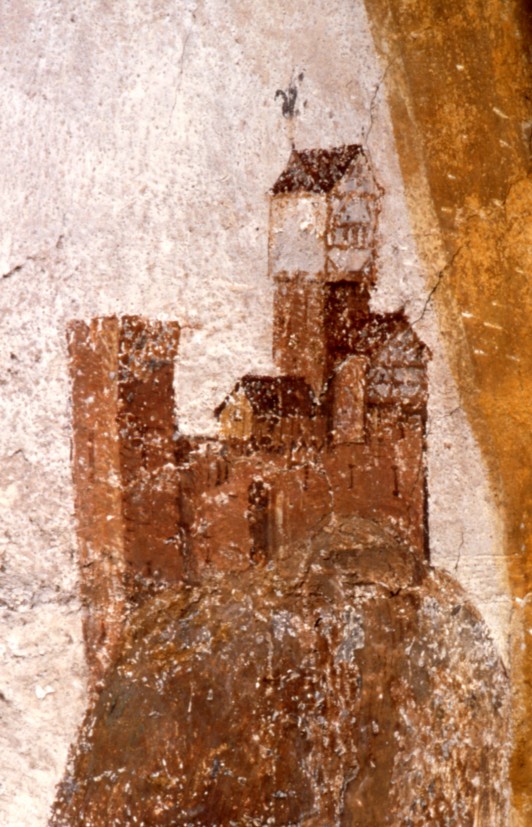
In the heart of southern Germany, the ruins of Hohenstaufen Castle stand as silent witnesses to one of medieval Europe’s most powerful dynasties. What many visitors don’t realize is that this German imperial family forged a crucial tie with the Norman rulers of the independent Kingdom of Sicily through a strategic marriage that would reshape European politics.
The Staufer dynasty, known internationally as the Hohenstaufen, rose to dominate the Holy Roman Empire in the 12th and 13th centuries. Their path to power was paved not just through military conquest, but through strategic marriages that connected German imperial ambitions with other European powers.
The Sicilian Connection
The most significant link came in 1186, when the future Emperor Henry VI married Constance of Sicily, the Norman heiress to the Kingdom of Sicily. This union brought together two of medieval Europe’s most formidable powers. Henry was the son of Frederick Barbarossa, the red-bearded German emperor who had spent decades trying to assert imperial control over Italy. Constance was the aunt and heir of William II of Sicily, whose Norman ancestors had carved out an independent Mediterranean kingdom. While The Normans Who Changed the World had conquered England in 1066, a separate branch had established the Kingdom of Sicily as an independent realm distinct from Normandy or France.
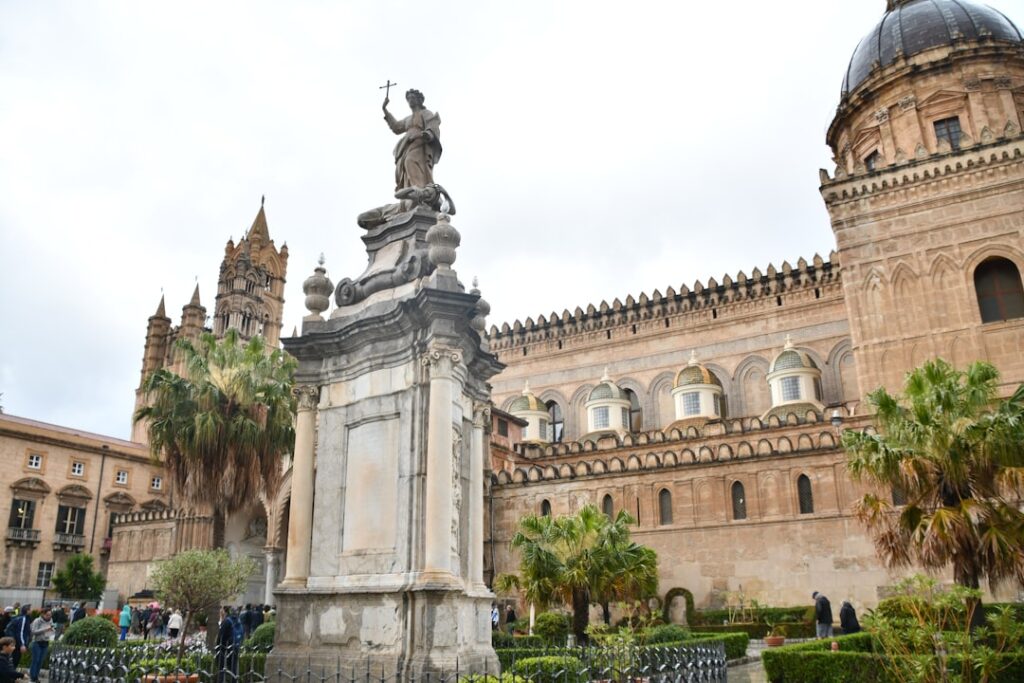
When Constance inherited Sicily in 1194, the German Staufer suddenly controlled not just the Holy Roman Empire in the north, but the wealthy Norman kingdom in the south. Italy was caught in a vice between German imperial power from both directions. Their son, Frederick II, would become one of medieval Europe’s most remarkable rulers—a German emperor raised in Norman Sicily, speaking Arabic and Greek, patron of science and poetry, called “Stupor Mundi”—the Wonder of the World.
Norman Influence on German Imperial Policy
The marriage transformed German imperial strategy. Frederick II spent most of his reign in Sicily rather than Germany, governing from Palermo where Norman administrative systems had created one of Europe’s most sophisticated bureaucracies. He imported Norman legal concepts northward, while his court at Palermo became a meeting place of German, Norman, Arab, and Greek cultures.
The cathedral in Palermo still holds the tombs of both Norman kings and German emperors side by side—a physical manifestation of this dynastic merger. Henry VI lies near Roger II, the first king of Sicily who consolidated the Norman realm, while Frederick II rests in a Roman sarcophagus, his life’s contradictions embodied even in death.
Legacy in Stone and Story
Back in Germany, the Staufer left their mark on the landscape. The imperial palace at Gelnhausen, the cathedrals they patronized, and castles scattered across Swabia all benefited from wealth flowing from Norman Sicily. The sophistication of Norman governance influenced German imperial administration for generations.
This connection between the German emperor and the Norman Kingdom of Sicily represents more than dynastic politics—it shows how medieval Europe’s ruling families created a web of relationships that transcended modern national boundaries. The Norman rulers of Sicily, while ethnically descended from Normans, had established an independent kingdom that became united with the German imperial family and helped shape the Holy Roman Empire’s golden age.
Today, visitors to Hohenstaufen Castle in Baden-Württemberg can look south toward Italy and imagine the ambitions that drove these medieval rulers to unite German imperial power with the Norman Kingdom of Sicily—a dynastic alliance forged not on battlefields, but in a marriage chamber, seven centuries before the modern European project began.
Tours & experiences in Germany


Powered by Viator. Some links are affiliate links — we may earn a small commission at no extra cost to you.