
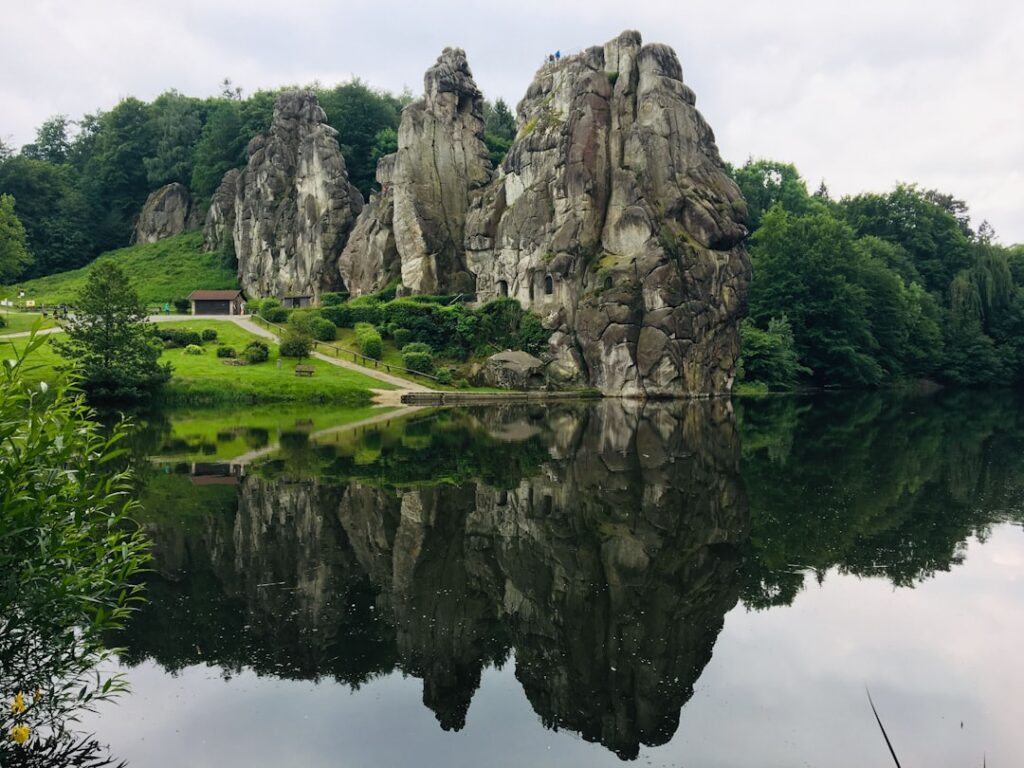
In the heart of the Teutoburg Forest near the town of Horn-Bad Meinberg, five towering sandstone pillars rise nearly 130 feet from the earth. The Externsteine has captivated visitors for centuries—part natural wonder, part archaeological puzzle, and entirely unlike anything else in Germany.
These weathered rock formations, carved by wind and water over millions of years, served as a sacred site long before recorded history. Medieval hermits carved chambers and a chapel into the stone, leaving behind one of Germany’s most mysterious cultural landscapes.
What You’ll Find at the Externsteine
The site centers on the five main rock pillars, connected by narrow staircases carved directly into the stone. The most striking feature is the rock-cut chapel, reached by climbing 230 steps that wind through crevices and up steep faces. Inside, you’ll find a peculiar circular window precisely aligned to let sunlight stream through during the summer solstice—whether by medieval design or ancient intent remains debated.
The carved relief depicting the Descent from the Cross, dating to around 1120, is one of the finest Romanesque sculptures in northern Germany. Below ground level, rock-cut chambers and grottoes hint at centuries of use as hermitages and places of contemplation.
The small museum on site explores the geology and human history of the rocks, from prehistoric evidence to medieval Christian use. A reflecting pool at the base of the formations creates mirror-image views that photographers prize, especially during golden hour.
Planning Your Visit
The Externsteine lies about 10 miles south of Detmold in the Lippe region of North Rhine-Westphalia. By car from Detmold, follow the L828 to Horn-Bad Meinberg, then follow signs to the rocks—there’s ample parking near the entrance. The site is also accessible by bus 792 from Detmold’s main station.
Entry costs €4 for adults, which includes access to climb the rocks and visit the museum. The site is open daily from April through October, 10:00 AM to 6:00 PM, with reduced winter hours and occasional closures during icy conditions when the stairs become hazardous.
Wear sturdy shoes with good grip—the stone steps can be slippery, especially after rain. The climb isn’t recommended for anyone uncomfortable with heights or narrow passages. Allow at least two hours to explore the rocks and surrounding park properly.
Beyond the Rocks
The surrounding landscape offers excellent walking trails through the Teutoburg Forest. The Hermannsweg, one of Germany’s premier long-distance hiking routes, passes right by the Externsteine. Even a short walk along the forest paths reveals why this region inspired German Romantic painters.
The nearby town of Horn-Bad Meinberg is a pleasant spa town worth an hour of exploration. Its half-timbered Altstadt and thermal baths offer a civilized counterpoint to the wild rocks. For a longer excursion, Detmold—with its impressive Renaissance castle and open-air museum—makes an excellent base for exploring the region.
Spring brings wildflowers to the forest floor, while autumn colors the beech woods in brilliant gold. Summer weekends draw crowds, so arrive early or visit on a weekday if possible. Winter visits offer solitude and stark beauty, though check ahead that the climbing routes are open.
The Mystery Endures
Much about the Externsteine remains unexplained. Were the rocks a pre-Christian sacred site? The alignment of that circular window suggests astronomical knowledge, but conclusive evidence remains elusive. What’s certain is that medieval Christians found this place spiritually powerful enough to carve their chapel into living rock.
This ambiguity adds to the site’s appeal. Standing atop the highest pillar, looking across the endless green of the Teutoburg Forest, you sense why humans have been drawn here for millennia. The Externsteine rewards those who venture beyond Germany’s more famous landmarks with something genuinely unique—a place where geology, archaeology, and atmosphere combine into an experience you won’t soon forget.
Want more stories about Germany’s hidden wonders and practical travel tips? Subscribe to the Love Germany newsletter—one short story a day, delivered to your inbox.
Tours & experiences in Germany


Powered by Viator. Some links are affiliate links — we may earn a small commission at no extra cost to you.