
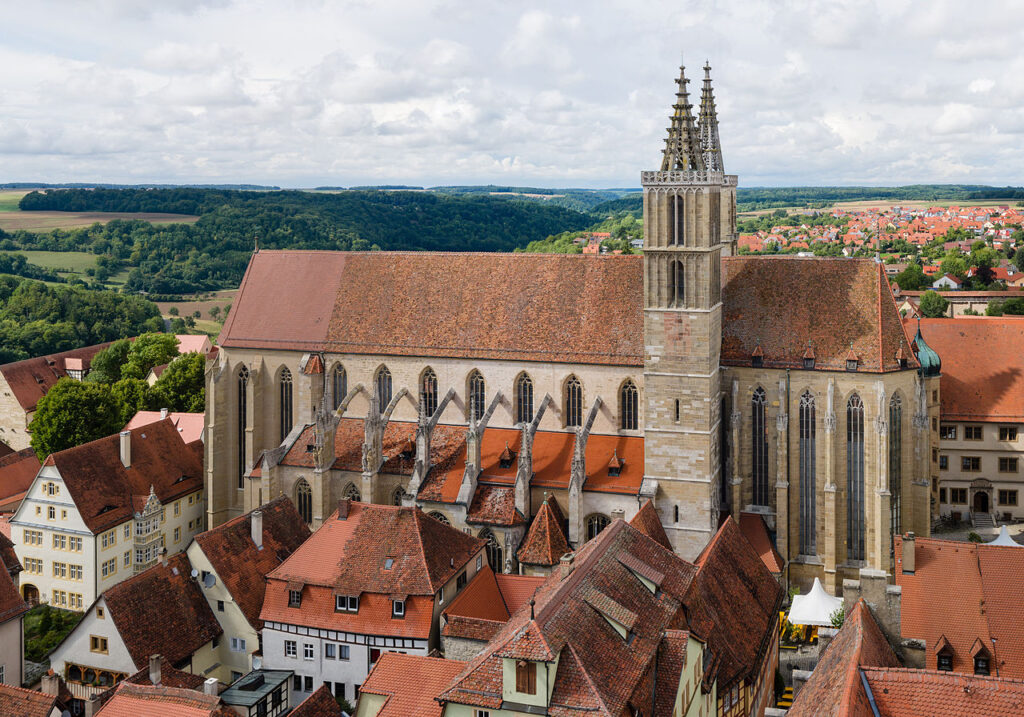
Perched above the Tauber River in northern Bavaria, Rothenburg ob der Tauber is Germany’s most iconic medieval town—a place where cobblestone lanes, half-timbered houses, and Gothic spires transport visitors straight into a storybook. Remarkably intact after surviving centuries of wars and economic decline, this walled town has become one of the Romantic Road’s crown jewels and a must-visit destination for anyone seeking authentic medieval atmosphere.
Walking through Rothenburg’s ancient gates feels like crossing into another era. The town’s remarkable preservation isn’t just luck—after World War II bombing damaged parts of the old town, an international effort funded restoration using original plans and materials, ensuring that today’s Rothenburg looks much as it did 500 years ago. This dedication to historical authenticity makes it one of Europe’s finest examples of a medieval town.
What Makes Rothenburg Special
Unlike many European towns that blend medieval cores with modern sprawl, Rothenburg’s historic center remains completely encircled by its original town walls. You can walk almost the entire 2.5-kilometer circuit along the covered wooden walkway atop these 14th-century fortifications, peering through arrow slits and tower windows at red-roofed houses below. This wall walk alone offers one of Germany’s most photogenic perspectives.
The town’s architectural treasures center around Marktplatz, the market square dominated by the Renaissance-era Town Hall. Climb its 220-foot tower for panoramic views across the Tauber Valley—the steep, narrow stairs are worth every step. Nearby, the Gothic St. Jakob’s Church houses an extraordinary treasure: the Altar of the Holy Blood, a masterpiece carved by Tilman Riemenschneider in the early 1500s. The intricate limewood carving depicting the Last Supper ranks among Germany’s finest examples of late medieval art.
Rothenburg’s most photographed corner is the Plönlein, where a tiny triangular square splits into two streets, framed by half-timbered houses and the Sieber Tower. This postcard-perfect spot captures the essence of German medieval architecture, and you’ll understand why artists have been sketching this view for centuries.
Christmas Magic Year-Round
One of Rothenburg’s most delightful quirks is the Käthe Wohlfahrt Christmas Village, a massive store spanning several buildings where Christmas reigns 365 days a year. Even summer visitors can browse thousands of ornaments, nutcrackers, and handcrafted decorations while listening to carols. The attached Christmas Museum explains the history of German Christmas traditions, from the invention of glass ornaments in nearby Lauscha to the evolution of Advent calendars.
Of course, visiting during the actual Christmas season offers special magic. Rothenburg’s Reiterlesmarkt, held during Advent, transforms the town into a winter wonderland with one of Germany’s most atmospheric Christmas markets. Vendors selling mulled wine, gingerbread, and roasted almonds set up wooden stalls around the Marktplatz, while medieval buildings draped in lights create an unforgettable backdrop.
Practical Information for Your Visit
Rothenburg sits along the Romantic Road between Würzburg and Füssen, making it an ideal stop on a Bavaria road trip. By car from Munich, expect about 2.5 hours via A7. Train travelers should head to Steinach bei Rothenburg, then catch the connecting regional train for the final 15-minute leg—the journey itself offers lovely Franconian countryside views.
The town is compact and entirely walkable. Most visitors need just 4-6 hours to explore the highlights, though spending a night allows you to experience Rothenburg after tour groups depart. The best times to visit are spring (April-May) and early fall (September-October) when weather is pleasant and crowds manageable. Summer brings peak tourist season, while winter—especially during the Christmas market—offers atmospheric charm despite cold temperatures.
For the most authentic experience, arrive early morning or stay until evening. Day-trippers flood the town between 10 AM and 4 PM, but Rothenburg transforms into a peaceful medieval dream outside these hours. The Night Watchman’s Tour, departing from Marktplatz at 8 PM, provides entertaining historical insights as a costumed guide leads you through dimly lit streets with a lantern and halberd.
Insider Tips and Hidden Gems
Don’t miss the Medieval Crime and Punishment Museum, a surprisingly engaging collection of torture devices, legal documents, and punishments from the Middle Ages. It’s more thoughtful than gruesome, offering fascinating insights into medieval justice systems.
For the best local specialty, try Schneeballen (snowballs)—balls of shortcrust pastry dough deep-fried and covered in chocolate, sugar, or other toppings. While they’re sold throughout town, locals suggest trying them fresh from smaller bakeries rather than tourist-focused shops.
Photography enthusiasts should explore the town walls near the Klingentor at sunset, when golden light illuminates the towers and rooftops. The view from the Burggarten (castle garden) at the town’s western edge offers another spectacular perspective, especially in spring when flowers bloom.
Finally, venture just beyond the main tourist routes to discover quieter lanes where locals still live and work. The southeastern part of the old town, near the Gerlach Schmiede (forge), retains an authentic residential feel that many visitors miss entirely.
Rothenburg ob der Tauber proves that some places genuinely live up to their fairytale reputations. This isn’t a reconstructed theme park but a living town where medieval architecture frames modern life, offering travelers an unmatched journey into Germany’s past.
Tours & experiences in Germany


Powered by Viator. Some links are affiliate links — we may earn a small commission at no extra cost to you.