
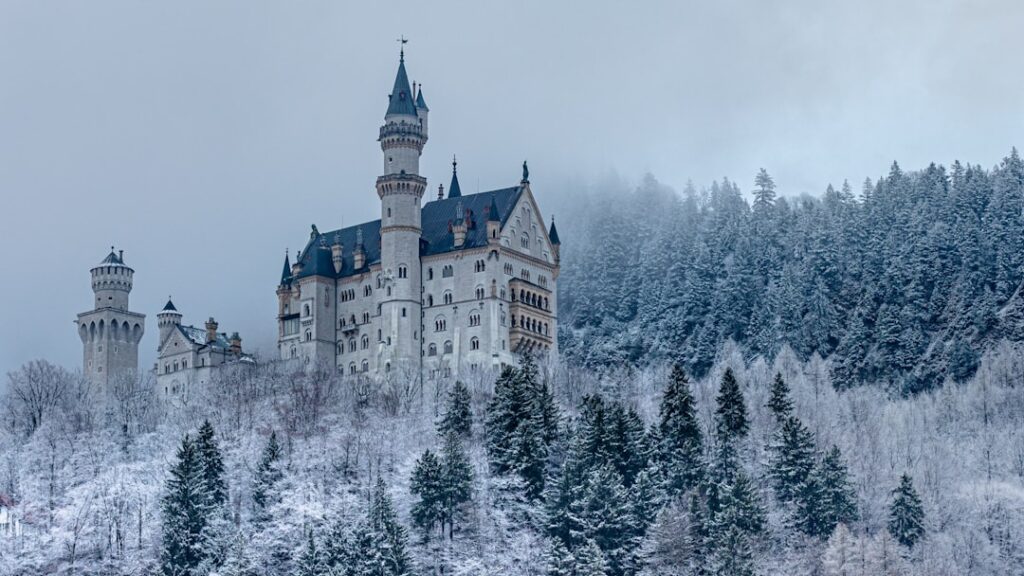
Rising dramatically from a rugged hilltop near Füssen in southwest Bavaria, Neuschwanstein Castle stands as Germany’s most photographed landmark and one of Europe’s most visited castles. With its white limestone façade, soaring towers, and Alpine backdrop, this 19th-century palace embodies the romantic ideals of medieval chivalry—even though it was built with modern conveniences like central heating and running water. Commissioned by the eccentric King Ludwig II of Bavaria as a personal refuge, Neuschwanstein has captivated millions of visitors and served as the inspiration for Disney’s iconic Sleeping Beauty Castle.
More than 1.4 million people tour Neuschwanstein each year, making it one of the most popular tourist attractions in Germany. Yet despite the crowds, the castle retains its magical allure, particularly when morning mist rolls through the surrounding forests or winter snow blankets the mountain peaks. Whether you’re a history enthusiast, architecture lover, or simply seeking that perfect fairytale moment, Neuschwanstein delivers an unforgettable experience.
The Story Behind the Castle
King Ludwig II began construction of Neuschwanstein in 1869 as a tribute to Richard Wagner, his favorite composer, and as an idealized vision of a medieval knight’s castle. Ironically, Ludwig spent only 172 days in residence before his mysterious death in 1886 at age 40. The castle was never completed according to his original plans, and just seven weeks after his death, it was opened to the public to help pay off the massive construction debts.
The interior showcases Ludwig’s obsession with Wagnerian opera themes and medieval legends. The Throne Hall features Byzantine-style mosaics depicting Christian kings and saints, though the throne itself was never installed. The Singers’ Hall, inspired by the hall at Wartburg Castle, occupies the entire fourth floor and features murals depicting the legend of Parsifal. The king’s bedroom took 14 woodcarvers more than four years to complete, with its intricately carved Gothic oak panels.
What makes Neuschwanstein particularly fascinating is that it represents a romantic fantasy rather than authentic medieval architecture. Ludwig used the latest 19th-century technology—steel frames, modern heating systems, and even an electric bell system—to create his dreamlike vision of the past.
Planning Your Visit
Neuschwanstein is located near the town of Füssen in the Allgäu region of Bavaria, about 75 miles southwest of Munich. The nearest village is Hohenschwangau, where you’ll find the ticket center, parking areas, and Ludwig’s childhood home, Hohenschwangau Castle—also worth visiting if time permits.
Tours are by timed entry only, and tickets sell out quickly, especially during summer months and weekends. Book your tickets online at hohenschwangau.de weeks in advance to secure your preferred time slot. Same-day tickets are available at the ticket center in Hohenschwangau village but can sell out by mid-morning during peak season. Tours are offered in English and German and last approximately 30 minutes, covering about 15 of the castle’s rooms.
From the ticket center, the castle is 1.5 kilometers uphill. You have three options: a 30-40 minute uphill walk, a shuttle bus (uphill €3, downhill €2), or a horse-drawn carriage (uphill €8, downhill €4). The walk is moderately strenuous but scenic. Note that buses and carriages drop you off about 10-15 minutes walking distance from the castle entrance, and there’s no elevator access—be prepared for stairs and uneven surfaces.
The best time to visit is September through early October or late April through May, when crowds are thinner and weather is generally pleasant. Summer brings the most tourists and longest wait times. Winter visits offer a magical snow-covered landscape but can involve icy conditions on paths. The castle is open year-round except January 1, December 24, 25, and 31.
Insider Tips and Must-See Views
While the castle interior is impressive, the exterior views are what make Neuschwanstein truly unforgettable. The famous postcard view comes from Marienbrücke (Mary’s Bridge), a pedestrian bridge spanning a gorge about 10 minutes’ walk beyond the castle. This vantage point offers the classic photograph with the castle framed by mountains and forest. Arrive early morning for the best light and fewer crowds blocking your shot.
Here are essential tips for maximizing your visit:
- Arrive at the ticket center at least two hours before your tour time to allow for ticket pickup, the journey uphill, and exploring the grounds
- Wear comfortable walking shoes with good traction—paths can be steep and slippery
- Photography is strictly prohibited inside the castle, but you can take photos on the grounds and from Marienbrücke
- Combine your visit with nearby Hohenschwangau Castle using a combination ticket for better value
- Pack snacks and water, as options near the castle are limited and expensive
- Visit the Pollat Gorge waterfall near Marienbrücke for a quieter nature experience
For a unique perspective, hike to Tegelberg mountain (cable car available) for elevated views across the entire valley with both royal castles visible below. The Alpsee lake near Hohenschwangau village also offers beautiful reflections of the surrounding peaks and makes for a peaceful afternoon stroll after the castle crowds.
Neuschwanstein Castle proves that sometimes reality can match the fairytale. Despite the tourist infrastructure required to manage massive visitor numbers, the castle’s romantic beauty and Ludwig’s extraordinary vision shine through, making it an essential stop on any German itinerary.
Tours & experiences in Germany


Powered by Viator. Some links are affiliate links — we may earn a small commission at no extra cost to you.