
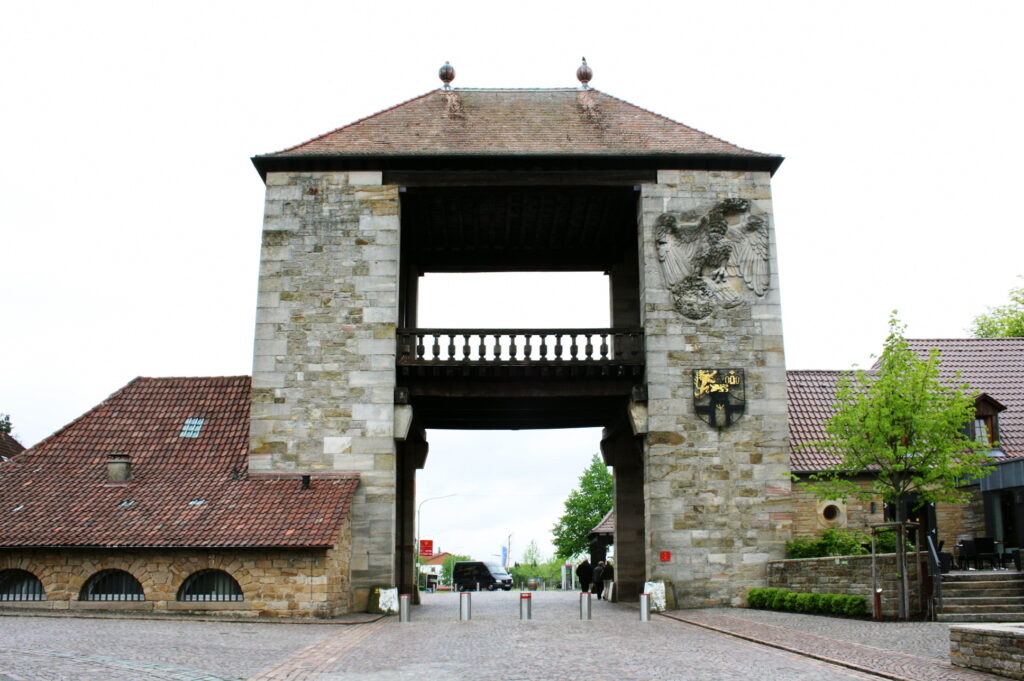

The Deutsche Weinstraße—the German Wine Road—runs 50 miles through the heart of the Palatinate, from Bockenheim in the north to the French border at Schweigen-Rechtenbach. Established in 1935 as Germany’s first designated scenic wine route, it threads through a landscape of rolling vineyards, half-timbered wine villages, and almond trees that bloom spectacularly each spring.
Unlike the steep, dramatic Rhine gorge or the winding Moselle, the Palatinate offers gentler slopes and a sunnier, almost Mediterranean climate. This is Germany’s second-largest wine region, and the Wine Road is your slow-paced introduction to its Rieslings, Pinot Noirs, and especially its relaxed wine culture.
The Route and Key Villages
The Wine Road follows the B271 highway, but the real charm lies in detours to the villages tucked into the vineyards on either side. Start in Bockenheim, marked by the Deutsche Weintor (German Wine Gate), a 1930s sandstone arch that officially begins the route.
Head south to Bad Dürkheim, home to the world’s largest wine festival, the Wurstmarkt, held each September. The town’s enormous wine barrel—the Dürkheimer Riesenfass—now houses a restaurant where you can drink wine inside what was once the world’s biggest cask. Don’t miss the ruins of Kloster Limburg on the hillside above town, especially at sunset.
Deidesheim, just a few miles south, is the Wine Road’s most elegant stop. Cobblestone streets, Renaissance town hall, and multiple Michelin-starred restaurants make it a favorite for serious food-and-wine travelers. The von Bassermann-Jordan and von Buhl estates offer tastings in historic settings.
Further south, Edenkoben sits beneath the Rietburg castle ruins. Take the chairlift up through the vineyards for panoramic views across the Rhine plain to the Black Forest. St. Martin, tucked into a narrow valley, is arguably the most picturesque village on the entire route—half-timbered houses, cobblestones, and ivy-covered walls create a storybook setting.
The route ends at Schweigen-Rechtenbach, where the Deutsches Weintor marks the French border. Cross into Alsace for lunch in Wissembourg if you have time.
Wine Culture and Tastings
The Palatinate is known for approachable, fruit-forward Rieslings—less austere than those from the Moselle or Rheingau. You’ll also find excellent Pinot Blanc (Weissburgunder), Pinot Gris (Grauburgunder), and increasingly impressive Pinot Noir (Spätburgunder).
Most villages have family-run wine estates offering tastings, often by appointment but sometimes walk-in. Look for signs reading “Weingut” or “Vinothek.” The Palatinate invented the Weinstube—a casual wine tavern serving regional dishes alongside estate wines. Expect Saumagen (stuffed pig’s stomach, a Palatinate specialty), Leberknödel (liver dumplings), and seasonal vegetables.
Between May and October, many estates open Straußwirtschaften—temporary wine taverns marked by a wreath or broom hanging outside. These seasonal spots serve simple cold plates and their own wines at outdoor tables, often in courtyards or gardens. It’s as informal and authentic as German wine culture gets.
When to Visit and How to Get Around
Late March to early April brings the almond blossom, when thousands of trees along the Wine Road burst into pink and white bloom. It’s spectacular, especially around Gimmeldingen and Edenkoben. May through October is ideal for hiking through vineyards and visiting Straußwirtschaften. September and October bring harvest season and the major wine festivals.
Winter is quieter, but Christmas markets in Deidesheim, Neustadt, and other villages offer a different charm, with Glühwein served in medieval squares.
You can drive the route in under two hours without stops, but that defeats the purpose. Plan at least two or three days to explore properly. Regional trains connect larger towns like Bad Dürkheim and Neustadt an der Weinstraße, and buses serve smaller villages, though service is limited. Cycling is popular—the route is mostly flat or gently rolling, and many wine estates welcome cyclists.
If you’re planning to taste seriously, consider hiring a driver for the day or staying in one village and exploring on foot and by bike.
Beyond the Wine
The Pfälzerwald (Palatinate Forest) rises immediately west of the Wine Road—Germany’s largest continuous forest, crossed by hiking trails and dotted with castle ruins. Burg Trifels, near Annweiler, once held Richard the Lionheart prisoner and the Imperial Crown Jewels. The hike up is steep but manageable, and the views reward the effort.
The Villa Ludwigshöhe, King Ludwig I of Bavaria’s summer retreat above Edenkoben, houses an art collection and offers another panoramic terrace overlooking the vineyards.
Speyer, just east of the Wine Road, deserves a half-day detour for its Romanesque cathedral—a UNESCO World Heritage site and burial place of emperors.
The Deutsche Weinstraße isn’t dramatic or grand in the way the Rhine gorge commands attention. It’s quieter, sunnier, and more intimate—a place to slow down, taste thoughtfully, and let the rhythm of vineyard life set the pace. Subscribe to the Love Germany newsletter for one short story about Germany every day, delivered to your inbox.
Tours & experiences in Germany


Powered by Viator. Some links are affiliate links — we may earn a small commission at no extra cost to you.